



MTA to Pilot Air Purification System on Commuter Rails
The technology will be installed inside rail cars for MTA’s Metro-North and Long Island Railroads.
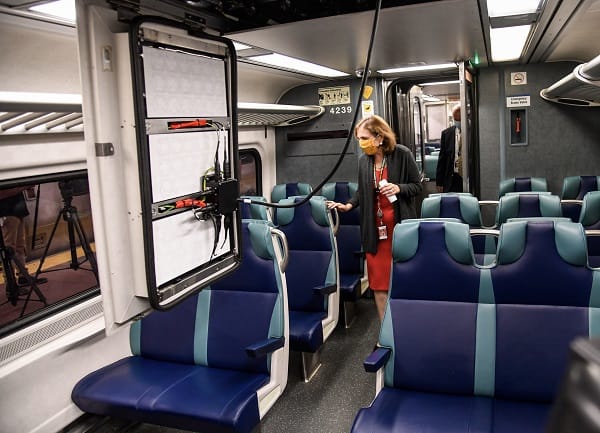
MTA’s Metro-North Railroad President Catherine Rinaldi and Chief Mechanical Officer James Heimbuecher unveiled the pilot railcar air purification technology at Grand Central Terminal on Oct. 15.
MTA
New York’s Metropolitan Transportation Authority (MTA) is piloting a new technology to filter and purify air inside rail cars for its Metro-North Railroad and Long Island Railroad.
The air purifying system, developed by Md.-based Knorr Brake Company and its Merak North America division, uses an electrical field to generate a wave of ionized particles that destroy airborne viruses, bacteria, and particulate matter, including COVID-19. Incorporated into the railroads’ existing ventilation systems, the system replaces the air inside a rail car approximately 12 times an hour, or about once every five minutes.
The technology was introduced as part of MTA’s “COVID Response Technology” that was announced in July to make public transit safer and more responsive to the needs of riders. The pilot follows a successful proof-of-concept conducted by Metro-North over the summer.
“As more and more customers return to Metro-North trains, they want to be confident that we are doing everything that we can to keep them safe and healthy,” said Metro-North Railroad President Catherine Rinaldi. “If the pilot proves successful, not only does this new air purification technology kill COVID-19, it kills any virus including the standard flu or bacteria that cause the common cold, and even particulate matter like diesel fumes. The benefits provided by this new system would last well after the pandemic has ended.”
The technology was installed in two HVAC units of a Metro-North car on Oct. 7 and is being installed by the end of the month on a car of MTA’s Long Island Railroad. Researchers with the U.S. Environmental Protection Agency will work in partnership with the MTA to test the technology to determine its effectiveness in meeting the needs for public transit.
In addition to launching its COVID response plan, the MTA has heightened cleaning and disinfecting of cars and stations, deployed customer ambassadors to assist with loading and rider information, installed hand sanitizer dispensers at stations along with vending machines selling personal protective equipment, and floor decals to assist customers with social distancing.
More Security and Safety

Transit Agencies Highlight Safety Gains at National Summit
Leaders from 15 major transit systems shared crime-reduction results and safety initiatives while discussing the role of continued federal support.
Read More →
DART Launches Major Security, Fare Enforcement Initiative
The 90-day demonstration will deploy coordinated security teams at five light rail stations while testing controlled access and gathering data to guide future investments.
Read More →
RTD Launches NextRide App to Consolidate Trip Planning, Fares, Security Reporting
The app expands on RTD’s existing NextRide web application and allows customers to view real-time vehicle locations and service alerts, purchase and store digital fares, and access customer support.
Read More →
TAPTCO Updates OSHA Compliance Training for Transit Maintenance Operations
The revamped program addresses 26 OSHA standards for maintenance facilities, with TAPTCO pointing to training, documentation, and everyday shop hazards as continuing challenges for transit operations.
Read More →
How VaporVision Adds Value to Transit Door Systems
Wabtec engineers explain how the system improves doorway detection, strengthens diagnostics and gives transit agencies and OEMs greater operating flexibility.
Read More →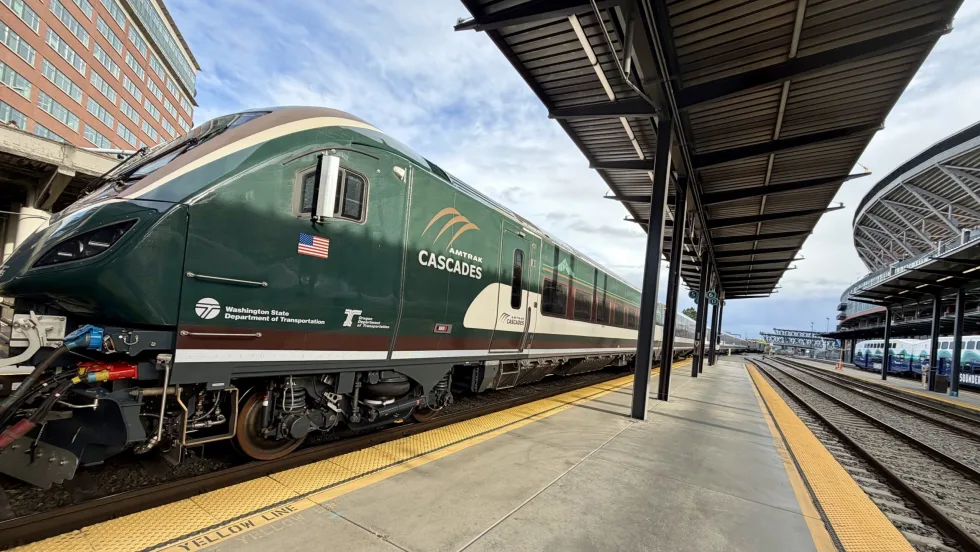
FRA Announces $5.3B in Rail Investments, Including $2B for Amtrak
Funding will support grade-crossing improvements, infrastructure upgrades, and new Amtrak equipment in 23 states.
Read More →
Chicago, Maryland Expand Non-Law-Enforcement Safety, Rider Support
The CTA and MTA are launching new programs aimed at de-escalation, crisis response, rider assistance, and greater transparency.
Read More →
LA Metro, City of West Hollywood, and Partners Advance Smarter Bus Lane Enforcement
The award-winning partnership combines AI-powered detection with human oversight to improve bus reliability, accessibility, and enforcement efficiency.
Read More →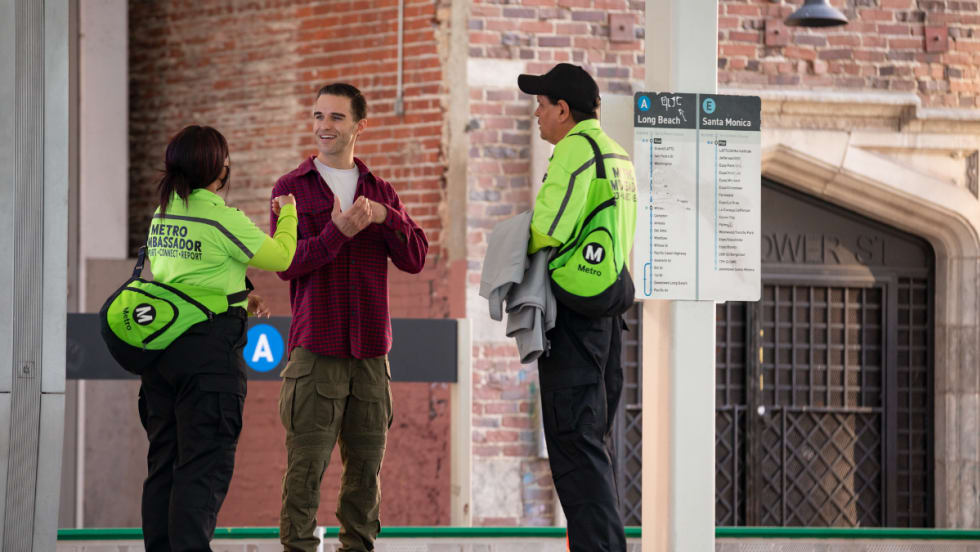
LA Metro Reports 57% Decline in Homelessness on Transit System Since 2024
The agency's latest homelessness count offers new data on how care-based services and cross-sector partnerships can complement traditional transit security strategies.
Read More →
FTA Launches 'Transit Moves America' Dashboard to Highlight Agency Safety and Performance
The online dashboard transforms National Transit Database information into a public-facing resource that allows users to compare transit agencies on key operational and safety metrics.
Read More →