



Midlands LRT Embodies Britain's Push for a Rail Revival
With a coalition of political and financial support, the Midland Metro project has brought LRT back to Birmingham and the Black Country. Integrated feeder bus service from an ally has been key.
In recent years, Great Britain has seen a light rail revival. Overcoming serious economic and political challenges, new light rail transit (LRT) systems have been built in Croydon, Sheffield, Manchester and Birmingham. These systems have developed a loyal passenger base by providing reliable, high-quality service. While many of the successes of these systems mirror those found on this side of the Atlantic, the approach to actually financing and building them were radically different. The fact that several of these systems were even built in an unregulated public transport environment is remarkable. The Midland Metro LRT system has given the residents of Birmingham and the West Midlands an attractive and affordable alternative to idling in traffic-congested streets. We’ll take a look at some of the key features of the system, how it fits together with the United Kingdom’s national public transport policy and the overall model that was employed to bring the project to fruition. A Birmingham renaissance The Midland Metro system starts in the center of Birmingham and proceeds in a northwesterly direction through the heart of the industrial “Black Country” towns of West Bromwich and Wednesbury before terminating in Wolverhampton. The region gained its name in the mid-19th century due to the shallow and relatively thick outcropped coal seams that give the ground a blackened appearance. The opening of the new line re-established a long tradition of tram service that dates back to 1872 when the Birmingham and District Tramway Co. Ltd. opened the first tramway line in the region. By 1910, nine tramway operators were running single and double-deck trams throughout the West Midlands. By the end of the 1920s, however, the decline and abandonment of tramway lines had gathered a momentum that would continue over the next two decades. On July 4, 1953, the last remaining routes in Short Heath, Pype Hayes and Erdington closed simultaneously, ending more than 70 years of tramway operations in Birmingham. After an almost 46-year hiatus, the Midland Metro LRT system opened in May 1999. The Metro is a 12.6-mile system that runs along the former Great Western Railway route from Birmingham to Wolverhampton. The alignment is an almost exclusively dedicated right-of-way that includes a short section of in-street running from Bliston to the Wolverhampton terminus. Where Metro shares road space with automobiles, LRVs have signal prioritization. Sixteen partial low-floor vehicles service the system during peak hours, making stops at 23 stations. Designed and built by Ansaldobreda, the vehicles are of the 70% low-floor design type and have a top speed of 45 mph. The system includes 40 bridges and two tunnel sections. Building the Midland Metro Midland Metro was promoted and developed by Centro, the corporate name of the West Midlands Passenger Transport Executive (WMPTE). Centro is responsible for putting into action the policies of the West Midlands Passenger Transport Authority (WMPTA). WMPTA is made up of 27 representatives from the seven district councils in the West Midlands. Together, they set the political and financial framework for the work of Centro. As with most major rail transport projects, planning and construction of the Midland Metro took many years. Planning commenced in the mid-1980s, and a bill was placed before Parliament in November 1988. Following Royal Assent of the system the following year, Centro was required to demonstrate the economic case to the then-Conservative government. Funding for light rail was very tightly controlled at that time. Light rail systems were effectively being built one at a time in the U.K. Only after the Manchester system was opened and the Sheffield system followed was funding for Midland Metro Line 1 approved. The combination of government grant and borrowing approval was not sufficient to fully fund the system. Additional money from the European Union, Altram (the system concessionaire) and Centro, as well as the WMPTA, enabled the funding package to be completed. A 23-year design-build-operate-maintain (DBOM) concession was awarded by Centro to the Altram consortium in August 1995. This included a three-year construction period by the LaingAnsaldo joint venture, followed by a 20-year operating concession for Travel West Midlands, a local bus operator and part of the National Express Group. National Express set up a company called Travel Midland Metro, which, as part of Altram, operates Metro. At the end of the concession period, the system is to be handed back to Centro. The overall capital cost of the complete system and LRVs was $207 million (U.S) with no operating subsidies required. Full operational, passenger and revenue risk have been transferred to the private sector Altram consortium, which is responsible for establishing fare levels and retains the income from ticket sales and advertising. Integrating the network Public transport in Britain at the national, regional and local level faces many challenges. Outside London, public transport is unregulated. This means that private operating companies provide public transport services, a system that does not necessarily lend itself to effective or efficient modal integration. In some instances, newly constructed LRT systems face direct competition along their routes from private bus operators. In simple terms, it is a free-for-all in some localities, with private operators competing with each other on high ridership routes. This has had an adverse impact on ridership for recent LRT start-ups in Britain and has and will continue to be a challenge for the Midland Metro system as well. The region benefits from the fact that the company Centro chose to operate and maintain the Metro system, TWM, is a subsidiary of Travel West Midlands (TWM), which is the dominant bus service provider, with an estimated 83% market share. Travel West Midlands (formerly West Midlands PTE) was established as a company on Oct. 26, 1986, following the 1985 Transport Act and deregulation of bus services. The company took over the bus operations of the WMPTE, a public body. In December 1991, the company was sold to its employees in the form of a 100% Employee Share Ownership Plan (ESOP), the first of its kind in Britain. Today, employees hold the majority of shares, giving the company a strong customer-service orientation. TWM carries more than 1 million passengers per day on its 1,800 buses on 450 bus routes. It has placed considerable emphasis on making the entire public transport network as integrated as possible in a challenging unregulated environment. It has done so by forging partnerships with Centro, train operators and other local bus companies to provide integrated ticketing in the West Midlands. Under the fare scheme, bus drivers can issue bus, rail and tram tickets to passengers. A key reason for TWM’s dominant position in the Birmingham region is its family of travel cards. In many respects, it helped to pioneer the use of travel cards. Today, Centro tickets such as the multimodal Centrocard — valid on all rail, bus and metro services within the Centro area — and Busmaster — valid on all buses and the metro — are widely used. As a parent company to Travel Midland Metro, TWM provides integrated feeder bus service at nine out of 23 stations. Each feeder bus is prefixed with the letter “M” for easy identification. Centro has provided four park-and-ride lots, and each station has a facility for bicycle storage to encourage car-free journeys. These efforts have had a positive effect on ridership and service integration, but the ultimate objective is to create a more effective and efficient alternative to private automobiles. Meeting this objective will be determined by whether future extensions can be built to form the basis of a true public transport network. Challenges to expansion More than 5.5 million passengers are using Metro Line 1 per year, and regional planners and government agencies are planning two extensions. These routes are being planned to serve Birmingham City Centre and Brierley Hill. The former will consist of a short two-mile route through the heart of Birmingham’s downtown. The Brierley Hill extension will consist of almost eight miles with 15 stops, and it will run through Sandwell and Dudley Boroughs with direct connections to local bus stations along the route. Although planning continues for expansion of the Metro system, challenges abound. Aside from the obvious hurdles associated with financing and building a new LRT system, service integration for the next phases could be problematic since the existing operations and maintenance franchisee is not certain to be the successful bidder on the extensions. Even if successful, TWM and Metro face growing competition from low-cost bus service providers. In the end, Metro must offer a comparatively more attractive product than alternative transportation methods both in terms of service quality and travel times. Despite these challenges, strong public support and enthusiasm surround the possible expansion of the Metro LRT system. Local authorities have secured more than 30% of the required funding for the new routes from developers and, if things go according to plan, an expanded Metro network could be servicing the Black Country by the end of 2006. Plans are already underway to expand the Metro Network with another three routes identified for future investment as Metro lines. These would utilize the extension through the Birmingham center and link north, south, east and west of the city and, in particular, Birmingham International Airport. Another link would be from Wolverhampton through Walsall to Wednesbury. These routes could be open to the public in 2008. Meanwhile, LRT systems planned for Leeds, Nottingham, Edinburgh and Bristol could open within the next five years.
More Rail
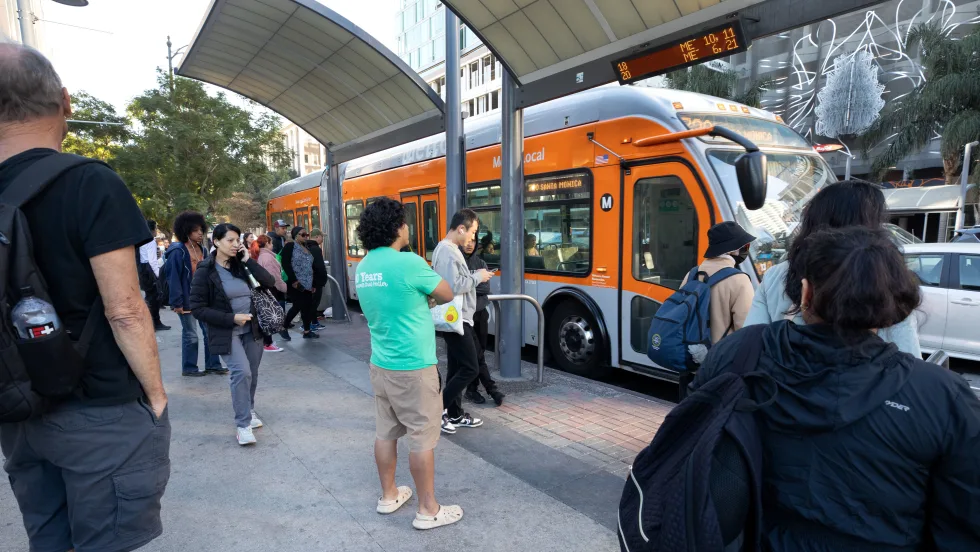
LA Metro September Ridership Climbs 3.9%, Led by Rail Growth
The agency recorded more than 27.2 million boardings, with rail ridership increasing 12.4% year over year and the D Line posting the largest gains.
Read More →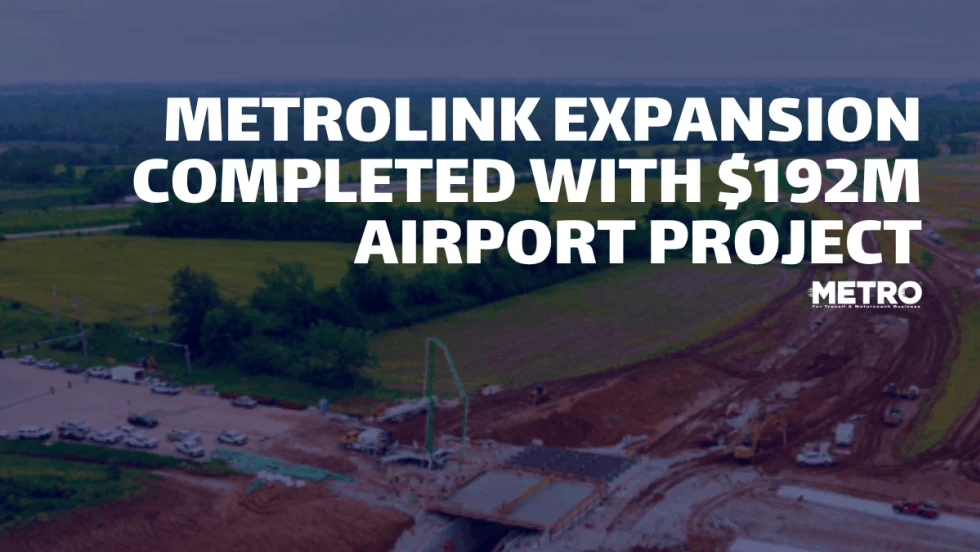
First Full MetroLink Rail Expansion Completed in 20 Years with $192M Airport Project
The project links two St. Louis-area airports by light rail while adding roadway and bike trail connections to improve regional access and mobility.
Read More →
Utilimarc Launches SmartReplace to Optimize Fleet Replacement Decisions
AI-powered SmartReplace helps fleets prioritize vehicle replacements, model budget scenarios, and build more defensible long-term strategies.
Read More →
Scenes from APTA TRANSform & EXPO 2026
Transit leaders, manufacturers, and industry professionals gathered in Chicago to explore new technologies, share ideas, and discuss the future of public transportation.
Read More →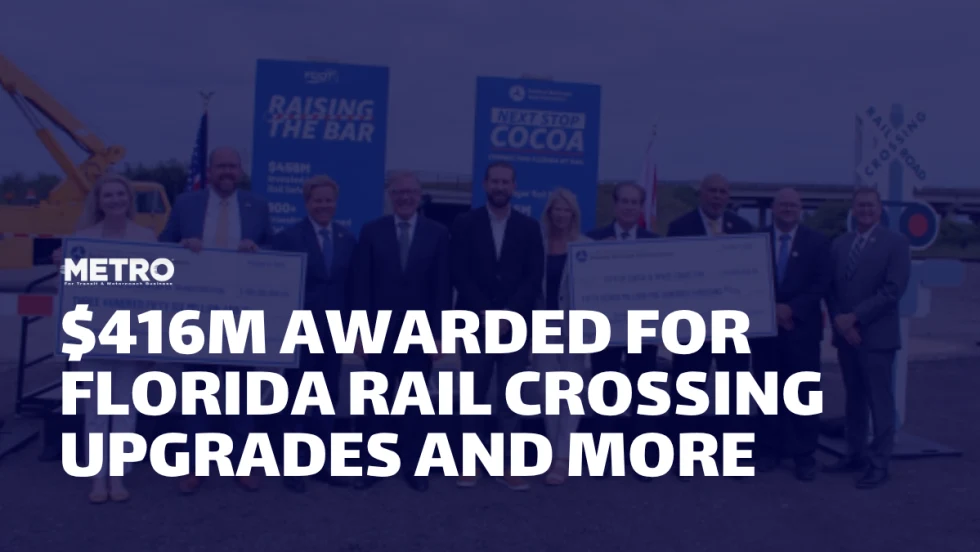
USDOT Awards $416 Million for Florida Rail Crossing Safety Upgrades, New Brightline Station
The projects aim to reduce risks for motorists and pedestrians at rail crossings while expanding passenger rail access along Florida’s Space Coast.
Read More →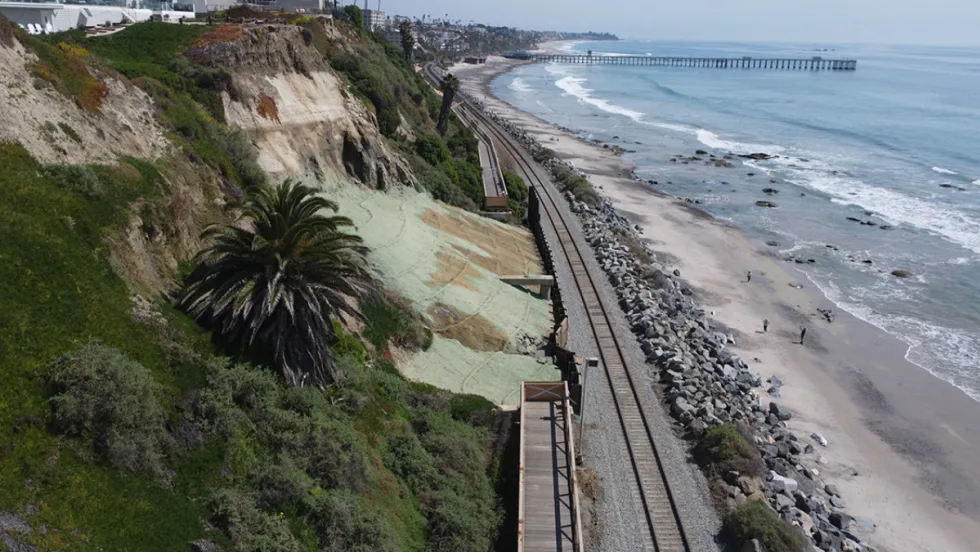
OCTA Declares Emergency to Protect Rail Corridor From Coastal Erosion
The California agency is accelerating shoreline protection and plans to place approximately 690,000 cubic yards of sand along the San Clemente coast to protect a key passenger and freight rail link.
Read More →
More Than a Summer Job: Building the Next Generation of Transit Talent
The Delaware River Port Authority and PATCO have transformed their internship program into a hands-on professional development experience that introduces students to the breadth of transportation careers — and creates a pipeline for future employees.
Read More →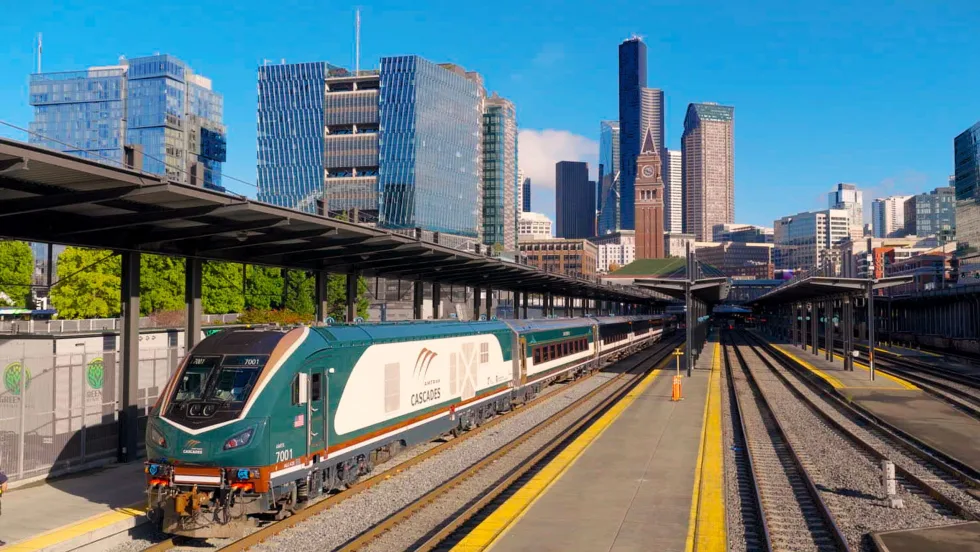
Airo Trains Make Their Amtrak Cascades Debut in the Pacific Northwest
Effective immediately, two cutting-edge Airo trainsets will join the Amtrak Cascades route, operating four daily trips between Vancouver, B.C., Seattle, Portland, and Eugene, Oregon, marking the first introduction of Airo trains into passenger service anywhere in the country.
Read More →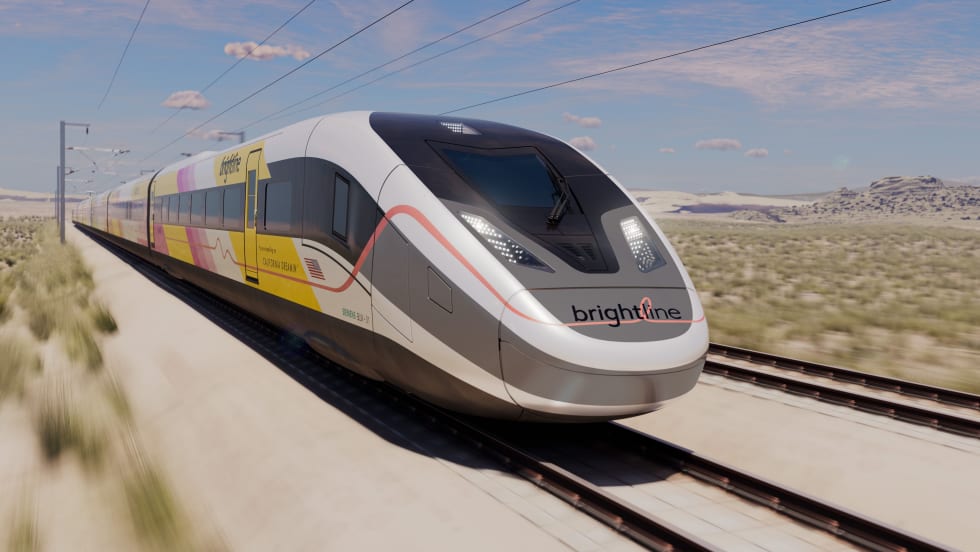
Florida's Brightline Announces Financial Restructuring
Brightline Florida says train operations will continue as normal as certain parent entities enter Chapter 11 and financial stakeholders provide $490 million in new long-term capital.
Read More →
ENC Lands MATA Contract and More in Biz Briefs
In this edition of Biz Briefs, we spotlight the latest developments shaping the future of mobility.
Read More →