



LA Metro September Ridership Climbs 3.9%, Led by Rail Growth
The agency recorded more than 27.2 million boardings, with rail ridership increasing 12.4% year over year and the D Line posting the largest gains.

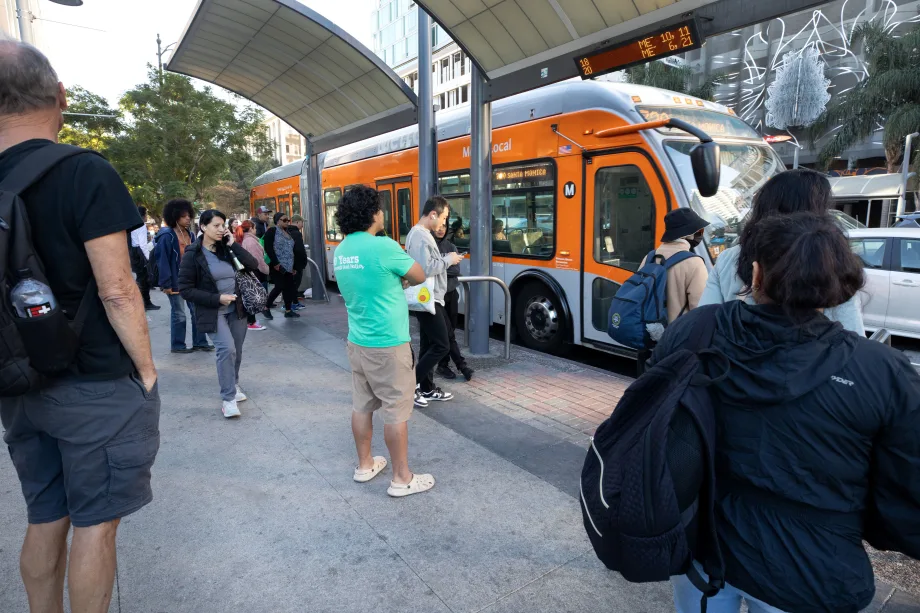
Systemwide, ridership averaged 1,022,776 on weekdays, a 4.4% increase over September 2025. Saturdays averaged 720,083 boardings, and Sundays averaged 584,475.
LA Metro
- LA Metro's boardings increased to over 27.2 million in September, marking a 3.9% rise in ridership.
- Rail ridership experienced a notable 12.4% year-over-year growth, contributing significantly to the overall increase.
- The D Line showed the most substantial gains in rail ridership among the lines.
*Summarized by AI
LA Metro ridership was 27,281,003 in September, an increase of 3.9% over the same month in 2025. The D line saw the largest year-over-year (YOY) increase, with 114% growth on weekdays and nearly 93% overall.
Systemwide, ridership averaged 1,022,776 on weekdays, a 4.4% increase over September 2025. Saturdays averaged 720,083 boardings, and Sundays averaged 584,475.
Nearly 20% of ridership came from customers enrolled in fare programs that offer free or discounted rides, including GoPass (for students in grades K-community college at participating schools), LIFE (for persons with qualifying incomes), U-Pass (for students at participating colleges and universities), and E-Pass (for employers who offer transit to their employees). The LIFE Program grew 35% YOY.
A Busy September, Rail and Bus Growth Continues
September featured a packed schedule of concerts, sporting events, festivals, and conventions across Los Angeles. Highlights included BTS at SoFi Stadium, J. Cole at Intuit Dome and Crypto.com Arena, and a John Williams tribute at the Hollywood Bowl. Football returned with home games for USC, UCLA, the Rams, and the Chargers, while the Dodgers, Galaxy, LAFC, Sparks, and Kings also played. Other major attractions included the opening of the Lucas Museum of Narrative Art, the Los Angeles Korean Festival, Long Beach Comic Con, and the Low Rider Magazine Super Show.
Rail ridership remained strong in September, rising 12.4% over the previous year to 6,698,337. Weekdays had the highest growth at 13.9%, with average boardings of 244,680. Saturday boardings averaged 194,793, a 10.5% increase YOY.
Other year-over-year rail ridership highlights include:
- A line ridership increased 9.5% to 2,083,094 and grew 10.4% on weekdays to an average of 244,680 riders.
- B line ridership increased by 4.5% in September to 1,412,266. The biggest growth came on Sundays, up 24.4% to an average ridership of 49,300.
- D line growth increased every day. In addition to phenomenal weekday growth, Saturdays averaged 14,221 boardings, a 24.5% increase, and Sundays averaged 11,457 boardings, a 20% increase.
- E line ridership was 1,658,854, a 10% increase, with Saturdays showing the strongest growth at 12.5% to 50,826 average ridership.
- K line ridership grew 2.2% to 242,298, with Saturdays showing the biggest growth at 7.6% to 7,064 average ridership.
Bus ridership rose 1.4% year over year, with a 2.2% increase on Saturdays to 525,290 average ridership. The J line, a Bus Rapid Transit (BRT), was up 5.6%. Total bus ridership in September was 20,582,666.
Public Safety Initiatives Making Impact
Metro continues to strengthen safety across its system through a visible, engaged presence of uniformed personnel, enhanced access control through environmental design, and partnerships with the County, cities, and regional agencies to address societal issues affecting the transit system.
In August, 99.998% of trips were completed without incident. Combined violent and property crime rates reached 6.25 incidents per million boardings, the lowest level in August since 2019. Compared with July, violent crime declined 11.7%, and property crime fell 27%.
Metro Transit Security Officers continued their targeted Code of Conduct enforcement, including fare enforcement and operations on the G line, which launched on June 8. On July 27, Metro also launched a joint train-riding operation with the Los Angeles Police Department (LAPD) and the Los Angeles Sheriff’s Department (LASD) on the A Line North.
From July 27 through August 31, Metro Transit Security train-riding teams on the A Line North averaged seven removals per sweep, up from one per sweep during the same period last year. At targeted stations, citations increased 4,200% compared with the same period last year, primarily for no proof of fare.
Metro’s outreach teams continued connecting people experiencing homelessness with services and housing. In August, teams engaged 443 individuals, resulting in 222 interim and 46 permanent housing placements in coordination with regional service providers. In fiscal year 2027, 1,288 people enrolled in the Homeless Management Information System (HMIS), and 558 were connected to interim or permanent housing.
Metro’s goal is to facilitate 2,400 housing placements for the new fiscal year.
Quick Answers
Overall ridership for LA Metro increased by 3.9% in September.
*Summarized by AI
More Management

Castro to Lead RTC of Southern Nevada and More in People Movement
In this edition, we also cover recent appointments and announcements at the STV, MCI, and more, showcasing the individuals helping to shape the future of transportation.
Read More →
STraffic Expands North American Presence with Fare Collection Technology
John Moon, Associate Director, Product Strategy at STraffic, discusses the company's growth in North America, its efforts to reduce fare evasion, and more.
Read More →
Study: Denver RTD Generates $2.1 Billion in Annual Economic Activity
An economic impact study finds the agency supports approximately 17,500 jobs, delivers $1.6 billion in annual community and mobility benefits, and generates $2.42 in economic value for every dollar invested.
Read More →
Mark Aesch Nominated to Lead Federal Transit Administration
The former Rochester transit chief and TransPro founder, who has also contributed to METRO Magazine, brings decades of industry experience and a focus on performance, accountability, and financial sustainability to the nomination.
Read More →
Best and Worst U.S. Cities for Public Transportation in 2026
A new analysis of 50 major U.S. urban areas ranks public transit systems based on accessibility, affordability, usefulness, and safety, highlighting where transit performs best and where challenges remain.
Read More →
Laketran Cuts Fuel Costs, Boosts Efficiency with Propane-Powered Fleet
The Ohio transit agency is using propane-powered vehicles and on-site fueling infrastructure to cut fuel and maintenance costs while meeting growing demand for paratransit services.
Read More →
Canada’s Public Transit Supports $65.6 Billion in Annual GDP
New research from the Canadian Chamber of Commerce examines transit's economic contributions, including job creation and the financial implications of transportation investment.
Read More →
Pierce Transit Moves to Expand Fleet Following Proposition 1 Approval
The agency authorized the purchase or refurbishment of up to 60 buses to support a 47% service expansion, as voters nationwide approved billions in new transit funding.
Read More →
Right-Sizing Rural Transit: Lessons from North Grenville’s On-Demand Model
A small municipality shows how flexible service, rider needs, and public accountability can expand mobility with limited resources.
Read More →
Transit Ballot Victories Signal Strong Voter Support: What Comes Next?
Voters approved billions in public transportation investments in 2026, giving agencies opportunities to preserve service, expand operations, and strengthen regional connections amid a changing political landscape.
Read More →