



Not the Usual Suspects: Transit Expands Its List of Partners
As funding from state and federal agencies continues to be more difficult to secure, local transit systems have found a variety of new partners that not only help pay for new hours of service, but can also provide opportunities for transit agencies to restructure service in parts of the community.
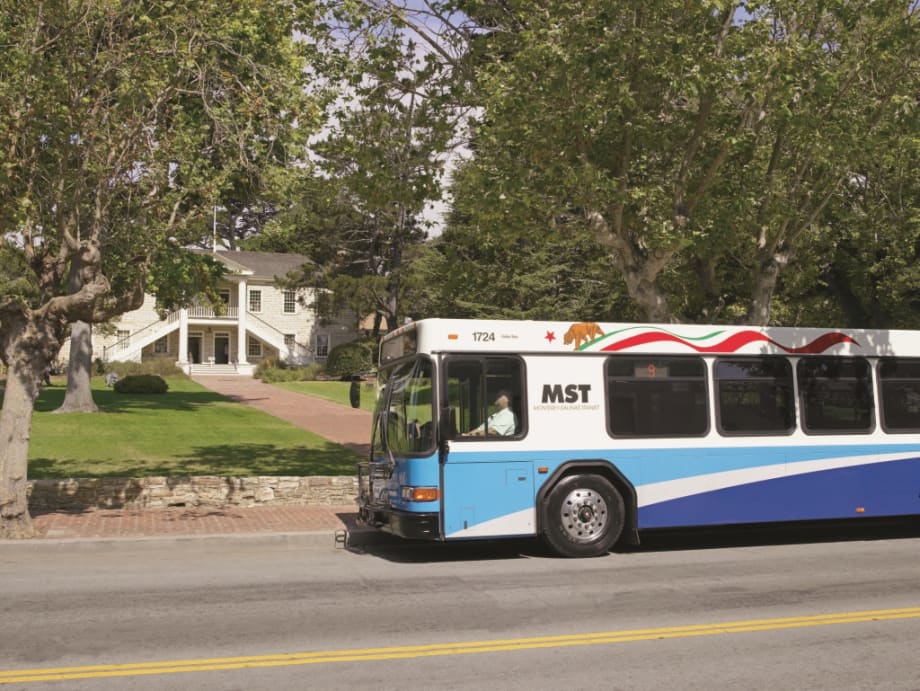
The Presidio military training facility in Monterey, Calif. has an agreement for transit service with Monterey Salinas Transit.
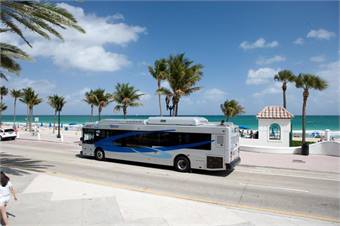
Florida’s Broward County Transit reached agreements with 20 of the 30 cities in the county, which has resulted in streamlining routes.
For many decades, whenever public transit managers or boards talked about their “partners,” it was almost always in reference to their state Department of Transportation and the federal government. After all, those two partners provided the majority of capital funds necessary to purchase new vehicles, build new facilities, and often, helped to pay for the operating costs of the transit system. State and federal agencies continue to be the most prominent partners of most local transit agencies. However, the list of entities that help support local transit systems has exploded over the past 10 years.
As funding from state and federal agencies continues to be more difficult to secure, local transit systems have found a variety of new partners that not only help pay for new hours of service, but can also provide opportunities for transit agencies to restructure service in parts of the community. These partnerships can also result in improving the transit agency’s image and relevance in a community, and result in improved quality of service for passengers.
Military, city agreements
There are many examples of public sector partners. For example, the Presidio military training facility, in Monterey, Calif., has an agreement for transit service with the Monterey-Salinas Transit agency (MTS). This service is intended to meet the transportation needs of students, faculty and staff of the Presidio to commute to work from the communities on the Monterey Peninsula, Salinas and San Jose on weekdays. The service, which includes 12 new or redesigned commuter routes, is fully integrated with existing bus service, operates on fixed schedules and utilizes established bus stops. The military base was becoming overwhelmed with private vehicles, and with security concerns becoming more prominent, the Presidio leaders wanted to find transportation alternatives for those who worked at the base. While the transit service funded through the agreement is intended to primarily address the needs of the personnel on the military training base, it is open to the public as well. The Presidio pays the full hourly costs associated with this service, which amounts to over $1.5 million annually. The new military commuter services are fully paid for by the Federal Transit Benefit/Transportation Incentive Program established by Executive Order 13150 through the U.S. Department of Transportation, which is being used by approximately 1,000 military base personnel.
Florida’s Broward County Transit (BCT) has reached agreements with 20 of the 30 cities in the county, which has resulted in BCT being able to minimize meandering routes that serve condominiums and other facilities that are off the transit system’s grid network. BCT leases (for $1 a year) minibuses to the cities and provides technical assistance in terms of scheduling, while the cities operate the minibuses with their own personnel or through contracts that the cities manage. This has allowed BCT routes to stay on the major roads, providing faster and more direct service throughout the county that helps to build ridership. The cities pro-vide more customized services in their communities that allow people to go to the front door of shopping centers or condominiums. BCT also provides approximately half the operating cost for the city circulators, which ends up being 75% less than the amount it would cost BCT to provide the service itself. All city circulators are required to connect with BCT routes at the nearest transfer center. Hence, the city circulators also serve as feeders to, and distributors from, the county system, thereby increasing mobility and transit ridership and minimizing the first mile-last mile challenge many transit passengers face. The city circulators also help reduce the cost of paratransit service since the circulators can often accommodate the needs of people with disabilities.[PAGEBREAK]
The Presidio military training facility in Monterey, Calif. has an agreement for transit service with Monterey Salinas Transit.
University partnerships
Many transit systems have entered agreements with their local universities to provide unlimited access to college/university students who have prepaid for the service through student fees that they have voted approval of as a student body. For some transit systems in university-dominated cities such as the Gainesville Regional Transit System in Fla. or Go West Transit in Macomb, Ill., the revenue received from the university is larger than any other single source of operating revenue. Less well known are agreements reached between transit agencies and local school boards, who are operating under tight budgets and are open to ways of reducing the expenses associated with yellow school transportation. New York’s Rochester-Genesee Regional Transit Authority reached an agreement with the local school board to provide additional service that met the letter of the law in terms of being regularly scheduled and open to the public, which resulted in an additional $2 million dollars in revenue and reduced the cost of transportation services for the local school board.
Paratransit programs
The Central Contra Costa (Calif.) Transportation Authority (CCCTA) established the Community Connection program, which has allowed more trips to be made throughout the county at a very low cost due to their partnerships with other programs that use volunteers and receive grants and provide additional trips thanks to CCCTA’s assistance with vehicles and training. Between increasing productivity and spreading the load, many more trips can be accommodated at a very modest cost. Not only has this program expanded options for seniors with service tailored expressly for their individual needs, but capacity has been freed up on the CCCTA’s paratransit service (LINK) to serve additional trips that were formerly taken by those now using a partner’s “Community Connection” van. Instead of ridership on LINK growing at a rate of over 3% per year, ridership on LINK stabilized and actually fell in 2007 nearly 1.5% over what it was the previous fiscal year. This allowed 10% more same-day trips to be accommodated, and LINK is able to focus on serving those very frail persons for whom it was designed, with no service denials and within budget. In FY 2008, ridership on LINK grew by 4%, but productivity increased from 1.94 to 2 passengers per hour. Nearly 23% more same-day trips were provided as well.
Transit agencies have also partnered with downtown development authorities, transportation management associations and convention centers, among other public partners. In addition, they have partnered with private sector entities such as shopping malls, business parks, museums, hotels, major employers, associations of businesses, hospitals, and casinos that pay partially or fully for new service.
Joel Volinski, METRO Magazine’s newest contributing blogger, is the director of the National Center for Transit Research at the University of South Florida where he manages the largest university-based transit research program in the country.
More Bus

Report: Transit Bus Manufacturing Supports 34,100 Jobs, $5.1B in GDP
The “Buses Mean Business” report examines the transit bus manufacturing industry’s economic footprint, supply chain, and rising demand for vehicle replacements.
Read More →
Biz Briefs: New Flyer Delivers in Columbus, Houston, Beep and Freebee Merge, and More
In this edition of Biz Briefs, we spotlight the latest developments shaping the future of mobility.
Read More →
People Movement: Dan Dipert Coaches Adds Third-Generation Leader, Keolis Names New Valley Metro VP/GM, and More
In this edition, we also cover recent appointments and announcements at the Wabtec, SilverRide, HNTB, and more, showcasing the individuals helping to shape the future of transportation.
Read More →
New York MTA Plans Largest Bus Fleet Upgrade in More Than a Decade
The agency is seeking manufacturers for 650 new CNG buses to replace aging vehicles, improve reliability, and advance its broader fleet modernization strategy.
Read More →
Building a Flexible Path to Transit Electrification
John Hroncich discusses BAE Systems’ modular and scalable approach, lessons learned from decades of real-world operations, and how agencies can identify electrification strategies that fit their fleets.
Read More →
Bus Tech Talk: Keeping Transit Technicians Ahead of the Technology Curve
LA Metro’s Obed Mejia discusses technician training, evolving maintenance technology, fleet replacement, and strategies for getting the most out of today’s transit fleets.
Read More →
Biz Briefs: RIPTA Unveils New Frontrunners, Clevland RTA Adds New Siemens, and More
In METRO's latest installment, we take a look at recent news from Siemens, Prevost, Dodge, and more partnerships making headlines across the transportation sector.
Read More →
People Movement: Holly Arnold Joins Transdev and More
In this edition, we also cover recent appointments and announcements at Pace, CamTran, MCI, and more, showcasing the individuals helping to shape the future of transportation.
Read More →
The High Cost of Transit Buses: Industry Leaders Look to Procurement Reform
Transit leaders and policymakers examine how standardized bus designs, streamlined procurement, and predictable funding could help agencies stretch budgets and deliver better service.
Read More →
The Business Voice Behind Public Transportation
As chair of APTA’s Business Members Board of Governors, Ray Melleady explains how more than 850 business members are partnering with transit agencies to advance funding, innovation, and industry-wide collaboration.
Read More →