



Open Fare Payment Systems Convenient for Riders, Transit Systems
One of the benefits of letting riders pay fares using a smart card-based bank card is it allows the transit agency get out of the ticket business. However, costs are still a problem due to transaction fees charged by the banks offering them.

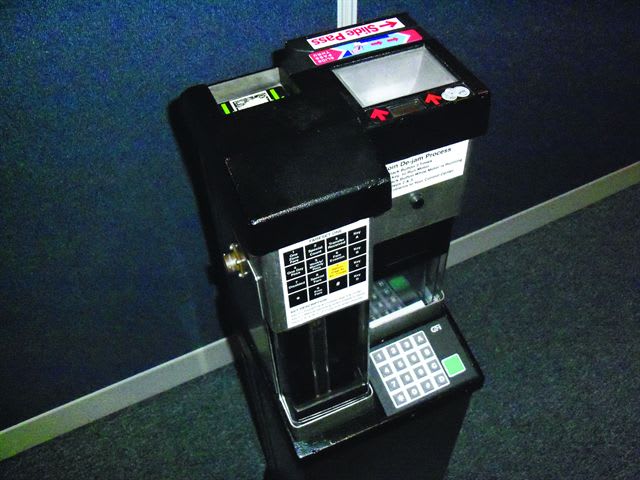
SEPTA opted to refurbish its fare collection boxes, rather than replace them, to save money as it moves toward open payment.
[IMAGE]MET2FareCollection-UTABoxTrain-2.jpg[/IMAGE]For the past three years, the transit industry has been buzzing about open fare payment, a system that lets riders pay fares using a smart card-based bank card, such as a debit or credit card, instead of an agency-issued fare card. Riders simply tap the card on a fare gate or farebox, which reads the card, and the charge for the fare appears on their credit card bill.
New York Metropolitan Transportation Authority (N.Y. MTA) and Salt Lake City-based Utah Transit Authority (UTA) were two of the first agencies to test the system and Chicago Transit Authority (CTA), Washington Metropolitan Area Transit Authority (Metro), Los Angeles County Metropolitan Transportation Authority, Toronto Transit Commission and the London Underground are all looking into the system.
The N.Y. MTA completed two successful long-term open fare payment pilots. The first was in 2006, in conjunction with Citibank, and the second took place from June to November 2010. Riders could use any card with contactless payment capability. The system is not currently in use, but the agency plans to move to it eventually, Aaron Donovan, spokesman, N.Y. MTA, says.
Opening up options
Many transit properties can now consider putting in new fare payment systems. These agencies are trying to decide whether to invest in a traditional closed loop proprietary fare payment technology — the agency buys smart cards and equipment that is able to read the cards; adds its logo, issues, distributes and sells the cards, and figures out how to recharge or add value to them — or ask for bids for open loop systems, says Randy Vanderhoof, executive director, Smart Card Alliance. "We're seeing more and more agencies considering both options," he adds.
Five years ago, not only was a contactless payment infrastructure unavailable, Vanderhoof explains, many riders did not have a smart chip, which provides the capability to use the system in their credit and debit cards. Since then, though, the financial industry has been moving in this direction and, now, transit can benefit from it, with significantly more customers who have this capability. "They can use it on transit, which before this never was really an option," Vanderhoof says.
As a result, agencies are starting to seriously look at the costs of managing an open fare payment system, which include selling cards, collecting cash out of the machines and installing enough automatic vending machines to provide the level of service required to support the fare system. Many see a way to reduce the investment and lower operating costs by allowing customers to use their credit and debit cards, reducing the number of people standing in line at the ticket window, using an automatic vending machine or paying with cash, which has to be collected and processed.
"They can just get to the thing that they're really in business to do: Transport people from one place to the other and get paid for it, by leveraging the technology being issued elsewhere within the commercial payment industry and gaining the same speedy convenience they are looking for with the fare cards that they sell," Vanderhoof says.
Simply offering options besides dollars, coins and passes seems, for some smaller and mid-sized agencies, to be a new development. Many have recently upgraded to closed-loop systems just to offer a more modern approach. "In some cases with smaller agencies, they have very antiquated fare structures," Kim Green, president, GFI Genfare says.
Costs and benefits
The closed loop smart card system has been the long-time predominant mode for fare collection, according to Green. This system puts all the responsibility on transit properties. "The agency has the capital cost of the reader, — which they're always going to have to pay for — but right now the big cost is not that initial capital outlay, it's the ongoing costs," he explains. "They have to buy cards continually, as customers buy new ones and lose them. They have to pay for the administration and handle the customer service associated with the cards."
An open payment system, Green points out, is centered on banks and financial institutions. Many consumers are receiving credit and debit cards that not only have a magnetic stripe but, also, a smart chip inside them, offering the customer more convenience and security. The main banks associated with open fare payment are MasterCard, which offers a PayPass card; Visa's pay Wave and Citibank. Financial institutions see this as a new market for them, especially public transit in larger cities, which supplies the volume of transactions that will make the investment worthwhile. "New York City hauls six million people a day. That's extremely appealing to them," Green says.
The benefit to transit properties is they get out of the ticket business. "At the end of the business day, the banks electronically transfer hundreds of thousands of dollars into the transit authority's bank account. They don't have to do anything, just receive the funds. They don't have to worry about card distribution, customer service and administrative overhead," Green says.
However, the problem is still cost. MasterCard, Visa and the associated banks charge transaction fees. Currently, credit card transaction fees are still greater than the cost of processing cash. "At GFI, we struggled with trying to help customers find new ways of paying fares. It's an evolving field," Green says. "It's a trade-off every financial manager has to make at every transit property: What's the best for customer convenience, what's going to cost the least money, where am I going to make my best return?"
[PAGEBREAK][IMAGE]MET2FareCollection-SEPTA-2.jpg[/IMAGE]Jumping ahead
Some mid-sized agencies are upgrading to the newest systems and adding the open payment functionality, Vanderhoof says. Rather than start the process with antiquated technology that would soon need to be replaced, they are leapfrogging the technology and implementing the open payment standard system up front. In 2009, Salt Lake City-based UTA went straight into open fare payment from mechanical cash fare boxes and visual inspection of paper passes.
Gerry Carpenter, UTA's senior media relations specialist, says that when the agency began planning to upgrade to an electronic system, it became aware of developing contactless technologies and was quickly convinced that the advantages of a contactless approach were significant compared to a traditional magnetic stripe system. UTA conducted an electronic fare collection (EFC) pilot project in 2006 to determine whether the system would benefit the agency and its riders. Working with Vix ERG Transit Systems, UTA installed contactless readers on 41 ski buses that operated daily. The pilot was conducted for the 2006-2007 and 2007-2008 ski seasons.
"The positive results of the pilot program gave UTA the confidence to move toward a full implementation," he explains.
UTA's EFC system is compatible with any contactless smart or bank card, including the Visa payWave, MasterCard PayPass, American Express expresspay, and Discover Network Zip. It can also work with compatible third-party smart cards, such as government, university and corporate ID cards. Additionally, UTA issues its own smart cards directly to customers to be used as transit passes.
Carpenter says that for bank card transactions, the agency's electronic fare system charges a single adult cash fare when the card is tapped. For UTA passes or third-party IDs, the fare system checks the card's unique ID against a database to determine if it has been activated as a valid pass for UTA services. Passes are activated or deactivated by UTA or a third-party partner that UTA has authorized.
UTA launched its EFC system for all of its services, which include more than 500 buses and 35 train platforms on Jan. 2, 2009. Card holders tap their cards or passes on a contactless reader when boarding ("tap on") and tap again when exiting the train or the bus ("tap off"). Carpenter explains that this provides full trip data, showing origins and destinations useful for planning. For bank card users, tapping on and off is also important when riding distance-based services so the system can calculate the correct fare to charge for the distance traveled.
Customers that have transitioned to the new system have embraced the technology, and UTA is benefiting from the new access-to-rider travel data that was previously unavailable.
However, there have been challenges to implementing the contactless technology in a new application. "UTA's technology department has had to overcome the challenges of communicating wirelessly with readers on more than 500 buses that are continually on the road," Carpenter says. The agency also is still in the process of transitioning all of the passes to the electronic system; currently some patrons are still using paper passes. Over the next two years, UTA plans to complete the process of converting all fare products over to the new EFC system, according to Carpenter.
Upgrading to cut costs
Finding themselves short on funds due to high unemployment, which is sinking ridership numbers, and declining funding, many transit systems are choosing to upgrade existing equipment, rather than purchase new fare collection systems. The Southeastern Pennsylvania Transportation Authority (SEPTA) recently completed the first phase of its move to an open fare payment system. While financing has been a challenge, the agency's approach of upgrading its 1,850 fareboxes, rather than replacing them, proved successful. John McGee, chief officer, new payment technologies, SEPTA, says that the agency chose to upgrade its fareboxes in preparation to move to an open payment system.
"We are in the midst of [planning] what we're calling a new payment technology system. It [will] replace our existing fare collection processes system-wide," McGee says. The upgrade, he adds, was the first step in implementing a customer-friendly open payment system on all its buses, trolleys, subways and regional rail lines. "As we design the rollout and implementation of this system, we looked at the components that could be upgraded instead of replaced with new products, as a way of saving scarce resources."
The rebuild and the install project took about nine months, from late 2009 to September 2010.
GFI upgraded the 15-year-old CENTSaBILL registering fareboxes for the agency, modernizing the electronics and wiring, and restoring the equipment to like-new condition. The back-end data system hardware was replaced and software upgraded. "While the [old boxes] had been maintained lovingly by our revenue staff, key components were in bad need of replacement," McGee says. Additionally, the agency was still running a DOS-based software system. "We really needed to move up to at least the beginning of the 21st Century," he adds.
Green explains that, in addition to cost savings, refurbishment decreases operational disruptions and minimizes the need for retraining operators.
The overhaul is in the final software testing stage, and the last upgraded box was put into service a few months ago. "It was quite a money saver for us, because, instead of incurring the expense of $10,000 or $15,000 for each new farebox, we were able to upgrade each at less than half that number — $4,200," McGee says.
Revamping the fareboxes was the first step in SEPTA's open fare implementation. It has not yet awarded the contract for the rest of the system but that is expected to take place in the spring of this year, McGee says.
The next step is financing. Despite receiving 41 letters of endorsement for the project from a wide range of stakeholders, including local elected officials; Amtrak and the SEPTA Citizen Advisory Committee, the agency did not receive the $29.3 million TIGER II grant it applied for, which would have shouldered the majority of the expense of the system. The total new payment technology initiative, which is expected to cost approximately $100 million to install system-wide, was among 22 projects SEPTA was forced to cut from this year's capital budget due to insufficient state funding.
"We are looking at a variety of funding and financing sources to provide the capital for the rest of the project, ranging from capital funding all the way through vendor financing and private financing" McGee says.
In advising other transit agencies, McGee says, "It's not only upgrading the fareboxes, but also taking a look at upgrading other capital-rich resources and see if they still have some useful life. New is not always better."
More Bus
Roman Cornell on ABC Companies’ Evolution and the Future of Passenger Transportation
The company’s CEO discusses carrying forward a third-generation family legacy, ABC’s continued evolution in passenger transportation, support for increasingly complex fleets, and how technology and continued investment could help operators improve uptime.
Read More →
VIA Bus Ridership Grows 10.1% Through August 2026
San Antonio's VIA Metropolitan Transit reported the highest bus ridership growth among major Texas transit systems. Federal Transit Administration data ranked it second among the nation's 50 largest transit systems.
Read More →
LA Metro September Ridership Climbs 3.9%, Led by Rail Growth
The agency recorded more than 27.2 million boardings, with rail ridership increasing 12.4% year over year and the D Line posting the largest gains.
Read More →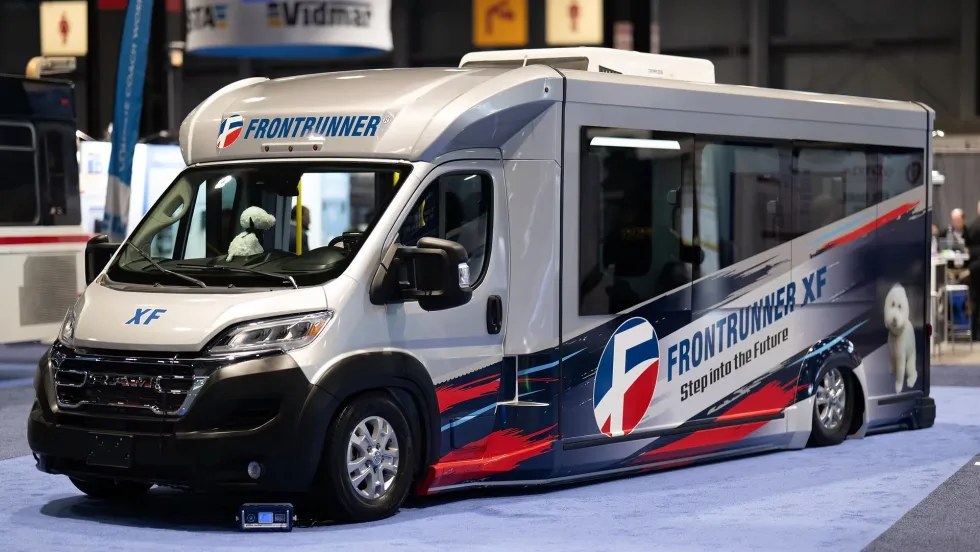
Frontrunner Bus Group Introduces XF Low-Floor Bus with Enhanced Accessibility
The new mid-sized bus features a full flat-floor design, eight-inch curbside step-in height, and zero-entry rear ramp to improve passenger access and operational flexibility.
Read More →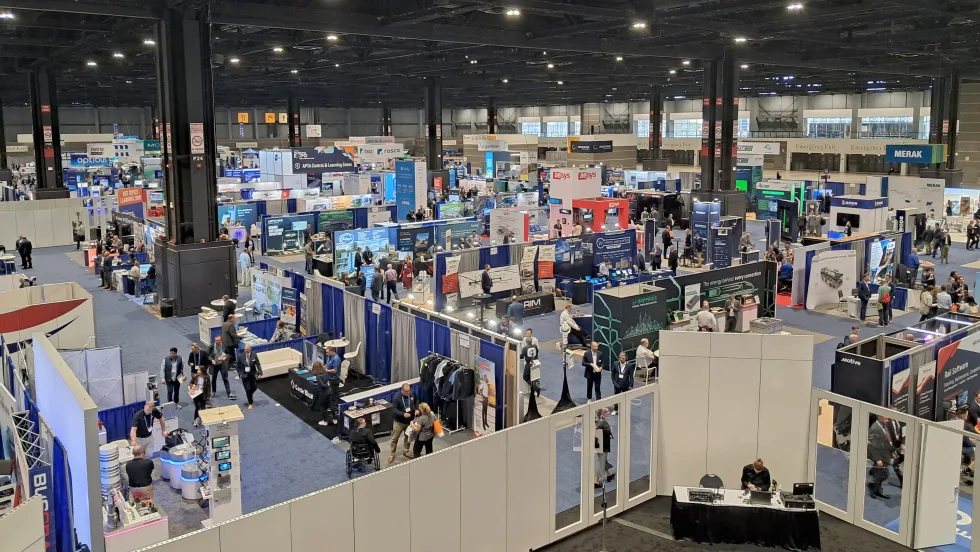
Scenes from APTA TRANSform & EXPO 2026
Transit leaders, manufacturers, and industry professionals gathered in Chicago to explore new technologies, share ideas, and discuss the future of public transportation.
Read More →
More Than a Summer Job: Building the Next Generation of Transit Talent
The Delaware River Port Authority and PATCO have transformed their internship program into a hands-on professional development experience that introduces students to the breadth of transportation careers — and creates a pipeline for future employees.
Read More →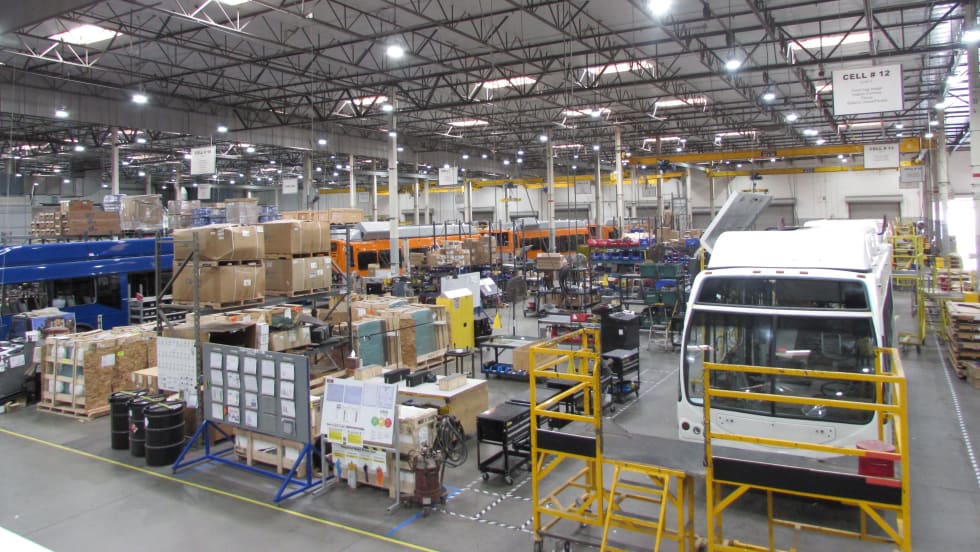
LA Metro Board Awards 220 Battery-Electric Bus Contract to ENC
The contract, which is the largest base award of battery-electric buses by a U.S. transit agency, will be built in Southern California, sustaining good jobs as LA prepares to welcome the world in 2028
Read More →
Public Transit Conference Returning to GFX in 2027, Call for Papers Now Open
The Call for Papers is now open, allowing transit agency professionals and industry experts to help shape the PTC educational program by submitting session ideas for consideration.
Read More →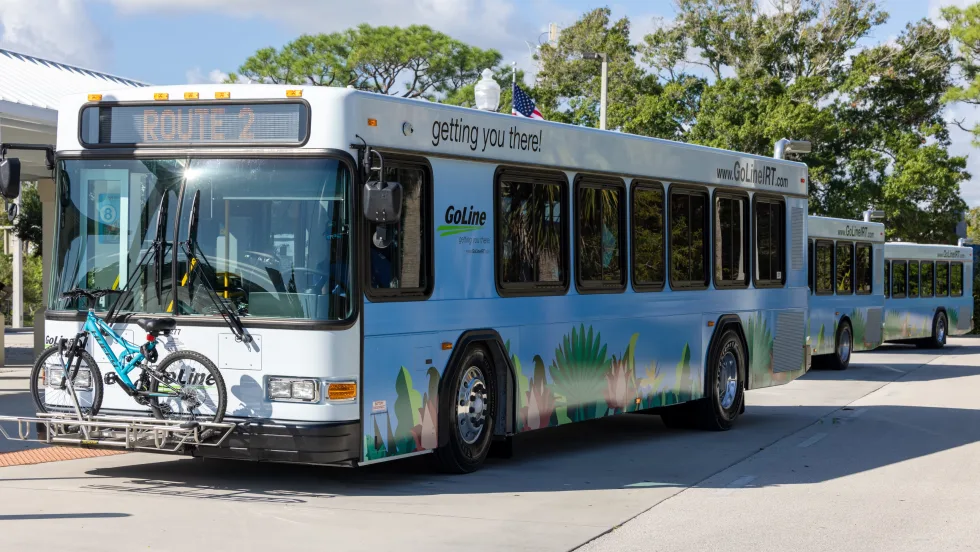
Indian River Transit’s Community-Focused Approach Earns National Recognition
Named APTA’s 2026 Outstanding Public Transportation System in its size category, Florida’s Indian River County transit system continues to grow ridership through fare-free service and a focus on evolving community needs.
Read More →
ENC Lands MATA Contract and More in Biz Briefs
In this edition of Biz Briefs, we spotlight the latest developments shaping the future of mobility.
Read More →