



North Carolina's Metropolitan Transit Commission Concludes Decades of Leadership
To commemorate the occasion, current members of the MTC were presented with a custom painting of the Charlotte Transportation Center in Uptown.

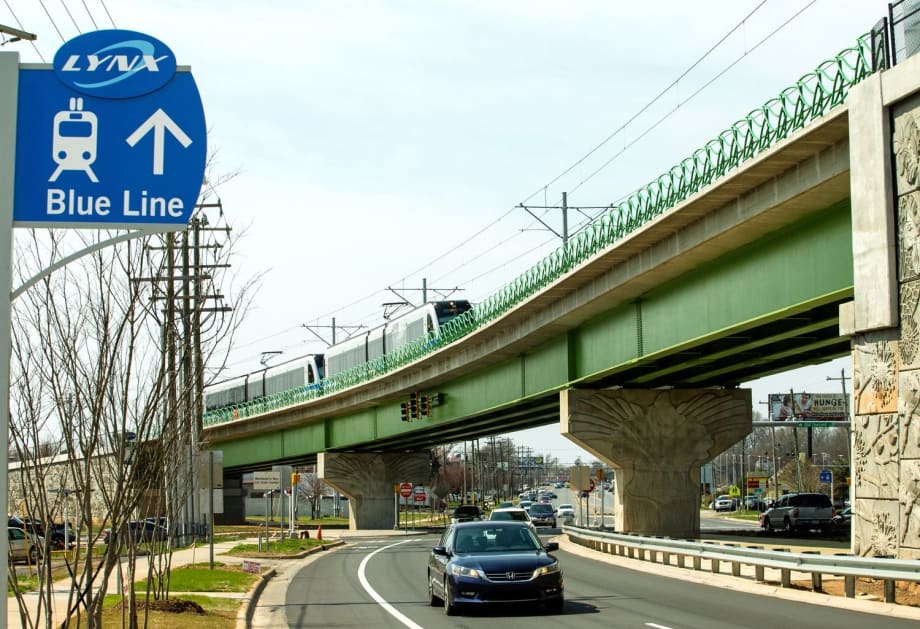
CATS extended its deepest thanks to the MTC for providing decades of “innovative leadership, vision, and thoughtful collaboration,” all of which helped elevate the Greater Charlotte region into a top-tier transit system, officials said.
Photo: CATS
- The Metropolitan Transit Commission (MTC) of Charlotte, North Carolina, held its final meeting as governance transitions to the newly formed Metropolitan Public Transportation Authority (MPTA) on July 1.
- CATS Interim CEO Brent Cagle highlighted the MTC's contributions to the city's economic and cultural development over nearly 30 years, expressing gratitude for their impact on the transit system.
- To honor the MTC's service, members were presented with a custom painting of the Charlotte Transportation Center in Uptown.
*Summarized by AI
Charlotte, North Carolina’s Metropolitan Transit Commission (MTC) conducted its final meeting with the governing body set to officially dissolve on July 1, handing over governance of the Charlotte Area Transit System (CATS) to the newly formed Metropolitan Public Transportation Authority (MPTA).
“For nearly 30 years, the MTC didn’t just plan transit — they built the foundation for our city’s economic and cultural boom,” said CATS Interim CEO Brent Cagle. “As the commission dissolves to hand the baton to the new MPTA, we look back with profound gratitude for their decades of service and ahead with excitement for the transit future they made possible."
To commemorate the occasion, current members of the MTC were presented with a custom painting of the Charlotte Transportation Center in Uptown.
CATS extended its deepest thanks to the MTC for providing decades of “innovative leadership, vision, and thoughtful collaboration,” all of which helped elevate the Greater Charlotte region into a top-tier transit system, officials said.
The MTC’s Legacy
The MTC was formed in 1999 following a voter-approved half-cent sales tax for public transportation.
Under its nearly three decades of guidance, the commission transformed Charlotte from a bus-only city into a multimodal, rail-connected metropolitan region. Key historic milestones include:
- The Creation of CATS (2000): Following its inception, the MTC orchestrated the consolidation of the Charlotte Transit bus system with regional planning bodies. This officially birthed CATS as it operates today, establishing unified, countywide bus service operations and establishing a collaborative governance framework among Charlotte, Mecklenburg County, and its six surrounding suburban towns.
- Adopting the 2030 Transit Corridor System Plan (2006): The MTC adopted a visionary master plan that laid the literal tracks for Charlotte's future. It was grounded in an integrated land use and transit vision, outlining rapid transit goals for five major growth corridors: the Blue Line (South/Northeast), the Gold Line (Streetcar), the Red Line (North), the Silver Line (Southeast/West), and an expanded bus rapid transit network.
- Launching the LYNX Blue Line (2007): The MTC oversaw the completion of the initial 9.6-mile leg of the Blue Line light rail line, stretching from I-485/South Boulevard to Uptown. Hailed as the first major rapid rail service of its kind in North Carolina, it triggered an unprecedented, multi-billion-dollar explosion of transit-oriented development that completely reshaped neighborhoods like South End.
- Opening the Blue Line Extension (2018): The MTC successfully managed funding, planning, and the opening of the $1.1 billion Extension. This added 9.3 miles of track, seamlessly connecting Uptown Charlotte to the University of North Carolina at Charlotte (UNC Charlotte) and providing high-capacity transit access to high-growth areas such as NoDa and University City.
- Implementation of the CityLYNX Gold Line Streetcar (2015 & 2021): The MTC expanded urban mobility options by implementing Charlotte's modern streetcar system in two phases. Phase 1 (2015) connected the Uptown transportation center to the historic Cherry and First Ward neighborhoods, while Phase 2 (2021) extended the line to a full four-mile route, linking French Street near Johnson C. Smith University in the west to Sunnyside Avenue in Plaza Midwood to the east.
- Mecklenburg County’s First Microtransit Service (May 2022): The MTC officially adopted the Better Bus Plan, which introduced microtransit as a core initiative to address "first-mile, last-mile" connection challenges and to convert less-used fixed routes into flexible, on-demand service.
- Securing the Norfolk Southern O-Line for the Red Line (2024): In a historic milestone championed by Charlotte city leaders, the City of Charlotte officially acquired the 22-mile Norfolk Southern "O-Line" rail corridor in September 2024. This monumental purchase finally unlocked the right-of-way needed to advance the long-awaited Red Line commuter rail.
- Approval of 2055 Transit System Plan (May 2025): The 2055 Transit System Plan, adopted by the MTC, serves as a long-range blueprint for expanding and modernizing transit across the greater Charlotte region. The plan balances near-term bus service improvements with a long-term, phased buildout of rapid transit rail corridors. Overall, it plans for a 50% increase in bus service and 43 additional miles of rail.
Quick Answers
The Metropolitan Transit Commission is dissolving on July 1, with its responsibilities being transferred to the new Metropolitan Public Transportation Authority (MPTA).
*Summarized by AI
More Management

7 Ways to Build a Better Transit Internship
Lessons from DRPA/PATCO’s approach to creating a meaningful internship experience—and developing the next generation of transportation professionals.
Read More →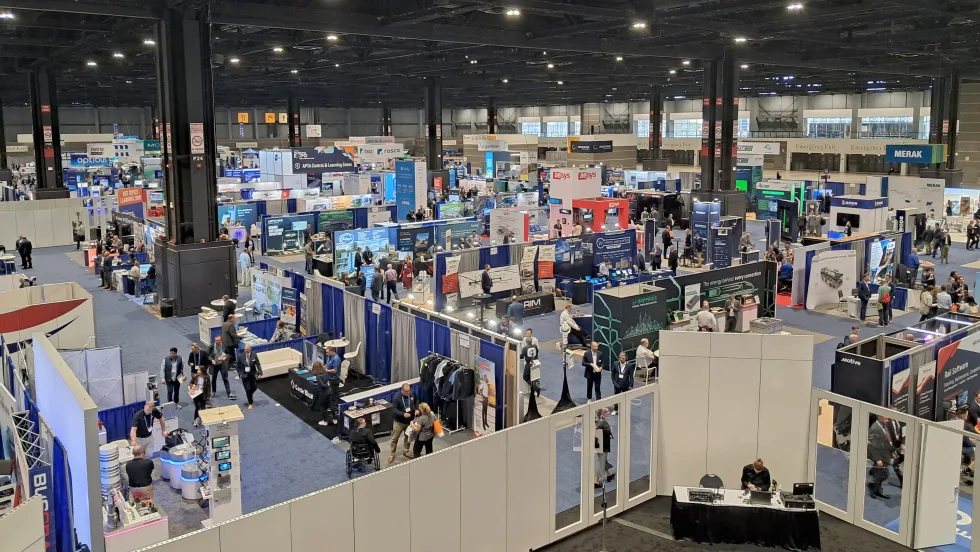
Scenes from APTA TRANSform & EXPO 2026
Transit leaders, manufacturers, and industry professionals gathered in Chicago to explore new technologies, share ideas, and discuss the future of public transportation.
Read More →
Building Stronger Leaders, More Resilient Transit Teams
Dr. Carol Parker Walsh discusses leadership development, employee retention, workplace culture, and preparing transit’s workforce for AI and automation.
Read More →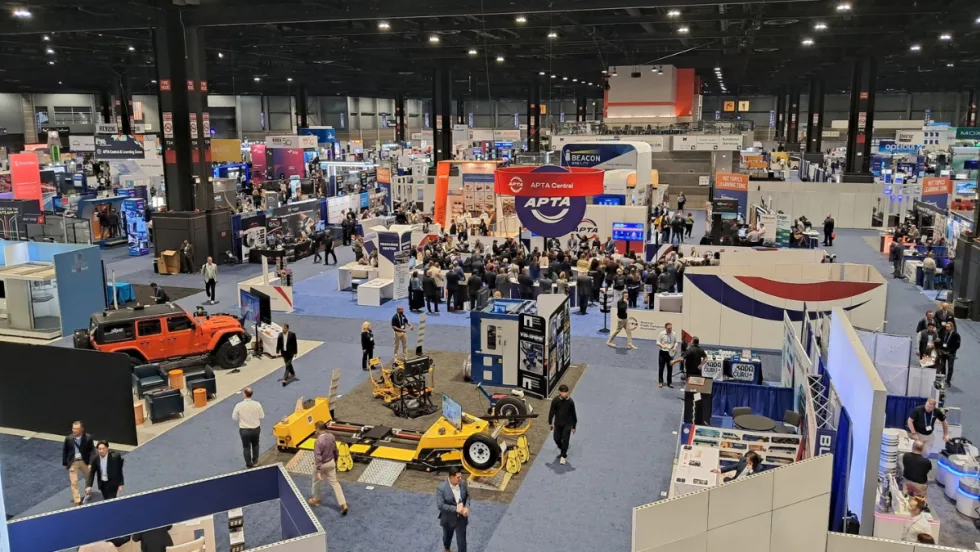
APTA 2026 TRANSform & EXPO Kicks Off in Chicago
After 45 years, APTA returns to Chicago with a focus on next-generation fleets, AI, connected transit networks, and the funding strategies shaping public transportation’s future.
Read More →
New York MTA Warns Federal Tariffs Could Add $1 Billion to Rolling Stock Costs
The agency said tariffs on specialized imported components could reduce the purchasing power of its $23 billion investment in new subway cars, railcars, and buses.
Read More →
From the Show Floor: What Happened at APTA TRANSform & EXPO 2026
See the latest product launches, partnerships, technology updates, and transit industry announcements from APTA TRANSform & EXPO in Chicago.
Read More →
How Valley Metro Is Balancing Transit Growth With the Rider Experience
The APTA award-winning agency is pairing rapid system expansion with investments in workforce, safety, technology, and the fundamentals of transit service.
Read More →
Bus Tech Talk: Keeping Transit Technicians Ahead of the Technology Curve
In this episode of Bus Tech Talk, Complete Coach Works’ Business Development Manager Mark Hollenbeck and METRO’s Executive Editor Alex Roman sit down with Obed Mejia, Senior Technical Trainer for Bus Maintenance, at LA Metro to discuss how rapidly evolving bus technology is changing the maintenance shop — and the skills technicians need to keep pace.
Read More →
Michael Schneider Joins Paslay Group to Expand Transportation Practice
The longtime transportation executive will help Paslay Group grow its advisory and program management work across transit, highway, and other infrastructure sectors.
Read More →
People Movement: Connectpoint Expands Leadership Team, Stadler Names New Group CEO, and More
In this edition, we also spotlight recent personnel moves at Burns, UZURV, and more, highlighting the people taking on new roles across the transportation industry.
Read More →