



Tech Talk: How to Make Public Transportation Safer and Healthier
Planning Optimal Bus Replacement Lifecycles
Determining optimal replacement lifecycles and preventative maintenance can improve transit fleets' uptimes, as well as help better serve their communities.
by Rachael Plant
November 4, 2022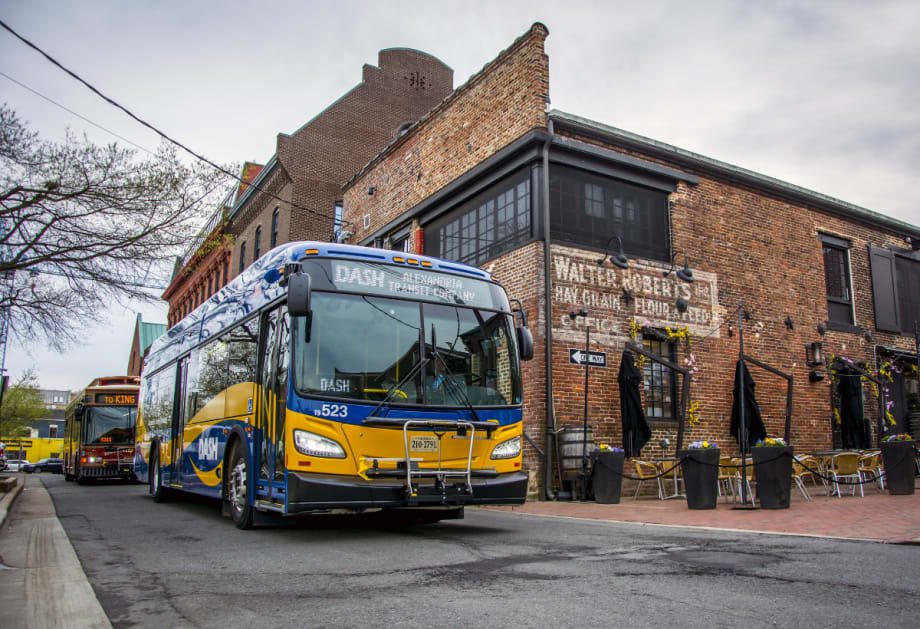
Significant investments can prolong a bus’s useful life beyond the 12-year mark.
Credit:
Alexandria Transit Company (DASH)
5 min to read
Uptime is crucial for transit fleets and the communities they serve. If a bus shows up late — or doesn’t show up at all — it negatively impacts those relying on it to get to medical appointments, jobs, or school. It also reduces the transit company’s credibility and value to customers.
While preventive maintenance (PM) plays a leading role in improving fleet uptime, recycling buses past their useful life is also a major component.
Running a bus past its optimal replacement window can increase service spending and unplanned downtime, as well as tank brand reputation.
What to Consider When Determining Replacement Cycles
Regulations dictate a lot of maintenance schedules and replacement criteria for transit fleets, but that doesn’t always mean assets are going to perform to those expectations.
Josh Baker, GM/CEO at Alexandria Transit Co. (DASH), in Virginia, is all too familiar with regulatory compliance.
“In the public transit arena, particularly in the heavy-duty bus area, you’ve got sort of the Federal Transit Administration’s (FTA) lifecycle plan for assets. Generally, these are duty-rated at 12 years or 500,000 miles,” says Baker.
He adds that before implementing the company’s current fleet management software (FMS), he thinks the organization “relied heavily on just those metrics.”
The problem with relying solely on a generic replacement plan is that it doesn't allow for consideration of maintenance and repair trends, recurring asset issues, or increased fuel consumption.
Another thing to consider is how recently you’ve replaced major parts, like the motor or transmission. Such significant investments can prolong a bus’s useful life beyond the 12-year mark.
“A ‘12-year bus’ probably has more than 12 years of life in it. Understanding what to expect out of that asset is important,” says Baker.
When determining optimal replacement lifecycles, Baker says to consider three things.
“Has it reached what is considered the useful life allowance under the guidelines of the manufacturer, the FTA, Altoona, etc.," he says. "Another thing, for us, is looking at what we’ve invested into it relative to its lifecycle. So for example, it’s not uncommon to repower a bus. It’s not uncommon for it to need a new motor at some point in its lifetime. If it gets a new motor a year before its end of life, well, why are we getting rid of that?”
Instead, Baker recommends focusing on buses that still have the original motor after 12 years.
“For us, it is important and useful to consider [which buses] are the best of the bunch and which are the worst of the bunch,” he explains.
The third thing, explains Baker, is considering the team’s feedback and concerns.
“If you bought 15 Toyota Camrys all at the same time, from the same dealership, on the same day, and ran them for 12 years, you would think that they’d all end up the same. But they don’t, and you end up with people who drive them saying, ‘Oh, I like car number seven, but number three is awful; it drives terribly. It’s just always been a problem.’ You have that happen with buses. So there is a perspective that the maintenance and operations teams have.”
Drivers and technicians are the first lines of defense when it comes to surfacing asset issues and evaluating asset-driven productivity.
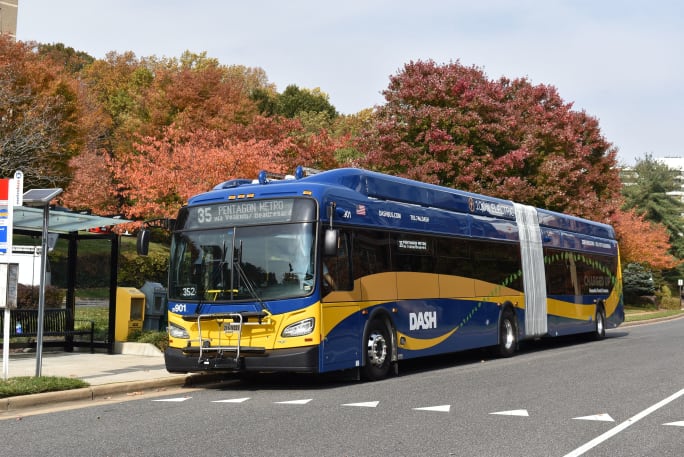
It is important and useful to consider which buses are the best of the bunch and which are the worst of the bunch.
Credit:
Alexandria Transit Company (DASH)
A Key Consideration — Budget
Another thing to consider — and this is usually top-of-mind — is budget. Where is it coming from, and what does procurement look like within budgetary allowances?
“There’s a lot of [federal funding] that comes to this region, but it largely goes to the larger transit operators [like the D.C. Metro system]. The systems [like] DASH, Arlington, Va.'s ART; and Fairfax County, Md., are all sort of smaller feeder systems that are serving local communities and generally not receiving federal funds,” explains Baker.
“I say all this in the context that we consider federal guidelines, and we’re operating under FMCSA guidelines, but we’re not always receiving federal funding," he adds. "Where we’re working locally, we’re having to afford a lot of the assets ourselves through local dollars.”
This is something many transit fleets are facing, which has a strong sway on asset procurement. Creating PM schedules in line with regulations, but specific to your fleet’s demands, can help extend asset lifecycles and optimize replacement windows to ensure maximum uptime with minimal expense.
Leverage Fleet Solutions for PM Scheduling and Adherence
PM compliance is hugely important for regulatory reasons, but proper PM also increases asset lifecycles and reduces downtime.
“One of the things we always struggled with before [FMS] was managing how compliant we were with [PM]. We were, at one point, doing a time-based PM program,” says Baker.
“It was cumbersome and, candidly, the team was not able to sustain it.” Not only was this process unsustainable for technicians, it also caused delays when high-use assets needed service.
“We were seeing buses that were being used heavily throughout the month be late in their PM, where buses that had been sitting around — that didn’t need to come in at all — were being seen by the technicians,” adds Baker.
The resolution for this unbalanced maintenance schedule was switching to a mileage-based system and using FMS for service reminders.
“We worked very hard to get ourselves caught back up [on PM]. When we were looking at dashboards, we were getting an on-time service compliance [from our FMS], early on, of sometimes as low as 50%. That was alarming, and it was indicative of logistical problems in getting the vehicles in for their service,” Baker explains, adding that making these changes brought the fleet’s maintenance compliance up to 99% in the last 30 days and 86% all time.
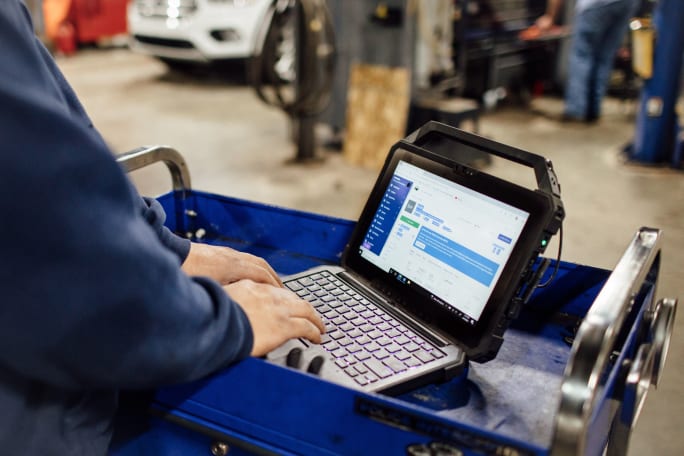
Fleet management software can help manage repair trends, recurring asset issues, or increased fuel consumption.
Credit:
Alexandria Transit Company (DASH)
When it comes to PM, meeting compliance can be easier said than done.
“Often, [PM processes] become overly complicated and something that’s relying too heavily on individual staff to maintain,” says Baker. “You need something where you’ve got metrics that are coming in, and vehicles [are] getting flagged for reminders, and [you can operate] within the system to then bring them in for service.”
Integrated fleet management systems, like the one DASH uses, allows transit fleets to hone in on productivity, downtime, service, cost of ownership, and replacement metrics.
FMS streamlines service through automated reminders and workflows, issue and DTC fault alerts, and quick, easy communication within specific tasks. This also allows for more strict PM compliance.
On top of that, all service-related data is collected and aggregated into easy-to-read reports that help you analyze exactly what’s going on with the health and productivity of your fleet.
About the Author: Rachael Plant is a content marketing specialist for Fleetio, a fleet management software company.
Subscribe to Our Newsletter
More Technology

From Hardware to Digital Partner: Luminator Charts Its Next Chapter
CEO Magnus Friberg discusses Luminator’s shift toward becoming a digital partner, the growing importance of software and interoperability, and how AI can help agencies improve operations and passenger experience.
Read More →
Beyond the Checklist: A Structured Approach to Transit Maintenance
Reliability-Centered Maintenance helps transit agencies move beyond routine checklists to focus limited resources on the assets and failures that have the greatest impact on safety, reliability, and service.
Read More →
NJ TRANSIT Advances Bus Technology Upgrades Across Statewide Fleet
More than 1,500 buses now feature upgraded technology designed to improve arrival predictions and provide free Wi-Fi, with deployment expected to reach nearly 2,000 buses by the end of 2026.
Read More →

Building a Flexible Path to Transit Electrification
John Hroncich discusses BAE Systems’ modular and scalable approach, lessons learned from decades of real-world operations, and how agencies can identify electrification strategies that fit their fleets.
Read More →
Biz Briefs: Alstom Lands Canadian Contract, LYT to Supply California TSP, and More
In METRO's latest installment, we take a look at recent news from Complete Coach Works, Beep, FlixBus, and more partnerships making headlines across the transportation sector.
Read More →
Sponsored•September 8, 2026
From Legacy Silos to Conversational Intelligence
What if transit leaders could ask any operational question and get a trusted answer in seconds? Conversational AI is transforming how agencies use their data.
Read More →
USDOT Announces Rail Vehicle Replacement Grants, Chattanooga AV Shuttle Funding
More than $191 million in federal funding will help three transit agencies replace aging rail vehicles and support a new autonomous shuttle service in Chattanooga.
Read More →
Bus Tech Talk: Keeping Transit Technicians Ahead of the Technology Curve
LA Metro’s Obed Mejia discusses technician training, evolving maintenance technology, fleet replacement, and strategies for getting the most out of today’s transit fleets.
Read More →
Biz Briefs: RIPTA Unveils New Frontrunners, Clevland RTA Adds New Siemens, and More
In METRO's latest installment, we take a look at recent news from Siemens, Prevost, Dodge, and more partnerships making headlines across the transportation sector.
Read More →
Why Simulating Pedestrian Movement Has Become Essential for Modern Rail Stations
Pedestrian microsimulation is helping rail planners identify bottlenecks, test station designs, and prepare complex transit hubs for growing passenger volumes.
Read More →