



Portugese rail projects begin service, continue construction
Lisbon and Oporto invest in metro extensions.

Portugal’s two largest cities, Lisbon and Oporto, are among a prominent group of new sections of public transport opening this summer across the world. In Lisbon, extensions opened to both the Blue and Yellow Line metros, and a new section of cross-city heavy rail infrastructure began service. Access and travel to and through Oporto is being transformed by the introduction of a $612 million, 70-station, modern rail-based system. The key five-station, 2.5-mile section between Trinidade and Estadio do Dragao, under the core of the city, much of it a World Heritage site, was opened in June. In both cities, more investments are underway. Priority was given to the projects largely due to Portugal’s hosting of the 2004 European Football Championships held mid-June through July. The Oporto scheme integrates new tunneled sections with street running and upgraded suburban heavy rail lines to complete a single network serving the city and its satellite towns and districts. The majority of the new elements, which include 10 underground and 27 aboveground stations, will be open by 2005. More than 60 million passenger journeys a year are predicted. Each new section opened so far has attracted higher numbers than expected. A majority of the funding for the rail project came from the European Investment Bank, and additional monies were made available through cohesion funds offered to Portugal for a period after it joined the European Union in the 1990s.
More Management

Public Transit Conference Returning to GFX in 2027, Call for Papers Now Open
The Call for Papers is now open, allowing transit agency professionals and industry experts to help shape the PTC educational program by submitting session ideas for consideration.
Read More →
Indian River Transit’s Community-Focused Approach Earns National Recognition
Named APTA’s 2026 Outstanding Public Transportation System in its size category, Florida’s Indian River County transit system continues to grow ridership through fare-free service and a focus on evolving community needs.
Read More →
ENC Lands MATA Contract and More in Biz Briefs
In this edition of Biz Briefs, we spotlight the latest developments shaping the future of mobility.
Read More →

From Surviving to Thriving: Building Stronger Transportation Organizations
Bus Business Consultants founder Brian Dickson shares lessons on leadership, organizational health, and creating options for long-term success in a changing transportation industry.
Read More →
Everett Transit, Community Transit Outline Consolidation Agreement
The proposed agreement calls for a 50% increase in bus service in Everett, a new microtransit zone, continued paratransit service, and the transfer of Everett Transit operations to Community Transit.
Read More →
Strada360’s Steve Lassey on Turning Transit Data Into Better Decisions
From breaking down data silos to preparing for AI, Strada360 CEO Steve Lassey discusses how transit agencies can use technology to improve operations, customer information, and long-term decision-making.
Read More →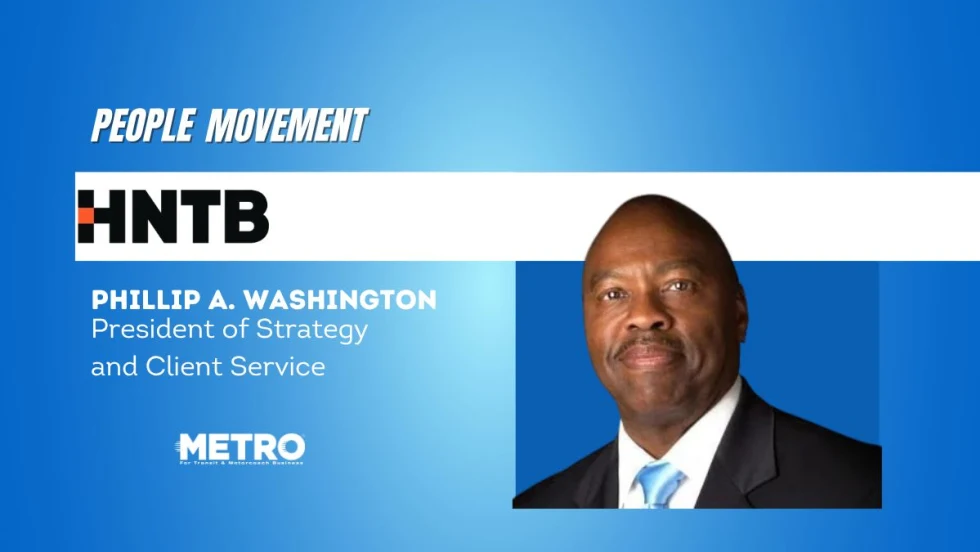
People Movement: Phil Washington Joins HNTB, Denver RTD Launches CEO Search, and More
In this edition, we also spotlight recent personnel moves at STV, the Eno Center for Transportation, and more, highlighting the people taking on new roles across the transportation industry.
Read More →
SEPTA Details Accelerate Vision for Transit System
The plan outlines investments in trolley modernization, new Metro and Regional Rail vehicles, accessible stations, and more frequent bus and rail service.
Read More →
FTA Ends Direct Oversight of MBTA Safety Actions
The federal agency closed its remaining special directive to the Massachusetts Department of Public Utilities following a safety review that began in 2022.
Read More →
Report: Transit Bus Manufacturing Supports 34,100 Jobs, $5.1B in GDP
The “Buses Mean Business” report examines the transit bus manufacturing industry’s economic footprint, supply chain, and rising demand for vehicle replacements.
Read More →