



Rail agencies adopt FRA's system for reporting close calls
Close calls are safety-related issues or concerns, which could be anything from a passenger car door that opened on the wrong side of a train to a distracted conductor who was almost struck by a car being coupled in a rail yard.
Amtrak Russ

Amtrak Russ
Many rail agencies are beginning to voluntarily implement the Federal Railroad Administration’s (FRA) Confidential Close Call Reporting System (C3RS). The program allows employees on any railroad to report “close calls” anonymously without fearing retribution.
Close calls are safety-related issues or concerns, which could be anything from a passenger car door that opened on the wrong side of a train to a distracted conductor who was almost struck by a car being coupled in a rail yard.
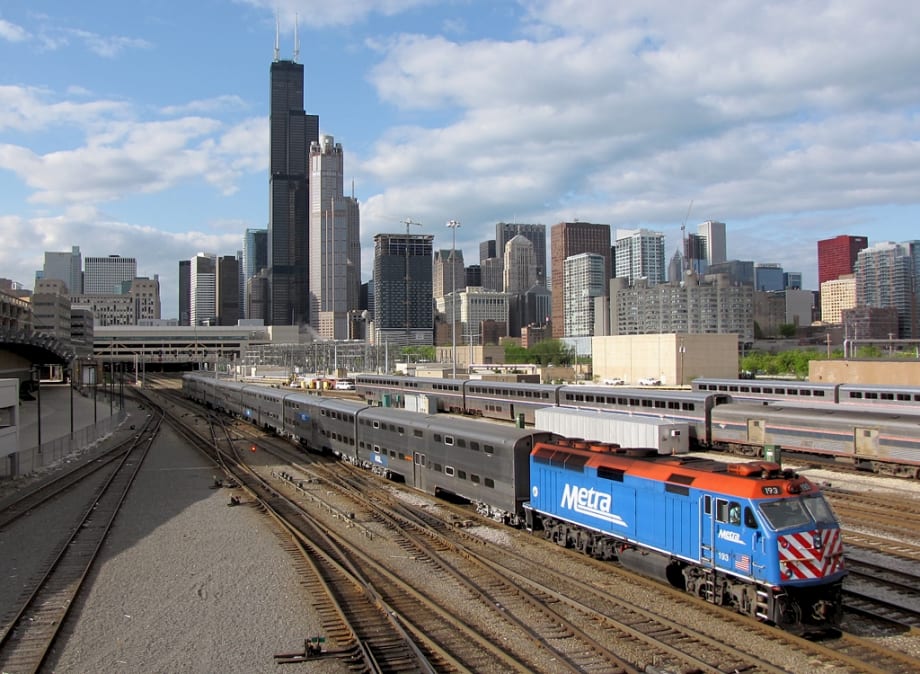
“These close calls include things we wouldn’t necessarily know about if crew never reported it to management,” said Hilary Konczal, director, safety, for Chicago’s Metra commuter rail system. Metra plans to kick off its C3RS initiative mid-July.
To ensure confidentiality, all reports are handled by an impartial, independent third-party: the National Aeronautics and Space Administration, or NASA. Rail employees have the option of sending an email report, mailing in a hard copy or submitting through an online portal. NASA then collects the data and gives each participating agency just the pertinent information reported by its employees.
FRA and participating agencies see C3RS as a chance to prevent accidents before they happen. After several years of planning and research, the FRA originally launched C3RS in 2007 as a way of learning more about accident precursors and to improve industry-wide safety culture. It was modeled after a similar program in the airline industry, according to an FRA spokesman.
The C3RS pilot program’s midterm report found that there was a 69% decrease in human factor-caused accidents at rail yards that implemented the program. The report also concluded that C3RS improves labor-management relationship and employee engagement.
Metra has set up peer review teams made up of managers and labor representatives to assess the NASA-generated reports together. They can discuss implementing new procedures or rules or creating targeted awareness campaigns.
“Communication is the key to training your brain,” said Konczal. “We want to address repetitive adverse situations by modifying behavior for everyone’s safety. Any time you put preventative measures in place, it ultimately brings more safety to employees and passengers alike.”
But the C3RS program strives to bring awareness to the greater rail industry as well, urging agencies to enhance the way they might look at a potential issue.
Justin Vonashek, chief safety and security officer of Massachusetts’ Keolis Commuter Services, said: “[C3RS] serves as an early warning system that focuses on programs instead of people. The system also provides incentives to learn from errors rather than try to conceal them, and seeks to target the root cause of an issue, not the symptoms.”
C3RS was created to complement existing safety programs. This year, Keolis Commuter Services implemented a Safety Excellence Plan, which contains several initiatives designed to improve overall safety culture, that will roll out during the year. C3RS is an integral part of the plan and will launch in August.
Both Keolis Commuter Services and Metra are asking for the support of union leaders to help carry out the program smoothly. “Unions have bought into this program and it’s a win-win for everyone,” Konczal said. “They are excited about it and are even assisting with the marketing and training.”
FRA’s Office of Railroad Safety is primarily responsible for the implementation of C3RS. It receives support from the U.S. Department of Transportation’s Volpe Center, which partners with public and private organizations to assess the needs of a given transportation community. A C3RS Implementation Team works with stakeholders to provide training and the necessary tools to implement and maintain a successful program.
According to FRA officials, any railroad, regardless of size, is eligible to participate in C3RS.
More Rail
Amtrak, CN Reach Agreements to Strengthen Passenger Rail Service, Safety
The agreement resolves a more than decade-long proceeding before the Surface Transportation Board concerning the terms and conditions for Amtrak services, such as the City of New Orleans, Illini/Saluki, and Wolverine.
Read More →
New York MTA Advances Final Contract for Second Avenue Subway Expansion
Contract Four is the largest in the Second Avenue Subway Phase 2 project and includes construction of station infrastructure, tracks, and signals for the subway expansion, MTA officials said. Work on Contract Four will begin in 2027.
Read More →
San Diego MTS Breaks Monthly Trolley Ridership Record
Agency officials said July’s ridership indicates MTS’s continued recovery from the pandemic.
Read More →
Report Examines NJ TRANSIT Reliability, Funding Challenges
The Garden State Initiative analysis examines the roles of Amtrak infrastructure, fleet management, and agency operations while recommending a more performance-based approach to improving reliability.
Read More →
Stadler, CapMetro Sign Long-Term Rail Fleet Support Agreement
Beginning in 2027, Stadler will provide on-site technical expertise, spare parts support, training, and obsolescence management to help extend the reliability and longevity of CapMetro’s GTW fleet.
Read More →
Biz Briefs: Alstom Lands Canadian Contract, LYT to Supply California TSP, and More
In METRO's latest installment, we take a look at recent news from Complete Coach Works, Beep, FlixBus, and more partnerships making headlines across the transportation sector.
Read More →
CATS Gold Line Marks 5 Years of Service, 2.8M Passenger Trips
With a six-mile expansion planned, the Charlotte streetcar is positioned to connect more neighborhoods and major transit hubs across the region.
Read More →
Why Simulating Pedestrian Movement Has Become Essential for Modern Rail Stations
Pedestrian microsimulation is helping rail planners identify bottlenecks, test station designs, and prepare complex transit hubs for growing passenger volumes.
Read More →
Amtrak Begins Major Construction at New York’s Sunnyside Yard
The new maintenance facility will support Amtrak’s Airo trainsets while improving maintenance efficiency and turnaround times in New York.
Read More →
Chicago Leaders Unveil Plans for O’Hare Airport Express Train
The privately developed project would offer a 15-minute trip between downtown and O’Hare’s Terminal 2, with trains operating every 15 minutes on a dedicated track. The service would use battery-electric trains and three existing freight rail rights-of-way.
Read More →