



Tech Talk: Safe Fleet’s New System Aims to Clear Lanes, Improve Ridership
RTLS Is Changing Transit Yard Management for The Better
Real-time Location Systems are used to track the precise locations of any vital assets within a working environment.
by Steven Manifold
March 4, 2023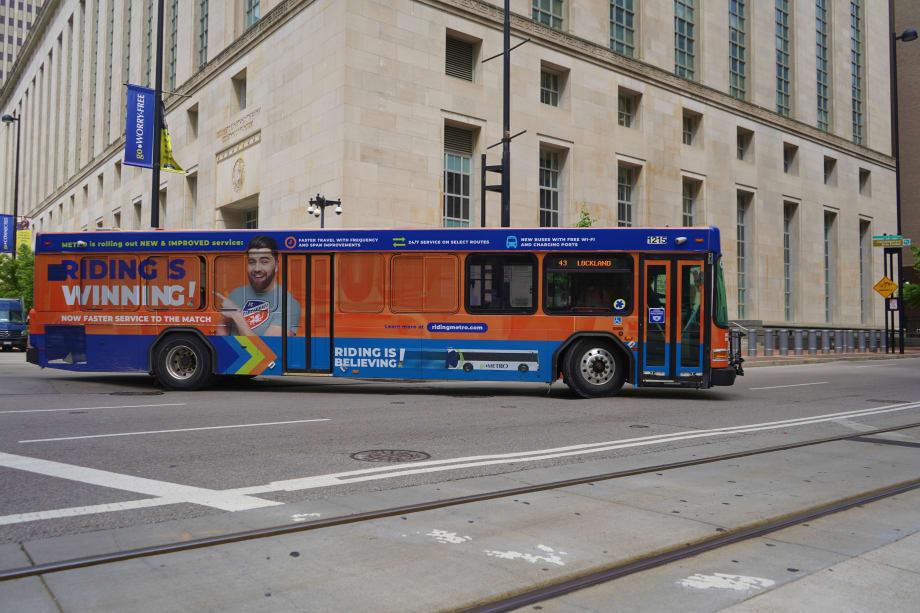
The Southwest Ohio Regional Transit Authority is the public transport agency serving Cincinnati.
Photo: SORTA
5 min to read
There is a certain inevitability to the rise of Real-time Location Systems (RTLS).
While they have existed in certain forms since the 1970s, they really started to take off in 2017 as IoT devices began to proliferate in the industrial sector. Now, due to the pressures facing many mass transit systems, and the increasing complexity of those systems, many transport hubs have begun to see the benefits of RTLS and the Industry 4.0 revolution.
But how do these systems work and what are the exact benefits?
RTLS, A Quick Explanation
Real-time Location Systems are used to track the precise locations of any vital assets within a working environment. By tagging and tracking assets, including vehicles, machinery, and even people, one can create a digital twin of that environment, gaining better oversight of all activities. Using AI and traditional analysis methods, one can prevent system bottlenecks, locate lost items (i.e., vehicles), and pursue “optimal efficiency.”
Due to the system’s ability to report in real-time, assess thousands of data points at any given time, and visualize its data in a simplified fashion, RTLS can optimize complex transit hub activities in a way that would otherwise be impossible. The days of physically having to walk through a site, and checking vehicles are parked correctly, are gone. There are no more human errors due to clipboard and paper checks. Drivers can be alerted to changes in their schedules automatically. And, it is instant.
How RTLS Works
To use an RTLS for transit yard management, one usually requires the help of a company specialized in installing RTLS systems — which will usually have access to the appropriate hardware and software. Usually, the RTLS company will begin by scanning the site(s) in question and creating a virtual map of the space. They will then install sensors in strategic locations around the site. Once the sensors are set up correctly, the vital assets can be tagged with a variety of tags, depending on the types of assets and whether they operate outdoors or indoors.

View of a UWB sensor in a bus depot.
Photo: Ubisense
The interaction between the tags and sensors will allow specialized software (either hosted on-site or in the cloud) to process and visualize real-time location data for the tagged assets. This software can often be customized to the client’s needs, displaying exactly what they need to see and driving specific insights and alerts.
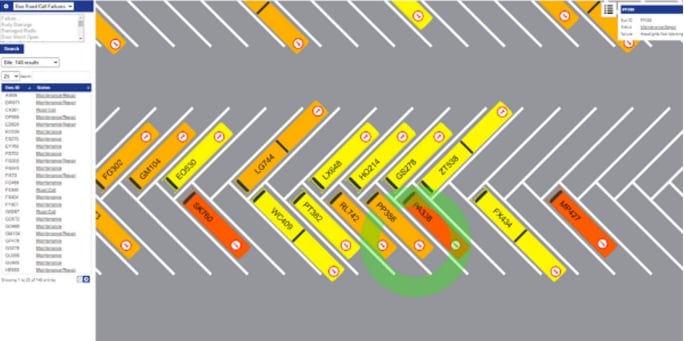
View of a simple transit hub interface.
Photo: Ubisense
What RTLS is Doing for Transit Hubs
RTLS has already embedded itself in many different transit hubs around the world, particularly in coach and bus depots. By tracking the real-time location of vehicles across indoor and outdoor spaces, one can eliminate wasted search time and automate many time-consuming processes.
The barriers that control entry and exit to a location can be automated, opening when correctly tagged vehicles or personnel come within a defined proximity. Drivers can then be guided to parking spaces, chosen by the tailored software to place them in the best possible position for maintenance and dispatch tasks, reducing the need for unnecessary shuffling. Vehicles in need of maintenance can be linked to service schedules and tracked accordingly, their icons changing color as they move through the maintenance process. When ready, they can then be dispatched with the correctly assigned routes.
These are just some of the ways an RTLS can be utilized, and individual transit hubs will find further uses for RTLS. For example, many will use their RTLS to help with worker safety hazards, even having them send social distancing and contact tracing alerts. You can see some recent case studies of transit businesses with RTLS systems here: Transit Yard Management.
Choosing an RTLS system
There are a great variety of RTLS businesses in operation, and they all use different technologies and are suited to different environments. While scanning barcodes and passive RFID tags can technically constitute a basic RTLS system, some of the more common RTLS technologies are listed below:
UWB RTLS
UWB is one of the newer but more versatile RTLS technologies. UWB (Ultra-wideband) uses specialized radio signals that can provide centimeter-level accuracy and don’t suffer from interference, like many other positioning technologies. Their accuracy and reliability have made them the technology of choice for many transit hubs, but not all UWB RTLS systems are of the same quality. It is crucial to ensure that a UWB system is truly accurate and can also be used effectively in any outdoor environment. Some companies can offer UWB-integrated RTK GPS to provide seamless tracking between indoor and outdoor environments.
BLE
Bluetooth Low Energy is a common technology nowadays. It is the same Bluetooth technology one uses in their mobile phone or smartwatch, and that is both beneficial and problematic. BLE RTLS systems can be simpler and more cost-effective to set up, and they can integrate many Bluetooth-enabled devices, but they will also suffer Bluetooth’s limitations. The signals are far more inaccurate than UWB and they are prone to interference. They also don’t have the same range. If looking into BLE systems, it is best to ensure that simple system functionality is all that is required.
RTK GPS
GPS has traditionally been used to generate accurate readings to within a few meters, but this often isn’t enough for accurate parking and security measurements. However, RTK GPS can offer much more accurate readings and can be excellent for tracking vehicles over large outdoor areas. While RTK GPS will still not provide accurate readings within buildings and covered parking areas, it can complement other RTLS systems looking for both indoor and outdoor tracking.
From the above, you can see that RTLS is a varied and often complex technology with interesting implications for transit hub efficiency. As the technology continues to develop, and more transit companies discover the potential cost savings RTLS creates, these systems will only continue to proliferate.
Steven Manifold is CMO at Ubisense.
Subscribe to Our Newsletter
More Technology

From Hardware to Digital Partner: Luminator Charts Its Next Chapter
CEO Magnus Friberg discusses Luminator’s shift toward becoming a digital partner, the growing importance of software and interoperability, and how AI can help agencies improve operations and passenger experience.
Read More →
Beyond the Checklist: A Structured Approach to Transit Maintenance
Reliability-Centered Maintenance helps transit agencies move beyond routine checklists to focus limited resources on the assets and failures that have the greatest impact on safety, reliability, and service.
Read More →
NJ TRANSIT Advances Bus Technology Upgrades Across Statewide Fleet
More than 1,500 buses now feature upgraded technology designed to improve arrival predictions and provide free Wi-Fi, with deployment expected to reach nearly 2,000 buses by the end of 2026.
Read More →

Building a Flexible Path to Transit Electrification
John Hroncich discusses BAE Systems’ modular and scalable approach, lessons learned from decades of real-world operations, and how agencies can identify electrification strategies that fit their fleets.
Read More →
Biz Briefs: Alstom Lands Canadian Contract, LYT to Supply California TSP, and More
In METRO's latest installment, we take a look at recent news from Complete Coach Works, Beep, FlixBus, and more partnerships making headlines across the transportation sector.
Read More →
Sponsored•September 8, 2026
From Legacy Silos to Conversational Intelligence
What if transit leaders could ask any operational question and get a trusted answer in seconds? Conversational AI is transforming how agencies use their data.
Read More →
USDOT Announces Rail Vehicle Replacement Grants, Chattanooga AV Shuttle Funding
More than $191 million in federal funding will help three transit agencies replace aging rail vehicles and support a new autonomous shuttle service in Chattanooga.
Read More →
Bus Tech Talk: Keeping Transit Technicians Ahead of the Technology Curve
LA Metro’s Obed Mejia discusses technician training, evolving maintenance technology, fleet replacement, and strategies for getting the most out of today’s transit fleets.
Read More →
Biz Briefs: RIPTA Unveils New Frontrunners, Clevland RTA Adds New Siemens, and More
In METRO's latest installment, we take a look at recent news from Siemens, Prevost, Dodge, and more partnerships making headlines across the transportation sector.
Read More →
Why Simulating Pedestrian Movement Has Become Essential for Modern Rail Stations
Pedestrian microsimulation is helping rail planners identify bottlenecks, test station designs, and prepare complex transit hubs for growing passenger volumes.
Read More →