



New York MTA Unveils State-of-the-Art Bus Operator Training Simulators
Officials said the investment reflects the agency’s commitment to modernizing operator training while improving safety and operational readiness across the system.

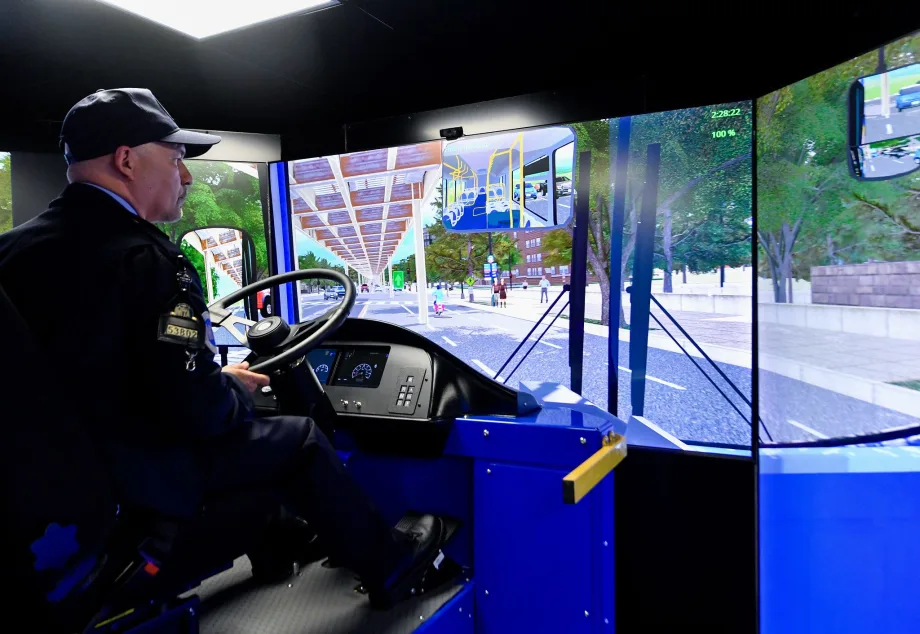
MTA officials said more than 4,300 bus operators will train annually on the simulators between the Zerega Training Center and Spring Creek Depot.
Marc A. Hermann
- The New York MTA has introduced advanced simulators for bus operator training.
- The investment in these simulators highlights a focus on modernizing training processes.
- The initiative aims to enhance safety and operational readiness throughout the transit system.
*Summarized by AI
The New York Metropolitan Transportation Authority (MTA) unveiled new, state-of-the-art bus operator training simulators that modernize the bus operator training experience: three at the Zerega Training Center in the Bronx and one at the Spring Creek Depot in Brooklyn.
Officials said the investment reflects the MTA’s commitment to modernizing operator training while improving safety and operational readiness across the system.
“With modern bus simulators, we’re ensuring bus operators are set up for success to deliver safe and reliable service for riders,” said NYC Transit President Demetrius Crichlow. “These simulators deliver immersive, real-world environments across different bus types and scenarios that benefit both new and experienced employees.”
MTA’s New Simulators
The new systems, already in use, provide a realistic training experience and include operator cabins that replicate the layouts of diesel, hybrid, electric, and articulated buses, allowing trainees to practice in an environment that mirrors the vehicles they will operate on the street, the MTA said.
The simulators also feature immersive 4K environments with highly realistic lighting, weather, and traffic conditions. Instructors can create customized scenarios to simulate emergencies and challenging operating conditions, while integrated performance dashboards allow trainers to track operator performance, identify skill gaps, and provide targeted coaching.
MTA officials said more than 4,300 bus operators will train annually on the simulators between the Zerega Training Center and Spring Creek Depot.
Quick Answers
The New York MTA has unveiled state-of-the-art bus operator training simulators.
*Summarized by AI
More Technology

Public Transit Conference Returning to GFX in 2027, Call for Papers Now Open
The Call for Papers is now open, allowing transit agency professionals and industry experts to help shape the PTC educational program by submitting session ideas for consideration.
Read More →
ENC Lands MATA Contract and More in Biz Briefs
In this edition of Biz Briefs, we spotlight the latest developments shaping the future of mobility.
Read More →
Strada360’s Steve Lassey on Turning Transit Data Into Better Decisions
From breaking down data silos to preparing for AI, Strada360 CEO Steve Lassey discusses how transit agencies can use technology to improve operations, customer information, and long-term decision-making.
Read More →
Almaviva Looks to Open Architecture to Advance Transit Technology
Eric Reese discusses how interoperability, open architecture, and modular design can help transit agencies control costs, reduce vendor lock-in, and upgrade technology without starting over.
Read More →
Driving Smarter Paratransit
John Hanlon shares how AlphaRoute is leveraging AI-powered technology to help paratransit providers optimize operations, support frontline staff, and enhance the rider experience.
Read More →
From Hardware to Digital Partner: Luminator Charts Its Next Chapter
CEO Magnus Friberg discusses Luminator’s shift toward becoming a digital partner, the growing importance of software and interoperability, and how AI can help agencies improve operations and passenger experience.
Read More →
Beyond the Checklist: A Structured Approach to Transit Maintenance
Reliability-Centered Maintenance helps transit agencies move beyond routine checklists to focus limited resources on the assets and failures that have the greatest impact on safety, reliability, and service.
Read More →
NJ TRANSIT Advances Bus Technology Upgrades Across Statewide Fleet
More than 1,500 buses now feature upgraded technology designed to improve arrival predictions and provide free Wi-Fi, with deployment expected to reach nearly 2,000 buses by the end of 2026.
Read More →
Building a Flexible Path to Transit Electrification
John Hroncich discusses BAE Systems’ modular and scalable approach, lessons learned from decades of real-world operations, and how agencies can identify electrification strategies that fit their fleets.
Read More →
Biz Briefs: Alstom Lands Canadian Contract, LYT to Supply California TSP, and More
In METRO's latest installment, we take a look at recent news from Complete Coach Works, Beep, FlixBus, and more partnerships making headlines across the transportation sector.
Read More →