Tech Showcase: Addressing Safety Challenges with Video Mirror Systems
Ensuring the safety and security of operators, passengers, and pedestrians in public transit is crucial.
by Chris Dutton
August 27, 2024
METRO Magazine showcases the latest in technology solutions in the public transit and motorcoach industries.
Photo: Canva
4 min to read
Ensuring the safety and security of operators, passengers, and pedestrians in public transit is crucial.
However, transit operators face numerous challenges that can compromise safety and operational efficiency. Traditional side mirrors, while standard in the industry, have significant limitations that can be addressed to enhance overall safety.
Ad Loading...
The Challenges of Traditional Mirrors
1) Limited Visibility and Field of View: Traditional mirrors are often obstructed by road grime, water droplets, and restricted angles.
They cannot always provide a wide enough view, hindering the driver’s visibility and increasing accident risk.
The limited visibility is particularly problematic in dense urban environments, where transit drivers must constantly monitor their surroundings for pedestrians, cyclists, vehicles, and other obstacles.
2) Weather Conditions: Adverse weather such as rain, snow, and low light significantly impair visibility with traditional mirrors, making it difficult for drivers to navigate safely.
Poor weather conditions can exacerbate the limitations of traditional mirrors, increasing the risk of accidents.
Ad Loading...
For instance, rain can obscure the mirror's surface, while low light conditions can make it hard to see clearly, especially during early mornings and late evenings.
3) Blind Spots: Traditional mirrors often have limited fields of view, resulting in blind spots that can be dangerous, especially in complex traffic situations and tight spaces.
Blind spots are a well-known hazard in transit operations, contributing to many preventable accidents. Drivers must constantly adjust their mirrors and turn their heads to compensate, which can be both tiring and ineffective.
4) Industry Solutions: Video Mirror Systems: Technological advancements, like video mirror systems, are addressing these safety challenges.
The systems use cameras and LCD monitors to provide a clearer and wider view of a vehicle's surroundings.
Ad Loading...
By complementing traditional side mirrors with high-definition cameras and screens, video mirror systems improve visibility, reduce blind spots, and enhance overall safety.
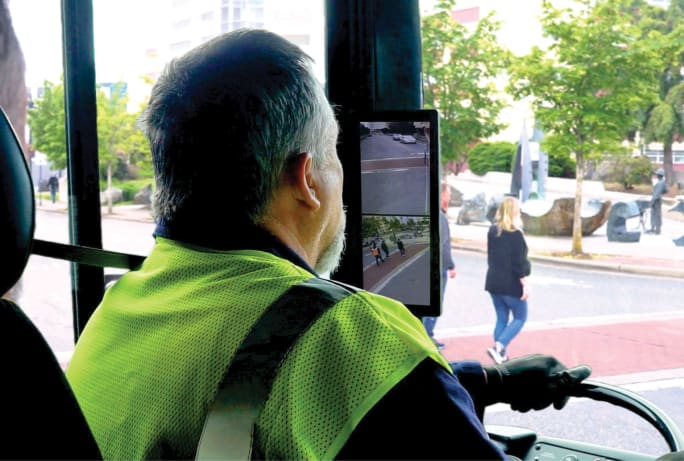
Traditional mirrors are often obstructed by road grime, water droplets, and restricted angles.
Photo: Safe Fleet
Benefits of Video Mirror Systems
Video mirror systems significantly enhance visibility and reduce blind spots by providing an expansive view of the vehicle's surroundings, enabling drivers to detect hazards earlier and respond more effectively.
They perform exceptionally well in adverse conditions, maintaining safety standards regardless of weather.
By improving visibility, these systems help prevent costly incidents involving pedestrians or obstacles, leading to indirect cost savings by reducing the frequency and severity of accidents.
Additionally, the ability to connect to recorders for high-definition video evidence capture enhances incident analysis, reporting, and driver training, offering valuable documentation for post-incident reviews and legal protection.
Ad Loading...
Future-Proofing Transit Fleets and Ensuring Safety
The adoption of video mirror systems is well underway.
In Europe, the General Safety Regulation (GSR) is setting new vehicle standards to reduce serious and fatal injuries caused by traffic accidents by half in 2030.
One of the new, mandatory features in vehicles is blind spot information systems, which are a critical component of video mirror technology.
The regulations are pushing the industry toward adopting advanced safety technologies, ensuring that vehicles are equipped to handle the challenges of modern transit environments.
In the US, while most states still mandate traditional mirrors, some are allowing companies with Federal Motor Carrier Safety Administration (FMCSA) exemptions to implement these systems.
Ad Loading...
The exemptions are a step toward broader acceptance of video mirror systems, highlighting their potential to enhance safety and operational efficiency.
As regulatory frameworks continue to evolve, video mirror systems are likely to become more widely accepted and integrated into transit operations.
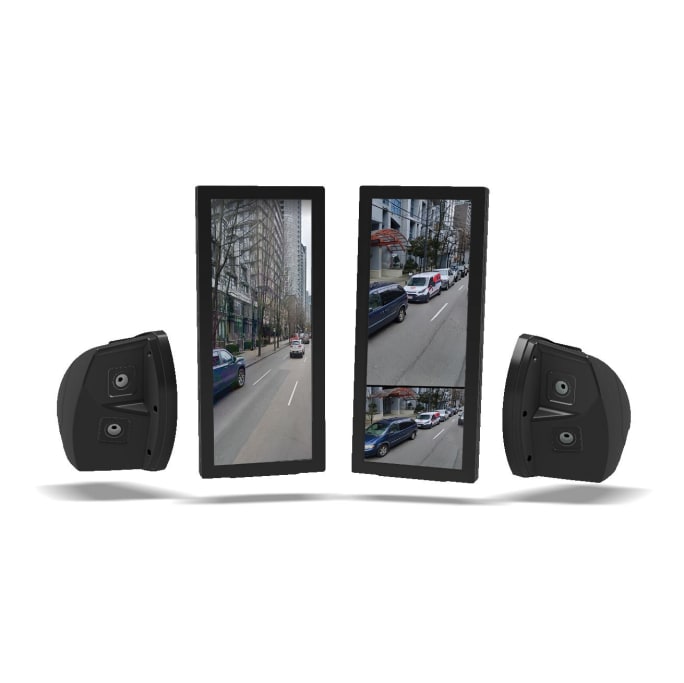
Video mirror systems use cameras and LCD monitors to provide a clearer and wider view of a vehicle's surroundings.
Photo: Safe Fleet
The Safe Fleet MirrorLESS System
As the industry moves toward broader acceptance of video mirror technology, the Safe Fleet MirrorLESS system is designed to meet future regulatory standards.
This system offers a solution designed to boost safety, potentially help cut costs, and enhance operational efficiency. By enhancing traditional mirrors with advanced camera technology, the MirrorLESS system paves the way for a safer and more secure future, setting new benchmarks for the industry.
Key Features of the Safe Fleet MirrorLESS System:
Ad Loading...
Heated Camera Lenses: Ensures clarity and functionality in cold harsh weather conditions, providing consistent visibility.
Integrated Air Nozzles: Keeps camera lenses clear of water, debris and obstructions, enhancing visibility and safety.
High-Definition Video Recording: Enables video evidence capture for incident analysis, driver training, and legal protection.
Safe Fleet ThruView Assist Integration: Works seamlessly with ThruView Assist Blind Spot Collision Prevention System to minimize A and B pillar blind spots, improving overall driver visibility.
The company’s commitment to advancing operator performance and safety ensures that transit agencies can confidently navigate the challenges of modern transportation while prioritizing the well-being of their operators, passengers, and communities.
The Safe Fleet MirrorLESS system offers more than a technological upgrade; it’s a step toward a safer, more efficient, and future-proof transit system.
Advancing Safety, Efficiency
As transit agencies continue to evolve and adapt, embracing innovative technologies like video mirror systems is crucial for advancing safety and efficiency.
By addressing the limitations of traditional mirrors and integrating advanced features, these systems pave the way for a more secure and streamlined transit experience.
Ad Loading...
The future of public transportation lies in leveraging such advancements to enhance safety, operational effectiveness, and overall reliability, ultimately benefiting operators, passengers, and communities alike.
About the Author: Chris Dutton is Director, Product Management – Electromechanical and Safety Systems, at Safe Fleet
From breaking down data silos to preparing for AI, Strada360 CEO Steve Lassey discusses how transit agencies can use technology to improve operations, customer information, and long-term decision-making.
Eric Reese discusses how interoperability, open architecture, and modular design can help transit agencies control costs, reduce vendor lock-in, and upgrade technology without starting over.
John Hanlon shares how AlphaRoute is leveraging AI-powered technology to help paratransit providers optimize operations, support frontline staff, and enhance the rider experience.
CEO Magnus Friberg discusses Luminator’s shift toward becoming a digital partner, the growing importance of software and interoperability, and how AI can help agencies improve operations and passenger experience.
Reliability-Centered Maintenance helps transit agencies move beyond routine checklists to focus limited resources on the assets and failures that have the greatest impact on safety, reliability, and service.
More than 1,500 buses now feature upgraded technology designed to improve arrival predictions and provide free Wi-Fi, with deployment expected to reach nearly 2,000 buses by the end of 2026.
John Hroncich discusses BAE Systems’ modular and scalable approach, lessons learned from decades of real-world operations, and how agencies can identify electrification strategies that fit their fleets.
In METRO's latest installment, we take a look at recent news from Complete Coach Works, Beep, FlixBus, and more partnerships making headlines across the transportation sector.
What if transit leaders could ask any operational question and get a trusted answer in seconds? Conversational AI is transforming how agencies use their data.