



The Best of the Best
New responsibilities deepen appreciation.
As many of you know, I’ve held a seat on APTA’s Business Member Board of Governors (BMBG) for several years, affording me the opportunity to contribute to the association and the industry and, importantly, to view the contributions of others.
I’ve seen hundreds of hours of work volunteered to the association by individuals already burdened with incredible workloads at the office. As APTA representatives, they attend numerous face-to-face meetings and conference calls, prepare reports and presentations, travel widely and rarely complain about the additional burden.
This perspective was broadened recently as I took on new responsibilities as a member of APTA’s Nominating Committee. Each year, this group is convened to evaluate transit professionals who are seeking positions for the upcoming year as officers and vice chairs on APTA’s Executive Committee, as well as vacancies on its board of directors.
To be considered for these positions, applicants must submit a statement of qualifications that describes their background and experience and reflects their commitment to both the association and industry.
Strength in every corner
This year’s group of applicants represented a cross-section of the industry. Some are employed by small agencies and companies, while others work at medium-sized and large concerns. The applicants’ diversity also included gender, race and geographic location. Their only common trait was the compelling nature of their qualifications.
In reviewing these statements, I can’t tell you how impressed I was by the breadth of work experience, knowledge levels, industry involvement and talent displayed by the candidates. Each applicant offered an extraordinary resumé of accomplishments during his or her career, and many had decades of experience in the transit industry.
There’s no doubt that the association will be well served by this crop of candidates. The only difficulty was deciding which of them should be nominated. They all presented such strong cases for inclusion that it was incredibly challenging to create a single slate of candidates to send forward for nomination at this year’s APTA Annual Meeting in Charlotte, N.C.
My experience on the Nominating Committee has given me a renewed appreciation of the talented people who lead our industry. Fact is, many of them are modest about their accomplishments, almost to the point of self deprecation. But when you see their accomplishments on paper in black and white, you have a better understanding of their capabilities.
We’re in good hands
The extraordinary guidance provided by APTA’s leadership has served the industry well for many years, and judging from the most recent applicants for Executive Committee posts, things are going to continue in the same vein.
Although we’re all facing challenges that seem to grow daily, the association is in good hands. Not only is it superbly run by President Bill Millar and his fine staff, but the Executive Committee and all of its board members, are among the most hard-working, committed and talented professionals that you’ll find in any industry.
If you have the opportunity, please thank them for the generous amount of time and energy that they donate to the betterment of the association and the industry. Until you’ve walked in their shoes for a year, you would have a hard time believing how much spirit and enterprise they contribute to the association.
More Management

ENC Lands MATA Contract and More in Biz Briefs
In this edition of Biz Briefs, we spotlight the latest developments shaping the future of mobility.
Read More →
From Surviving to Thriving: Building Stronger Transportation Organizations
Bus Business Consultants founder Brian Dickson shares lessons on leadership, organizational health, and creating options for long-term success in a changing transportation industry.
Read More →
Everett Transit, Community Transit Outline Consolidation Agreement
The proposed agreement calls for a 50% increase in bus service in Everett, a new microtransit zone, continued paratransit service, and the transfer of Everett Transit operations to Community Transit.
Read More →

Strada360’s Steve Lassey on Turning Transit Data Into Better Decisions
From breaking down data silos to preparing for AI, Strada360 CEO Steve Lassey discusses how transit agencies can use technology to improve operations, customer information, and long-term decision-making.
Read More →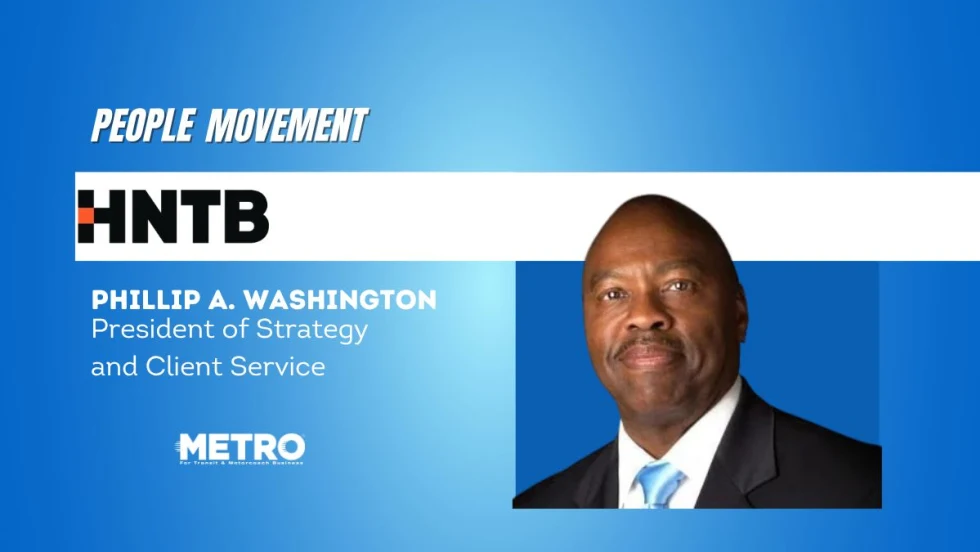
People Movement: Phil Washington Joins HNTB, Denver RTD Launches CEO Search, and More
In this edition, we also spotlight recent personnel moves at STV, the Eno Center for Transportation, and more, highlighting the people taking on new roles across the transportation industry.
Read More →
SEPTA Details Accelerate Vision for Transit System
The plan outlines investments in trolley modernization, new Metro and Regional Rail vehicles, accessible stations, and more frequent bus and rail service.
Read More →
FTA Ends Direct Oversight of MBTA Safety Actions
The federal agency closed its remaining special directive to the Massachusetts Department of Public Utilities following a safety review that began in 2022.
Read More →
Report: Transit Bus Manufacturing Supports 34,100 Jobs, $5.1B in GDP
The “Buses Mean Business” report examines the transit bus manufacturing industry’s economic footprint, supply chain, and rising demand for vehicle replacements.
Read More →
LIT Marks 10-Year Milestone at Annual Summit
Hosted by the COTA from September 10 to 13, the Summit carried the theme “Celebrating 10 Years of Excellence, Leadership, and Impact,” with every part of the program honoring the people, agencies, and partners who built LIT over its first decade.
Read More →
People Movement: Dan Dipert Coaches Adds Third-Generation Leader, Keolis Names New Valley Metro VP/GM, and More
In this edition, we also cover recent appointments and announcements at the Wabtec, SilverRide, HNTB, and more, showcasing the individuals helping to shape the future of transportation.
Read More →