The Intercity Bus Industry Will Have A Full Recovery by 2026, DePaul Study Predicts
Back on the Bus indicates traffic is on an upward trajectory almost everywhere, despite the limited amount of service provided by legacy bus lines, such as Greyhound, various Trailways brands, and many of their partners, on many routes.
The intercity bus industry benefits from new partnerships, allowing buses to be deployed more strategically than before, resulting in the traffic recovery outpacing the additional service added.
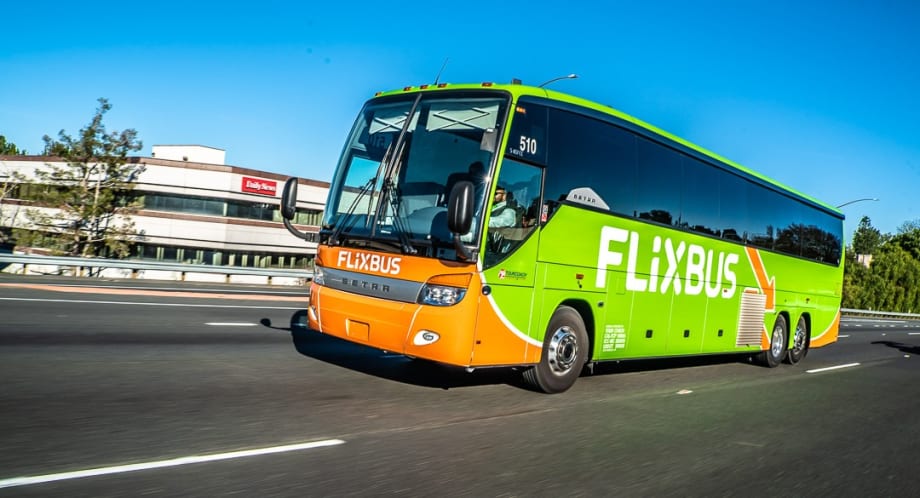
Photo: Flixbus
4 min to read
DePaul University’s new report on the U.S. intercity bus industry estimates ridership levels in the sector are around 85% to 90% of pre-pandemic levels and projects a full recovery by 2026.
“The pace of intercity bus industry’s bounce back more closely resembles that of airlines and Amtrak than commuter rail and rapid-transit services,” notes Joe Schwieterman, author of Back on the Bus: 2024 Outlook for the Intercity Bus Industry.
Ad Loading...
“We expect total passenger boardings nationwide to be back to 2019 levels in two years,” he adds, but cautions “the recovery will be even, with traffic in the Northeast Corridor and other urbanized areas lagging other regions.”
On busy days, FlixBus and Greyhound together operate around 35 buses between downtown Boston and New York, while Peter Pan operates a dozen.
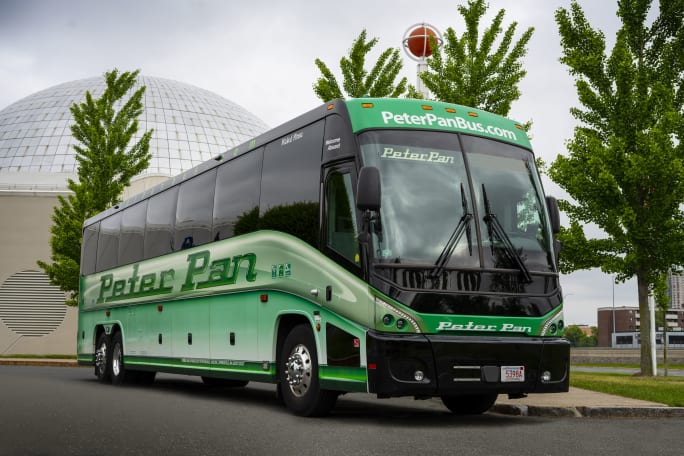
Photo: Peter Pan
Intercity Bus Report Findings
Back on the Bus indicates traffic is on an upward trajectory almost everywhere, despite the limited amount of service provided by legacy bus lines, such as Greyhound, various Trailways brands, and many of their partners, on many routes. These lines, the study estimates, have 15% to 20% fewer seat miles on the road than before the pandemic, although there are significant differences by region.
The industry benefits from new partnerships, allowing buses to be deployed more strategically than before, resulting in the traffic recovery outpacing the additional service added.
“The typical passenger load on intercity buses — and the fares that passenger pays — are higher than in 2019 due to the restraint of companies in adding back service,” says Schwieterman.
The anticipated full traffic recovery is based on the authors’ conversations with industry leaders, a review of service levels in major routes, and an assessment of passenger loads.
Ad Loading...
“Traffic appears well above 2019 levels on some rural and warm-weather routes,” notes Schwieterman. State-supported bus routes and bus lines catering to Spanish-speaking travelers, such as Tornado Bus and Tufesa, are doing particularly well, the study notes.
Less Favorable in Northeast
Less favorably, routes serving the downtown districts on the New York – Washington, DC route and “Rust Belt” cities are recovering more slowly.
Northeast Corridor traffic appears to be the weakest of all, even when commuter routes are excluded, at about 25% (or more) below pre-pandemic levels. While several private transit operators in the Northeast have given up their fixed routes or fixed-route contracts to concentrate on tours and charters, the rising demand for non-work trips to visit family and friends has helped sustain many services.
“The prospect of a full recovery by 2026 will require overcoming driver and equipment shortages,” says Akshara Das, a study co-author who conducted the report’s schedule analysis.
On busy days, FlixBus and Greyhound together operate around 35 buses between downtown Boston and New York, while Peter Pan operates a dozen. Coach Run, OurBus, and Go Buses also provide numerous options.
Ad Loading...
Another threat is the sustained downturn in the price of fuel, which has reduced the cost of driving and flying to a greater extent than bus travel. Gasoline prices across the country in January were more than 50 cents those from a year earlier.
In Cincinnati; Houston; Chattanooga and Knoxville, Tenn.; Little Rock, Ark.; Louisville, Ky; Philadelphia; and Tampa, Fla., Greyhound facilities have been downgraded over the past several years, in some cases due to governments prioritizing the redevelopment of bus-station property for other uses.
Photo: Joe Schwieterman
Greyhound Station Impact
The study notes that the shuttering of a traditional Greyhound station is a “wild card” with respect to the recovery.
In Cincinnati; Houston; Chattanooga and Knoxville, Tenn.; Little Rock, Ark.; Louisville, Ky; Philadelphia; and Tampa, Fla., facilities have been downgraded over the past several years, in some cases due to governments prioritizing the redevelopment of bus-station property for other uses.
The DePaul study, however, does not expect the loss of stations to derail the national recovery.
“Station closings are a major issue for legacy bus lines, but for others, cheap fuel and driver and equipment shortages are a bigger short-term risk,” notes Schwieterman.
Ad Loading...
Another risk is rising competition from Amtrak, which is on the horizon, although the authors don’t expect this to affect travel volumes significantly until at least 2026.
The authors also found the Bipartisan Infrastructure Bill, while providing massive funding for rail corridors, also benefits the intercity bus industry by encouraging states to become more assertive in jointly planning for bus and train service and improving the intermodal terminals that are used by both modes of travel.
“Public policy is beginning to swing in the industry’s favor,” says Schwieterman.
DePaul University’s Chaddick Institute has a free webinar on its new study on February 22, from 2 – 2:50 pm CT. To register, click here.
To read the full report or to join the Chaddick Institute’s Intercity Bus Listserv or reach the study team, click here and here.
In METRO's latest installment, we take a look at recent news from Complete Coach Works, Beep, FlixBus, and more partnerships making headlines across the transportation sector.
In METRO's latest installment, we take a look at recent news from Siemens, Prevost, Dodge, and more partnerships making headlines across the transportation sector.
In this edition, we also cover recent appointments and announcements at Pace, CamTran, MCI, and more, showcasing the individuals helping to shape the future of transportation.
In a recent episode of METROspectives, CharterUP Founder/CEO Armir Harris discussed the company’s evolution from an online charter bus marketplace into a technology platform supporting public- and private-sector mobility and much more.
In this edition, METRO also covers recent appointments and announcements at the DART, STV, and more, showcasing the individuals helping to shape the future of transportation.
Bus Business Consultants founder Brian Dickson shares lessons on leadership, organizational health, and creating options for long-term success in a changing transportation industry.
From manufacturers and suppliers to transit agencies and motorcoach operators, these updates offer a snapshot of the projects, partnerships and business moves driving the industry forward.
Preliminary findings show 98% of operators faced premium increases over the past five years, while shrinking insurer participation is putting added pressure on businesses and customers.