Transforming Mass Transit with AI and Advanced Analytics
Transit agencies are laser-focused on improving safety, security, and efficiency in their mass transit systems, and they are increasingly looking to new advancements and use cases in surveillance technology to do so.
by Anthony Incorvati
October 4, 2024
Video surveillance cameras coupled with new AI-enabled analytics can support the success of any enterprise operation, including mass transit systems, by going beyond security use cases.
Photo: METRO
7 min to read
Transit agencies are laser-focused on improving safety, security, and efficiency in their mass transit systems, and they are increasingly looking to new advancements and use cases in surveillance technology to do so.
Efficient and streamlined mass transportation is more than ensuring buses and subways are running smoothly; it involves reducing passenger waiting times and optimizing staff planning and scheduling systems throughout the operation to improve the flow of people and enhance the overall passenger experience.
Ad Loading...
After all, mass transportation, while an important public necessity, also has its own financial pressures.
Video surveillance cameras coupled with new AI-enabled analytics can support the success of any enterprise operation, including mass transit systems, by going beyond security use cases.
With some outside-the-box thinking, decision-makers can utilize today’s technology to better and more safely serve the public.
The Cost Challenge
First, it’s important to remember mass transit has financial constraints, and authorities and municipalities are running a safety-critical, revenue-based operation, not just a public service.
Because of this, transit has become focused on passenger experience as much as safety. However, mass transit faces challenge that other operations simply don’t.
Ad Loading...
Post-COVID, many transit agencies are feeling the pressure of lost revenue from the fare box because of remote work — people aren’t commuting as much, it’s that simple.
If they’re not relying on revenue, they’re relying on grant money, and maintaining an entire system on subsidies is tricky, especially when it’s not bolstered by projected revenue.
The financial challenges can impact technology investments and also the manpower they’re able to sustain, so they need the most return on investment to fund both avenues.
Specifically, this can impact security technology and labor — which is a critical thread in the fabric of mass transit. With lost revenue to contend with, efficiency has an even higher level of focus.
The value of security devices now must extend beyond just security capabilities, and every camera purchase will be interrogated with a “yes, and?” mindset.
Ad Loading...
Yes, a camera is great for security surveillance — and what else can it do?
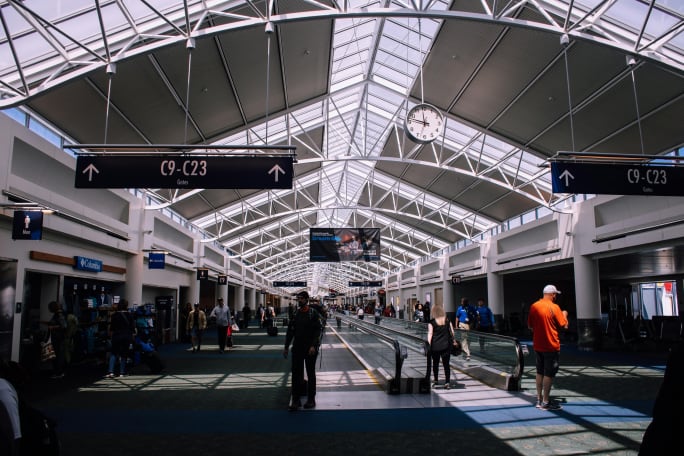
There are plenty of mass transportation operations that get a bad rap — think of any time you’ve been late trying to get to class, a job, or a special event because of public transportation.
Photo: Pexels/Brett Sayles
Learning by Example: Airports
Perhaps the best example of mass transit seamlessly functioning as a business is an airport.
There are plenty of mass transportation operations that get a bad rap — think of any time you’ve been late trying to get to class, a job, or a special event because of public transportation.
Airports are among those operations, of course, and many jokes have been made at their expense. Their success, though, is due to their desire and willingness to change, do better, and leverage technology in new and efficient ways to accomplish it.
We can learn from what they’ve done and apply that to all other forms of mass transit.
Ad Loading...
The biggest lesson we can take from airport success comes down to a simple fact: they focus on driving revenue and run their operations more and more like a true business.
They have a lot of non-aviation-related revenue, which is something that your typical ride-to-downtown service, or subway, won’t be able to accomplish, but other mass transit operations would be wise to take note of anyway.
Looking for ways to improve experience and looking for ways to maximize revenue actually go hand-in-hand.
Airports have taken advantage of this by specializing in what we can call passenger experience analytics, using typical surveillance cameras and other sensors to monitor, analyze, and raise alerts on pain points like long lines, busy bathrooms, or baggage claim congestion.
The analytics can fix things quickly — like sending extra TSA agents to security checkpoint processing or additional maintenance staff to a bathroom with high traffic — but they can also help airports function in the long term by informing staffing decisions and traffic flow optimization projects, as well as pinpointing the best places to contact potential customers.
Ad Loading...
For example, some airports have implemented advanced queue monitoring systems that track the number of people in line at security checkpoints.
When the system detects a long queue, it can automatically notify airport staff to open additional screening lanes or redirect passengers to less crowded checkpoints. And even better, provide the reporting data over periods of time so that schedules can be better established.
In addition, these systems are also sending out notifications (flight information displays, traveler apps, etc.) on what is the current wait times for different lines — the passenger can then use this information to manage their journey. This not only improves the passenger experience by reducing wait times but also enhances security by ensuring that passengers are processed efficiently and effectively.
Maximizing Potential with Analytics
In all of the best-case scenarios for mass transportation, there’s one common denominator: using security technology to go beyond security operations.
Instead of thinking of a security camera as a static object with one purpose, we should think of them as what they really are: computers that have a lens and image sensor.
Ad Loading...
Let’s take what airports have done well with their analytics, like queue monitoring and curbside traffic flow, etc., and expand on even those capabilities.
Because of this, those nice-to-have real-time alerts on pain points like long lines can instead be applied to access control and occupancy or, even further, aggression detection and audio deterrents on unmanned platforms.
For instance, imagine a scenario in a busy subway station where an AI-powered camera system can detect unusual behavior, such as someone attempting to access a restricted area or exhibiting aggressive behavior.
The system can immediately alert security personnel and trigger audio deterrents to address the situation before it escalates. This proactive approach not only enhances passenger safety but also helps to maintain a smooth and orderly flow of people through the station.
Furthermore, integrating AI analytics with existing transportation infrastructure can provide valuable insights into passenger behavior and preferences.
Ad Loading...
By analyzing data from surveillance cameras, transportation agencies can identify patterns in passenger movement, such as peak travel times, popular routes, and areas of high foot traffic. This information can be used to optimize service schedules, improve station layouts, and enhance overall efficiency.
For example, if analytics reveal that a particular bus route is consistently overcrowded during certain times of the day or passengers are experiencing long wait times, transportation agencies can adjust the schedule to add more buses during peak hours, ensuring that passengers have a more comfortable and efficient experience.
Similarly, if data shows that a specific train station experiences heavy foot traffic in certain areas, agencies can redesign the station layout to better accommodate passenger flow and reduce congestion.
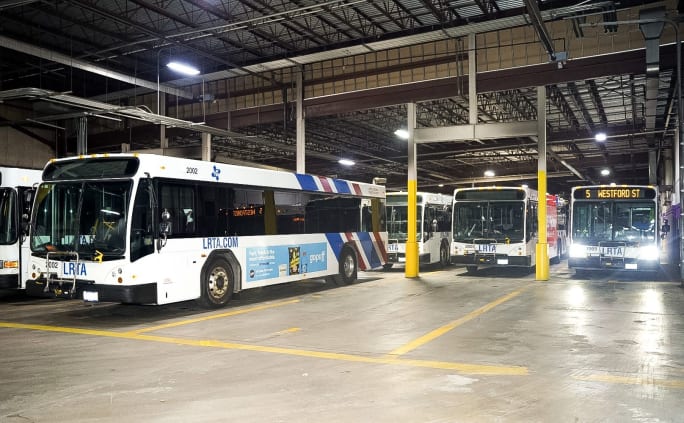
Efficient and streamlined mass transportation is more than ensuring buses and subways are running smoothly.
Photo: LRTA
Optimizing Operations’ Opportunities
We are on the cusp of mass transit operators, even in the infant stages, utilizing more and more computer vision technologies that will enable them to work more and more like a business. This means optimizing operations and passenger experiences, with advanced technology as the catalyst.
Take wait time analytics: yes, it’s great for efficiency, but it also improves the passenger experience.
Ad Loading...
If potential riders know they’ll have a good experience, they’re more likely to ride, and more ridership means more revenue.
There’s nothing wrong with treating public transit like what it is: a service designed to get people from point A to point B in the safest, most pleasant, most efficient way possible.
With AI analytics in hand, it’s no longer a guessing game, and transit system owners are better prepared than ever to achieve this goal and look good doing it.
In addition, AI-powered surveillance systems can enhance public safety in other ways, such as through real-time monitoring of environmental conditions.
For example, cameras on buses or railcars equipped with sensors can detect smoke or fire, triggering immediate alerts to emergency responders and facilitating a rapid response. This not only protects passengers but also helps to safeguard the infrastructure of the transit system.
Ad Loading...
The integration of AI and analytics into mass transit systems represents a significant step forward in the evolution of public transportation.
By leveraging these technologies, and by thinking of security cameras as "computers with lenses," municipalities can create a more efficient, secure, and passenger-friendly transit experience. This, in turn, can lead to increased ridership, higher revenues, and a more sustainable future for mass transit.
About the Author: Anthony Incorvati is Transportation Segment Leader, Americas, for AXIS Communications
CEO Magnus Friberg discusses Luminator’s shift toward becoming a digital partner, the growing importance of software and interoperability, and how AI can help agencies improve operations and passenger experience.
Reliability-Centered Maintenance helps transit agencies move beyond routine checklists to focus limited resources on the assets and failures that have the greatest impact on safety, reliability, and service.
More than 1,500 buses now feature upgraded technology designed to improve arrival predictions and provide free Wi-Fi, with deployment expected to reach nearly 2,000 buses by the end of 2026.
John Hroncich discusses BAE Systems’ modular and scalable approach, lessons learned from decades of real-world operations, and how agencies can identify electrification strategies that fit their fleets.
In METRO's latest installment, we take a look at recent news from Complete Coach Works, Beep, FlixBus, and more partnerships making headlines across the transportation sector.
What if transit leaders could ask any operational question and get a trusted answer in seconds? Conversational AI is transforming how agencies use their data.
More than $191 million in federal funding will help three transit agencies replace aging rail vehicles and support a new autonomous shuttle service in Chattanooga.
LA Metro’s Obed Mejia discusses technician training, evolving maintenance technology, fleet replacement, and strategies for getting the most out of today’s transit fleets.
In METRO's latest installment, we take a look at recent news from Siemens, Prevost, Dodge, and more partnerships making headlines across the transportation sector.
Pedestrian microsimulation is helping rail planners identify bottlenecks, test station designs, and prepare complex transit hubs for growing passenger volumes.