



Transit Center Design for a Post-9/11 World
In the wake of the 9/11 attacks, transit station architects must respect the need for greater security without compromising design elements, local character and customer satisfaction.
In the aftermath of the terrorist attacks of Sept. 11, 2001, transit design decisions that were once mundane suddenly took on life-or-death proportions.
From artwork to glazing to finishes, what once was chosen for a host of practical, operational or maintenance reasons had to be viewed through the prism of terrorism.
In the event of a terrorist act, would that finish become a projectile? Would a certain glazing end up harming rather than protecting commuters? Could that artwork become an inadvertent cause of death?
On the other hand, transit decisions cannot be driven solely by terrorism and its potential consequences. Apart from the high extra cost, we don't want to build transit systems that resemble prisons. If that were to become the norm, then the terrorists who committed these horrible acts would, on some level, have won; they would have forced us to sacrifice some of the openness that is a hallmark of our freedom.
So, transit decision-makers must now create innovative, efficient, user-friendly systems, augmented by the heightened awareness that every decision — no matter how big or small — can have potentially grave, far-reaching ramifications.
Whether renovating an aging system or building a new one, transit design decision-makers must focus on five elements to fulfill their mandate of maintaining and optimizing post-9/11 transit systems:
Optimal station design and location
Enhanced passenger experience
Sustainable design
Effective life-safety and security measures
Reliable vertical circulation
Respect local character
Transit facilities must reflect local character and values. The architecture should represent the community, accurately portraying the image that it wishes to present to the traveling public and to the world at large. Transit design architecture should also add lasting value to the community. Consequently, station design places unique demands on an architect.
Station designers now must fully integrate the design of the terminal or station into a neighborhood, area or region. They must treat the station as a community asset, not simply a utilitarian component of the transportation system. Often a station serves as the sole entry or exit point — a first or last impression — to a neighborhood or even an entire town. Transit designers are responsible for helping communities use that portal to express how they wish to be perceived (while meeting the practical needs of budget, strategic planning and overall system design integrity). But because their ultimate responsibility is to the ridership, transit system decision-makers must oversee the transit station designers to ensure they fulfill practical mandates of efficiency and effectiveness, even as they deliver the message the community wishes to convey.
The passenger's experience in a transit system is paramount. Passengers drive every system. Therefore, a transit agency must center its decisions on the customer's experience. Transit systems are unique in that most riders either make or withdraw their commitment to an entire mode of transit.
This is unlike any other travel mode. With airline travel, for example, a customer picks and chooses the airline that offers the shortest, most affordable flight to a destination. There are always other airlines if a particular flight is unsuitable. But when a transit rider is exposed to the transit experience, it produces a "binary" situation: the commuter is either sufficiently pleased (or driven by the lack of alternatives) to invest in a month of tickets, or he or she simply withdraws from public transit altogether.
So even though a transit agency may have a captive audience, the agency must still identify, consider, respect and deliver on the rider's needs. Failure to do so will simply drive customers out of the transit market (and back to the saturated streets and highways that can make the urban environment so distasteful).
Key satisfaction factors
To retain its customer base, a transit system must provide several key elements as standard features. Easy access is critical. Whether a customer approaches a system as a pedestrian, from a parking lot or on a bicycle, entry must be convenient and accessible. Connections to other transportation modes are also central. Whether through clear wayfinding, the use of an efficient fare gate system or the provision of useful neighborhood information, enhancing the customer experience is crucial.
The customer's experience can be made more pleasant through the adroit management of several design elements, such as acoustics, noise/reverberation/vibration control, lighting and materials.
A clean station is also essential. To keep riders happy, designers should make it easy for staff to perform system maintenance. Cleaning equipment should be placed where needed, and managers should ensure that it is used.
If customers experience a clean, fast and friendly on-time system, they will end up using it regularly.
Sustainable design
Sustainable design is no longer a future gleam in some designer's eye. It is here. While many transit systems have been slow in accepting this mandate, soon they will no longer be able to afford that luxury. Not only has it become important to many riders, sustainable design will very likely be required on many future transit design contracts. Even more importantly, it has proven to actually reduce costs over time.
The Leadership in Energy and Environmental Design (LEED) system — with its standards for cost, energy and environmental savings — applies broadly to transit design. Transit station designers can meet popular expectations and fulfill regulatory requirements by following LEED criteria on such measures as water re-use for nonpotable elements (cleaning, decorative fountains, etc.); reduction of pollution, noise and vibration from construction activities and vehicles; the use of recycled and local materials; and maximizing the use of daylight for design. Following LEED criteria can also provide long-term savings for agencies.
Security ranks high
Since 9/11, underground stations have become a particular concern. They are a challenge because of limited access and their confining nature. But, the challenge is not insurmountable. Creating a central surveillance system and establishing a quick-response team go a long way toward mitigating the difficulties posed by underground stations.
But there is another, often overlooked, defensive weapon in the transit agency's arsenal — the riders themselves. The London Underground — the Tube — has dealt with terrorism for decades. Its ridership is trained and encouraged to recognize and report anything out of the ordinary. It's time to stress that mindset in the U.S.
Through clever, eye-catching, entertaining campaigns, transit agencies should begin to instruct their ridership on how to recognize and respond to suspicious objects and behavior. No transit agency can afford to place paid "eyes and ears" everywhere. But with the help of the riding public, transit agencies can cover a lot more ground and provide an even greater level of protection and safety. Also, riders become more vested in a system when it is "theirs" to protect.
Other safety-enhancing tools
There are now state-of-the-art tools designers can use to help mitigate threats. A computational fluid dynamics program used in overall smoke-management planning has found new application. What role do exhaust fans play in a biochemical attack? This new program is helping designers figure out exactly that. And there's more.
Using smoke management modeling, passenger movement modeling, emergency exit modeling and several other advanced tools, designers can focus on making stations safer against many kinds of attack. In addition, the next generation of modeling studies will combine all of these factors to create an overall standard to make vertical circulation reliable.
Vertically challenged?
Finally, on a practical design note, the trend is to build stations deeper or higher, which ends up putting greater emphasis on vertical conveying systems. That in turn raises the challenges designers face on several fronts. Perhaps the most prominent issues among them are reliability, life-safety and security.
Greater reliance on these mechanical elements means they are subjected to daunting levels of use (and abuse). But in a postÐ9/11 world, such systems must not only provide the necessary access and egress; they must have enough working integrity to earn and retain user trust. In other words, elevator and escalator systems cannot be out of service for any length of time, especially before, during or after an emergency — and, above all, following a terrorist event. That's why designers are monitoring the development and use of the American Public Transportation Association's heavy-duty escalator and elevator specifications, which accommodate the new stations.
We are not alone. Other systems around the country and around the world have dealt with similar problems, some for decades (such as London). Benefit from their knowledge. Understand how they prepare for terrorist events. Know what our government agencies are recommending, planning and doing. Search out ideas from non-transit institutions. Gain first-hand insight by visiting other transit agencies, as well as secure facilities of other types, such as airports. And once you uncover a good solution, pass it on to your colleagues. Use the power of peer reviews to gain perspective, to share new ideas and to check your existing design and delivery procedures.
More Management

Public Transit Conference Returning to GFX in 2027, Call for Papers Now Open
The Call for Papers is now open, allowing transit agency professionals and industry experts to help shape the PTC educational program by submitting session ideas for consideration.
Read More →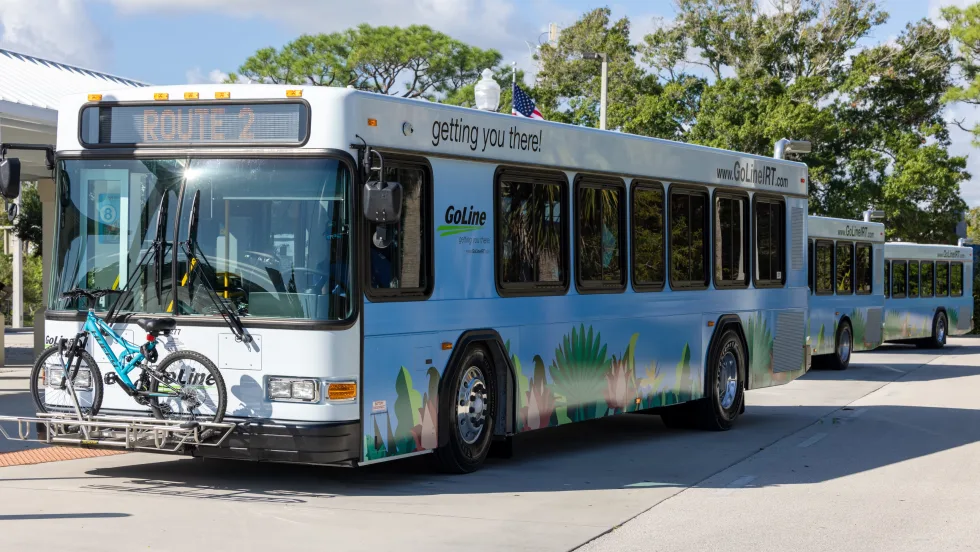
Indian River Transit’s Community-Focused Approach Earns National Recognition
Named APTA’s 2026 Outstanding Public Transportation System in its size category, Florida’s Indian River County transit system continues to grow ridership through fare-free service and a focus on evolving community needs.
Read More →
ENC Lands MATA Contract and More in Biz Briefs
In this edition of Biz Briefs, we spotlight the latest developments shaping the future of mobility.
Read More →

From Surviving to Thriving: Building Stronger Transportation Organizations
Bus Business Consultants founder Brian Dickson shares lessons on leadership, organizational health, and creating options for long-term success in a changing transportation industry.
Read More →
Everett Transit, Community Transit Outline Consolidation Agreement
The proposed agreement calls for a 50% increase in bus service in Everett, a new microtransit zone, continued paratransit service, and the transfer of Everett Transit operations to Community Transit.
Read More →
Strada360’s Steve Lassey on Turning Transit Data Into Better Decisions
From breaking down data silos to preparing for AI, Strada360 CEO Steve Lassey discusses how transit agencies can use technology to improve operations, customer information, and long-term decision-making.
Read More →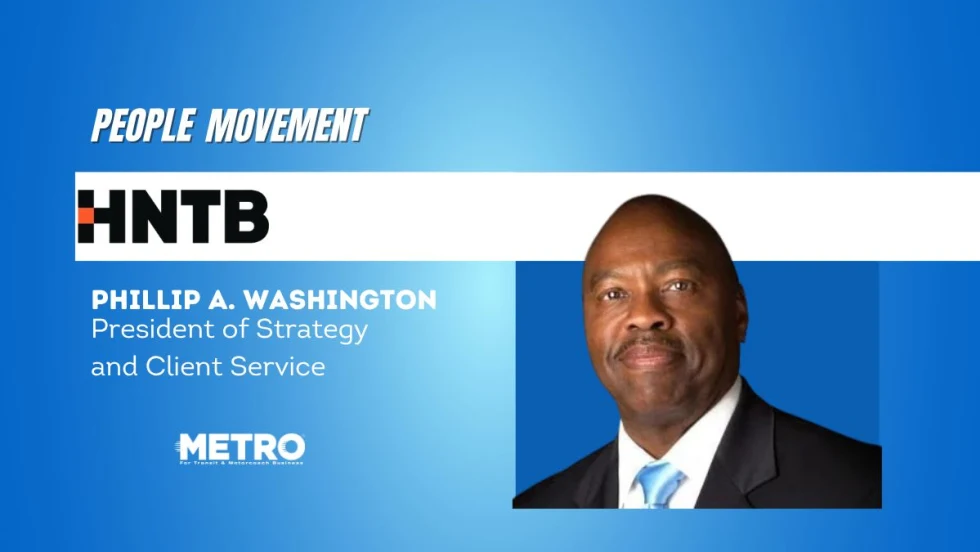
People Movement: Phil Washington Joins HNTB, Denver RTD Launches CEO Search, and More
In this edition, we also spotlight recent personnel moves at STV, the Eno Center for Transportation, and more, highlighting the people taking on new roles across the transportation industry.
Read More →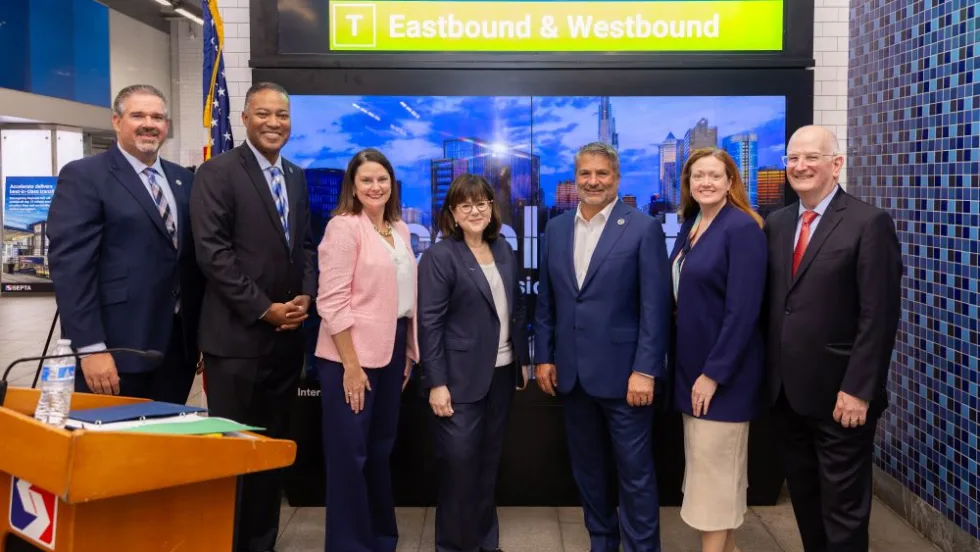
SEPTA Details Accelerate Vision for Transit System
The plan outlines investments in trolley modernization, new Metro and Regional Rail vehicles, accessible stations, and more frequent bus and rail service.
Read More →
FTA Ends Direct Oversight of MBTA Safety Actions
The federal agency closed its remaining special directive to the Massachusetts Department of Public Utilities following a safety review that began in 2022.
Read More →
Report: Transit Bus Manufacturing Supports 34,100 Jobs, $5.1B in GDP
The “Buses Mean Business” report examines the transit bus manufacturing industry’s economic footprint, supply chain, and rising demand for vehicle replacements.
Read More →