



RELATED: TriMet's McFarlane to retire
TriMet Ready to Make Rider Enhancements a Reality
The agency will use funds from a new statewide employee payroll tax to support two key priorities: a low-income fare program and bus service expansion.
by Janna Starcic, Executive Editor
November 28, 2017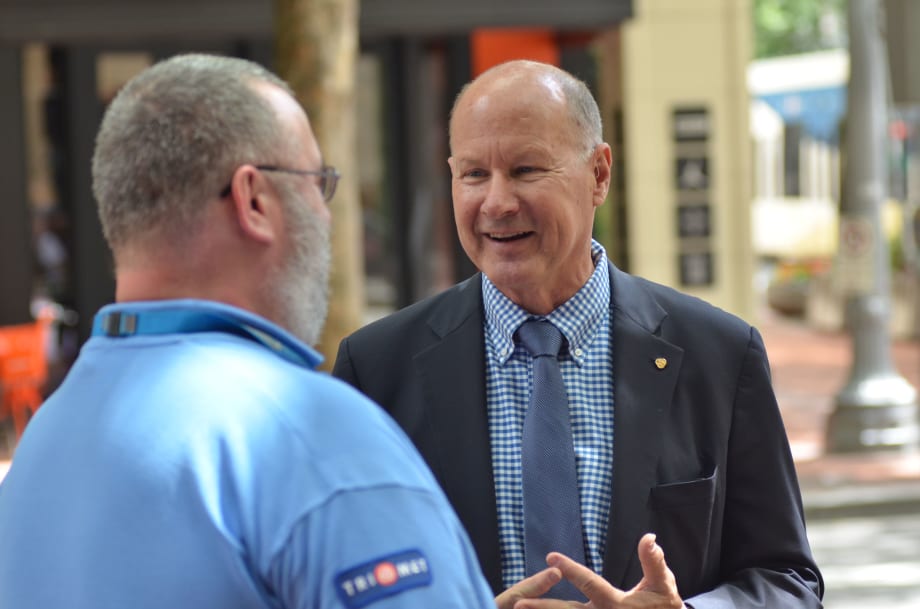
McFarlane touts TriMet’s “great operators and dedicated employees.”
10 min to read
Photos courtesy TriMet
This summer, Oregon lawmakers passed House Bill 2017 — the first comprehensive transportation package to receive legislative approval since 2009. The measure creates a statewide employee payroll tax dedicated to transit improvements. It is expected to generate $35 million to $40 million in additional annual revenue for TriMet. The agency will use the funds to support two key priorities: a low-income fare program and bus service expansion. We spoke to TriMet GM Neil McFarlane about the significance of this milestone and about the agency’s plans for the funding.
METRO:Explain the significance of the statewide funding package.
I have been with TriMet nearing three decades, and I’ve served as General Manager since 2010, and I can tell you that the state transportation funding package approved by the Oregon legislature is the most significant funding development for transit during my tenure. This was a hard fought bill. The need was evident but we were up against other issues in the state that could have eclipsed transit needs.
What did you learn from the experience?
One, we did not achieve this alone. The success we celebrated with the passage of this legislation was due to strong partnerships, transit advocates, and many groups coming together to address vital transit needs throughout the state. Our long-time support and collaboration with our colleagues statewide via the Oregon Transit Association helped demonstrate that transit was needed in all Oregon counties, not just metropolitan Portland.
Two, we planned for growth and expansion prior to knowing where we would get the funds. Beginning in 2013, we began deep engagement with riders, community groups, businesses, and jurisdictional partners, who helped us understand what and where the needs are and develop what we call Service Enhancement Plans for each section of our service district. Having a clear understanding of need and service expansion priorities based on planned regional growth helped us champion this bill.
What are the initial funding priorities?
We have outlined three main priorities for the new funding implement a low-income fare program, expand bus service, and address the region’s most congested travel corridors.
For more than a year, TriMet has worked with regional partners on developing the concept for a low-income fare program that could be pursued once we were able to identify a stable funding source. Now, with the dedicated transit funding we are in the position to build and implement a program that gives those who are living below 200-percent of the federal poverty level greater access to employment, education, healthcare, and services throughout the region. We are currently working on the overall implementation plan and expect TriMet’s low-income fare program to be in place by July 2018.
Along with low-income fare, we are going to be providing more access to transit in historically disenfranchised communities. This expanded bus service will be developed based on the extensive public feedback received during our Service Enhancement Plan process. In the coming years, we will build out bus service in areas with concentrations of affordable housing and create routes that connect those communities with the region’s bustling job centers.
The last piece of our plan for state transportation funds is aimed at keeping people who use our most popular routes moving and doing our part to reduce congestion in Portland metropolitan area. The Portland metropolitan area is experiencing an explosion of multi-family housing, which is helping fulfill land-use goals but challenging the transportation infrastructure. We are working aggressively to add services in the most congested travel corridors.
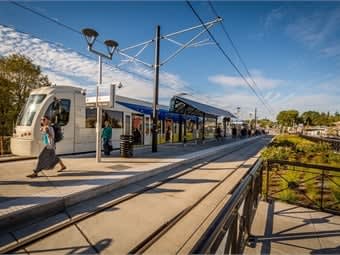
TriMet’s MAX Light Rail System consists of five different lines that serve 97 stations covering 60 service miles.
What types of issues will bus service improvements alleviate?
The funds from the state transportation package, which TriMet will begin receiving in January 2019, will help speed up the service expansion efforts we already have underway. We began those efforts last year with an increase in the employer payroll tax. The employer payroll tax funds about 59 percent of our transit operations.
TriMet’s Service Enhancement Plans are the blueprint to meet the explosive growth happening in our region and to get people where they need and want to go with transit service that is safe and reliable. Our plans focus on connecting people to jobs, services and retail. That means adding new bus lines that run between affordable housing areas and growing job centers, increasing service on our busiest bus lines, and expanding hours of service, including the return of 24-hour bus service on select routes for the first time in more than 30 years. By expanding and increasing our service, we’re making transit more accessible to all riders, especially seniors, people with disabilities and those making medium to low income wages.
TriMet’s expansion plans also focus on addressing traffic congestion. We are working closely with our regional transportation partners, including the City of Portland’s Bureau of Transportation; Metro, the regional government; and the Oregon Department of Transportation on a joint initiative known as the Enhanced Transit Concept. This establishes transit as a priority in key corridors to move more people faster, making transit an attractive and reliable option for people to get to work, school, services, and entertainment.
As traffic congestion has grown in the Portland metropolitan area, trips on TriMet buses are taking longer. The Enhanced Transit Concept looks at options to move the buses through the congestion more efficiently including dedicated bus lanes, business access, and transit lanes, and design improvements to speed the boarding process. Even minor solutions that leverage moderate capital and operational investments can vastly improve the speed and reliability of transit in our most congested corridors and help keep the city moving.
Besides funding, what other key challenges is TriMet faced with?
With the needs identified through our Service Enhancement Plans and continuing community outreach and the funding coming in, our biggest challenge now is adding the infrastructure needed to expand service.
You cannot add millions of dollars in service overnight. It requires careful planning and consideration of all of the elements needed in expanding service. That includes hiring operators, purchasing buses, hiring and training mechanics and service workers to keep the vehicles running, expanding bus garage facilities, growing security resources, and much more. TriMet will expand service in the degree possible but it will take time. We are currently envisioning a five-year ramp-up.
What project have you recently completed?
In July of 2017, TriMet and our transit partners publicly launched the Hop Fastpass™ regional electronic fare system. This project had been in development for more than five years. We wanted to develop a fast, easy, and convenient account-based fare payment system that reduced the reliance on cash. It’s a regional transit pass for seamless riding across the three main transit providers in the Portland-Vancouver area — TriMet, C-TRAN, and Portland Streetcar.
Hop offers users exciting benefits, including the ability to earn day and month-passes with each ride. This feature eliminates the need for riders to incur the upfront costs associated with purchasing a pass. They simply tap their card to the Hop reader each time they ride, and earn day and month-passes as they go. Using Hop technology, we also offer our riders the ability to purchase fare with their smartphone mobile wallet. Riders who enable Android Pay, Apple Pay or Samsung Pay can tap their phone to any Hop reader to purchase one Adult fare.
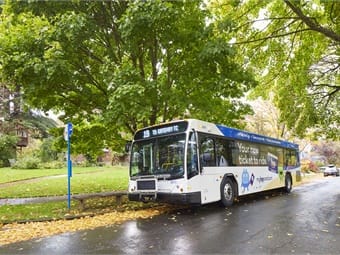
TriMet is currently in the process of receiving 57 new Gillig 40-foot buses, which are being acquired as part of a 2013 contract to augment the fleet.
You are in the midst of receiving Gillig buses to augment the fleet. What amenities does the new fleet have?
TriMet is currently in the process of receiving 57 new Gillig 40-foot buses, which are being acquired as part of a 2013 contract to augment the fleet. Our goal is to have all of these new buses in service by the end of January 2018. The majority of TriMet’s buses — 369 of 681 vehicles — have been acquired since 2012. As we purchase new buses, we retire our oldest and most problematic vehicles, which increases service reliability and decreasing overall maintenance costs.
All TriMet buses acquired since 2012 were made by Gillig and have low floors, air conditioning, the latest emission-reduction technology, electric engine cooling, and interior and exterior security cameras. These buses also have automatic stop announcements, easy-to-clean vinyl seats, larger windows, brighter LED lighting, handrails, and a gently sloping floor at the rear exit and a GPS dispatch/tracking system. On our most recent buses, we’ve added LED turn-signal lights on mirrors. This feature improves safety and alerts pedestrians and cyclists when a bus is preparing to turn.
Tell me about TriMet’s electric bus pilot.
TriMet is excited about the promise of battery-electric bus technology and is looking forward to the addition of five 40-foot battery-electric buses joining the fleet in 2018. This pilot project will enable TriMet to gain firsthand experience with the emerging technology and to validate cost and performance in our operating environment. This will help our agency better understand any changes needed to scheduling and operations to accommodate battery charging.
We are in the early stages of plan development for a possible transition to electric propulsion for the entire bus fleet. In addition to piloting electric buses for the fleet, TriMet has applied to form a federally funded consortium through the Federal Transit Administration’s ZERO program. We would partner with Portland General Electric and other electric utilities, bus manufacturers and transit agencies around the country to develop a reliable pathway for expanding battery-electric fleet choices and utilization. This would be done through encouraging the bus manufacturing industry to continue to advance bus, charger and battery technology, reliability and affordability. This would enable transit agencies and utilities to better understand the requirements of converting large fleets of buses to electric propulsion, which can create high levels of power demand in concentrated locations. This is particularly important for agencies with larger fleets, such as TriMet and the peer agencies with whom we have applied to form the consortium.
Discuss the Division Transit Project?
The Division Transit Project offers an exciting opportunity to provide high-capacity transit service to one of our most diverse geographic regions, and one that needs and wants more transit options. This type of bus service will be new to TriMet and riders, reducing travel time up to 20 percent while increasing service reliability. Service will be quicker as riders will be able to board and pay fare electronically at three doors of the bus. Stations will be located where rider demand is greatest. New 60-foot articulated buses to be operated on this line that have capacity for 60 percent more riders than our standard buses, accommodating the busy ridership already seen along the Division corridor between downtown Portland and Gresham.
Right now, TriMet is working with the community and businesses along the 14-mile route to ensure this project is designed and constructed with the same input, care and diligence as our light rail projects. The project is at 30 percent design, and currently with the Federal Transit Administration for funding consideration. We eagerly anticipate moving forward with the project and opening this service in 2021.
How will planned light rail improvements help with service?
TriMet’s MAX Light Rail System consists of five different lines that serve 97 stations covering 60 service miles. It connects communities in Beaverton, Clackamas, Gresham, Hillsboro, Milwaukie and Portland, as well as Portland International Airport, providing nearly 40 million rides over the last year. The MAX Orange Line, which opened in September 2015, continues to see strong gains with both weekday and weekend ridership. It averages about 67,000 trips per week, and that number continues to rise.
Our light rail system, just like any other across the country, requires repairs and upgrades. The oldest section of the system is more than 30 years old, opening in September 1985. As with any light rail system of such age, replacements and improvements are necessary to continue providing safe and reliable service for our riders. In 2016, we began a series of major improvement projects to replace switch machines, install new rail and overhead wire in sections and upgrade trackway materials with newer, longer-lasting products. These projects help us increase MAX reliability, lessen delays and create a smoother, better ride for our customers.
Meanwhile, we are making improvements to some of our oldest light rail stations including shelter renovations, better lighting, new information monitors, platform surface repairs, new tactile warning strips and upgraded amenities to improve the overall customer experience.
Our region is looking to expand the light rail system to better serve residents and reduce traffic congestion. The Southwest Corridor is the fastest growing corridor in Oregon, already containing more than 10 percent of the region’s population.
Congestion is expected to double in the next 20 years, and the corridor will grow by more than 70,000 residents and 65,000 jobs by the year 2035. That’s why light rail is one crucial response to that growth, as it would connect downtown Portland, still our region’s largest employment center, with Southwest Portland, Tigard and Tualatin. Metro estimates that by 2035, light rail will carry almost 20 percent of commuters heading south from downtown Portland—commuters who otherwise would travel on Barbur Boulevard or Interstate 5. Design and construction would create over 23,000 jobs and the resulting high-capacity service would attract an estimated 40,000 riders by 2035. Planning continues on this vital component to improving connections and travel options for our growing region.
Subscribe to Our Newsletter
More Management
CATS Launches West Charlotte Microtransit Zone, Expands Transit Services
The new microtransit zone connects residents to key destinations as Charlotte Area Transit System rolls out the first phase of its 2055 Transit System Plan.
Read More →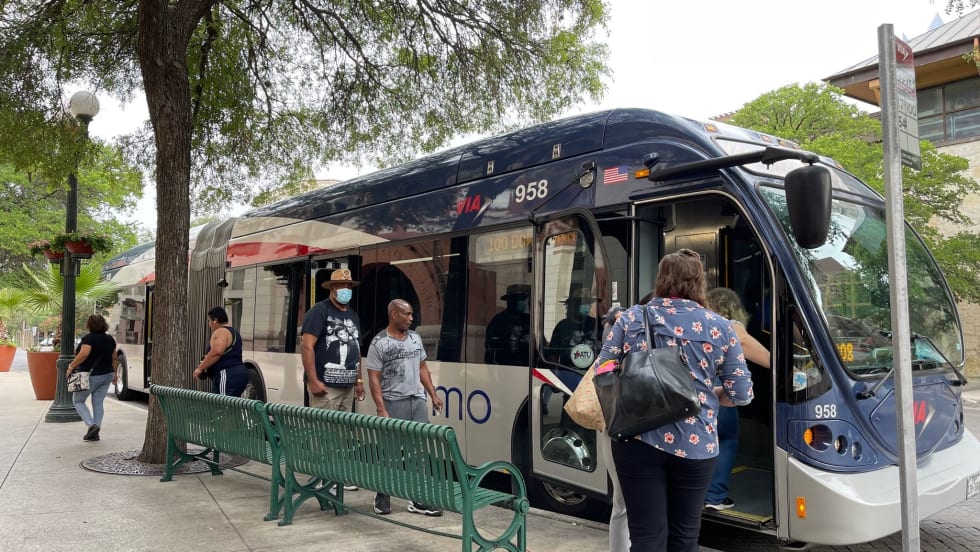
VIA Bus Ridership Grows 10.1% Through August 2026
San Antonio's VIA Metropolitan Transit reported the highest bus ridership growth among major Texas transit systems. Federal Transit Administration data ranked it second among the nation's 50 largest transit systems.
Read More →
CSA Group Releases Climate Resilience Standard for Transit, Passenger Rail
Developed with support from the Standards Council of Canada, CSA D700 guides assessing climate-related risks and planning adaptation measures for transit and passenger rail systems.
Read More →
ETA CEO John Maglio on Transit Technology, Innovation, and Building Agency Trust
ETA founder and CEO John Maglio explores the evolution of transit technology, the importance of reliable systems, and how stronger partnerships can help agencies improve operations and the passenger experience.
Read More →
COTA Launches First Customer Experience Action Plan to Improve Transit Service
The new plan outlines improvements to service reliability, accessibility, communication, and the overall rider experience across Central Ohio's transit system.
Read More →
LA Metro September Ridership Climbs 3.9%, Led by Rail Growth
The agency recorded more than 27.2 million boardings, with rail ridership increasing 12.4% year over year and the D Line posting the largest gains.
Read More →
Utilimarc Launches SmartReplace to Optimize Fleet Replacement Decisions
AI-powered SmartReplace helps fleets prioritize vehicle replacements, model budget scenarios, and build more defensible long-term strategies.
Read More →
APTA Honors 2026 Award Winners, Hall of Fame Inductees at TRANSform & EXPO
Innovations in autonomous and zero-emission transportation, standout transit systems, and industry leadership took center stage among this year's honorees.
Read More →
7 Ways to Build a Better Transit Internship Program
Lessons from DRPA/PATCO’s approach to creating a meaningful internship experience—and developing the next generation of transportation professionals.
Read More →
Scenes from APTA TRANSform & EXPO 2026
Transit leaders, manufacturers, and industry professionals gathered in Chicago to explore new technologies, share ideas, and discuss the future of public transportation.
Read More →