



Unlocking the Door to Finding, Keeping Talented Transit Staff
With changing demographics and a new generation of workers, transit agencies are faced with attrition, competition from the private sector and image problems. The transit industry is hitting the brakes and following a new path toward recruiting and retaining skilled employees.
Remember when your parents asked you what you wanted to be when you grew up? A firefighter, movie star or astronaut might have been your response, but you didn’t answer: “I want to work in public transportation.” The transit industry has long suffered an image problem that results in it not being viewed as a career of choice by the general public. It is this image problem, coupled with issues of attrition and competition from the private sector, that creates a continuous challenge for the transit industry when it comes to recruiting and retaining skilled employees. Federal Transit Administrator Jenna Dorn has designated the employment issue as a top priority during her tenure. “We face many challenges in terms of attracting the right kind of professionals who need to understand issues of complexity when building large projects or meeting the mobility needs of various constituent groups,” said Dorn in her speech at the annual meeting of the American Public Transportation Association (APTA). Recruitment hurdles Some of the greatest recruitment challenges for transit properties are in high-skilled areas such as information technology (IT) professionals. “Technology is always changing and it’s very dynamic. A lot of people with that background can write their own ticket,” says Mary Ann Collier, a senior director with the Metropolitan Transit Authority of Harris County in Houston. Manuel Herrera, a senior manager with the Regional Transportation District (RTD) in Denver, is finding it easier to recruit IT professionals but has experienced trouble recruiting engineers. RTD has some competitive pressures, says Herrera, because of local construction and development opportunities that are available for engineers. Competitive pressure from the private sector is nothing new in terms of transit salaries. Many transit properties are public agencies, and therefore cannot always pay market prices. Transit agencies have trouble adjusting both salaries and pay structures to compete effectively with the private sector, says Brian Vogel of Quatt Associates, a consulting firm in Washington, D.C. Vogel, principal investigator for a Transportation Cooperative Research Program (TCRP) study released in December 2001, found non-competitive wage programs to be a pervasive trend throughout the transit industry. The challenge of recruiting highly-skilled employees like IT professionals is dependent on the marketplace and varies with each transit agency. “You talk to properties in high-tech areas and they have trouble attracting IT people, “ Vogel says. The opposite can be said of older industrial areas, where properties are able to sell themselves as being IT intensive. Image is everything Another hindrance for recruitment in the transit industry is public transportation’s image problem. One of the common misconceptions the public has about the transit industry is that it is made up of nothing but bus operators and mechanics, when in fact transit agencies have an infrastructure not unlike any other company in terms of all the professional disciplines available. Houston Metro’s Collier agrees. “People don’t think of transit as a place to work,” she says. “You never hear a child say, ‘I’m going to grow up and be in transit.’” Careers in transportation need to be marketed as a career of choice. Students in high schools and universities or even earlier education levels should be encouraged to view transportation and transit in general as a viable career, says Gail Charles. As a deputy general manager with the Metropolitan Atlanta Rapid Transit Authority (MARTA), Charles foresees headway being made with this issue by way of APTA’s Workforce Development Taskforce, created to address critical needs facing the transit industry. Common dilemmas … You could qualify retirement as a retention problem by default. Nevertheless, it is an impending dilemma that is ready to explode. Demographics are changing and the aging of America is upon us. Transit agencies will start to see a rash of retirements if they have not already, leaving behind gaping holes in the workforce. Downsizing, not unlike the issue of retirement, is another workplace trend that bleeds the transit industry of talent. Before Sept. 11, transit agencies were already feeling the effects of a recessive economy, but now are facing more belt-tightening with revenue shortfalls, resulting in the delivery of early-retirement packages. “There are people who have been with us for 25 to 30 years, in senior management positions, who have a lot of knowledge in their heads,” says Susanne Fossey, vice president of human resources for BC Transit. “And they are going to leave with that knowledge.” As with any position, recruitment takes time, but possibly more so for senior-level positions. Meanwhile, the organization limps along until somebody comes on board, says Harold Bartlett, secretary and chief of staff at the Washington Metropolitan Area Transit Authority. “Once they get on board it takes time for the person to really learn the culture of the organization,” says Bartlett, who stresses the importance of “growing your own” replacements by way of succession planning. MARTA’s Charles, who also favors succession planning, says transit systems have a responsibility to plan for imminent position vacancies to keep systems going. ... and retention problems Not getting a promotion is one of the chief reasons people want to leave their job, says Daphne LeBlanc, founder of Daphne LeBlanc & Associates, a Los Angeles-based recruitment firm specializing in public transportation. People are looking to promotional opportunities for growth, as well as pay increases. With more than 10 years of transit industry recruitment under her belt, LeBlanc says this issue is most prevalent at mid-level positions, with employees leaving one transit property for another. David Stumpo, president of the APTREX Institute and former general manager of BC Transit in Victoria, B.C., says it is difficult to move up in organizations with funding problems. “It just seemed like your career would stagnate at a certain level.” Because transit systems are looking for people with multi-system experience, they tend to seek talent from other systems and not promote from within, creating another problematic trend. Historically, transit is a very traditional and insular industry, says Beverly Scott, APTA vice-chair of human resources and general manager of the Rhode Island Public Transit Authority. “Human resource issues are something transit is not typically comfortable with,” says Scott. The industry has become more complex over the years, with very different requirements in terms of the kinds of people needed to fill positions. Identifying the issues Some proactive steps that have already been taken toward addressing the transit industry’s plight have a lot to do with issue identification. The TCRP study, an outgrowth of APTA’s workforce development initiative, was a joint effort among the Federal Transit Administration, Transportation Research Board and APTA. Research conducted by Brian Vogel of Quatt Associates consisted of comprehensive interviews with representatives of properties of varying sizes, as well as other stakeholders such as labor unions and transit-related businesses. Vogel says the purpose of the study was to identify key workforce challenges facing the industry and current approaches to addressing those challenges. One of the measures the FTA hopes to facilitate is a system of information sharing among transit properties, whether it’s via the Internet, publications or outreach programs. “A lot of improvements in workforce development have to occur transit system by transit system,” says Matt Welbes, acting director of the FTA’s D.C. office. “So if Dallas Area Rapid Transit has excellent training methods, we want to be able to circulate that idea to transit agencies around the country.” The FTA also plans to target the educational aspect of transit by looking at National Transit Institute courses. “We want to look at training that is focused on workforce development,” says Welbes. The FTA will analyze the types of training available that support human resource personnel at public transit agencies. Training should include industry-specific information, such as best ways to recruit public transportation employees, says Welbes.
More Management

Bus Tech Talk: Keeping Transit Technicians Ahead of the Technology Curve
In this episode of Bus Tech Talk, Complete Coach Works’ Business Development Manager Mark Hollenbeck and METRO’s Executive Editor Alex Roman sit down with Obed Mejia, Senior Technical Trainer for Bus Maintenance, at LA Metro to discuss how rapidly evolving bus technology is changing the maintenance shop — and the skills technicians need to keep pace.
Read More →
Michael Schneider Joins Paslay Group to Expand Transportation Practice
The longtime transportation executive will help Paslay Group grow its advisory and program management work across transit, highway, and other infrastructure sectors.
Read More →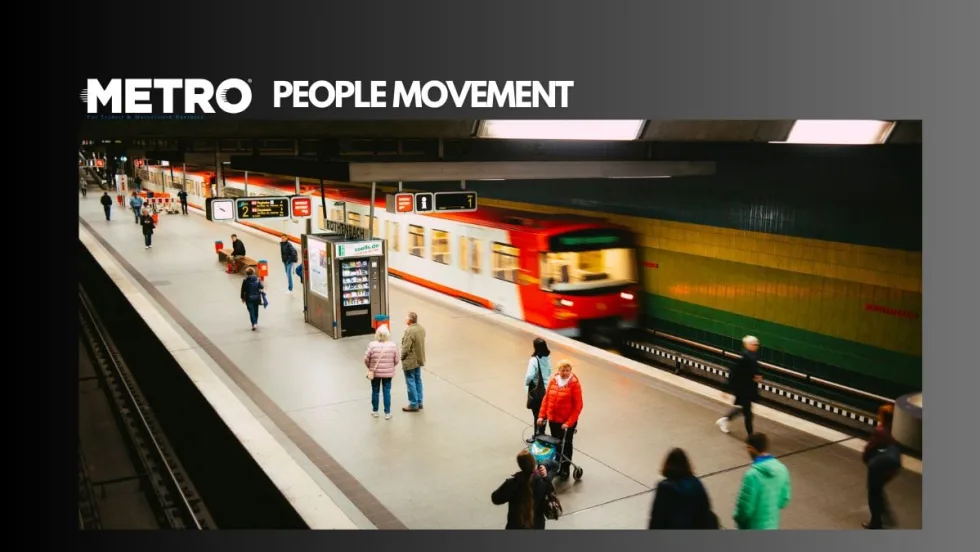
People Movement: Connectpoint Expands Leadership Team, Stadler Names New Group CEO, and More
In this edition, we also spotlight recent personnel moves at Burns, UZURV, and more, highlighting the people taking on new roles across the transportation industry.
Read More →
More Than a Summer Job: Building the Next Generation of Transit Talent
The Delaware River Port Authority and PATCO have transformed their internship program into a hands-on professional development experience that introduces students to the breadth of transportation careers — and creates a pipeline for future employees.
Read More →
LA Metro Board Awards 220 Battery-Electric Bus Contract to ENC
The contract, which is the largest base award of battery-electric buses by a U.S. transit agency, will be built in Southern California, sustaining good jobs as LA prepares to welcome the world in 2028
Read More →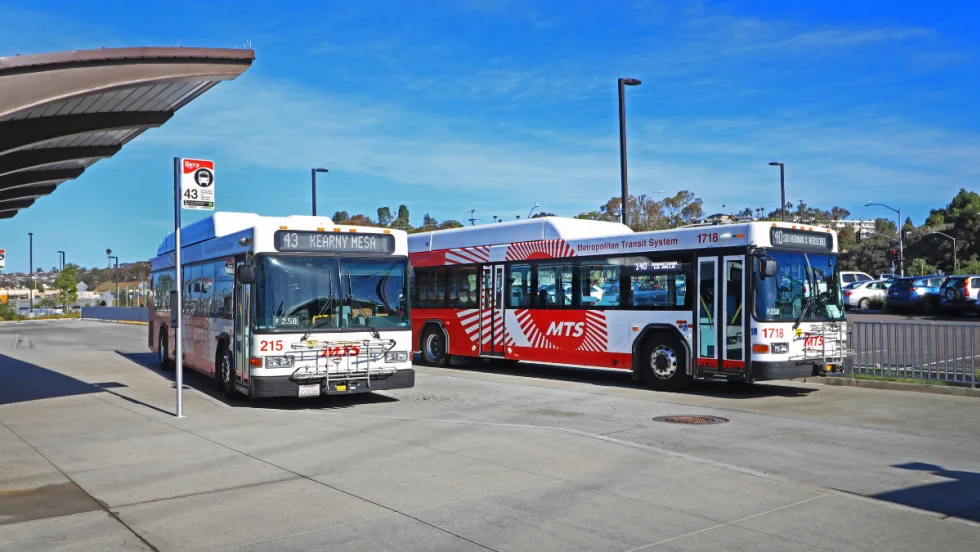
What’s Behind San Diego MTS’s Award-Winning Transit Strategy
Named one of APTA’s 2026 Outstanding Public Transportation Systems with 50 million or more annual passenger trips, California’s San Diego Metropolitan Transit System points to gains in ridership, safety, technology, and reliability as foundations of its success.
Read More →
Public Transit Conference Returning to GFX in 2027, Call for Papers Now Open
The Call for Papers is now open, allowing transit agency professionals and industry experts to help shape the PTC educational program by submitting session ideas for consideration.
Read More →
Indian River Transit’s Community-Focused Approach Earns National Recognition
Named APTA’s 2026 Outstanding Public Transportation System in its size category, Florida’s Indian River County transit system continues to grow ridership through fare-free service and a focus on evolving community needs.
Read More →
ENC Lands MATA Contract and More in Biz Briefs
In this edition of Biz Briefs, we spotlight the latest developments shaping the future of mobility.
Read More →From Surviving to Thriving: Building Stronger Transportation Organizations
Bus Business Consultants founder Brian Dickson shares lessons on leadership, organizational health, and creating options for long-term success in a changing transportation industry.
Read More →