



RTD Launches Multilingual 'I Speak' Buttons, QR Decals to Expand Rider Language Access
RTD is distributing 1,500 buttons in Spanish, Amharic, French, Arabic, Oromo, Swahili, Italian, Nepali, German, Hindi, Farsi, and American Sign Language. Employees can volunteer to wear them on their shirts, hats, lanyards, or other visible items, in accordance with uniform standards.

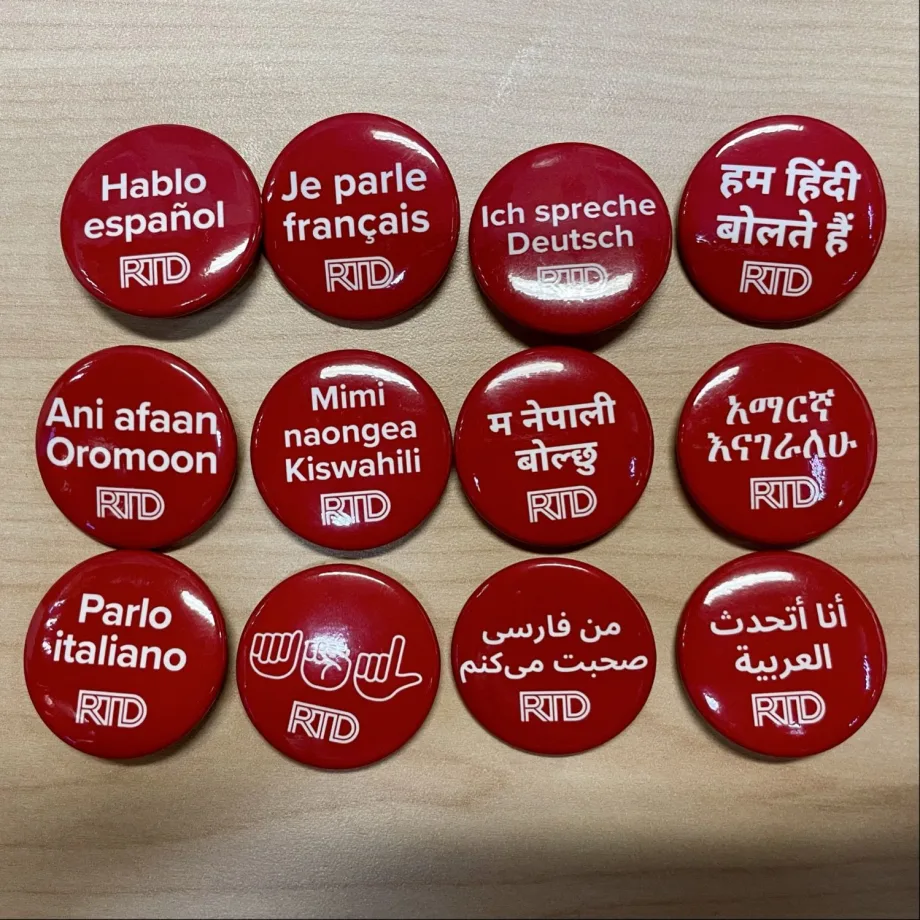
The buttons help customers quickly identify employees who can assist them in their preferred language.
Denver RTD
- RTD is introducing 1,500 buttons in various languages, including Spanish, Amharic, and American Sign Language, to aid communication with riders.
- The buttons are available in 12 languages, allowing staff to display their language skills visibly.
- Staff members may choose to wear these buttons as part of their uniform to assist riders who speak different languages.
*Summarized by AI
Denver’s Regional Transportation District (RTD) is rolling out two new tools to improve transit access for non-English-speaking riders: multilingual “I Speak” pin-back buttons for frontline staff and Language Help decals on buses, helping customers get information in their preferred language.
RTD is distributing 1,500 buttons in Spanish, Amharic, French, Arabic, Oromo, Swahili, Italian, Nepali, German, Hindi, Farsi, and American Sign Language. Employees can volunteer to wear them on their shirts, hats, lanyards, or other visible items, in accordance with uniform standards.
Boosting Inclusivity
An internal survey conducted in winter 2024 found that 30% of approximately 660 responding RTD employees, including contracted staff, speak a language other than English fluently. More than half of those employees speak Spanish. Other commonly spoken languages among staff include Amharic, French, Arabic, and Oromo.
RTD selected the button languages based on this survey data and the most commonly spoken languages within its workforce.
The buttons help customers quickly identify employees who can assist them in their preferred language. Employees are encouraged to wear a button if they speak the language fluently, meaning they can speak or read it easily and accurately.
RTD officials said that supporting multilingual communication is important because many of its customers speak languages other than English. RTD’s service area includes approximately 3.1 million people. Of those, about 200,812 residents, or roughly 7%, speak English less than very well, according to the American Community Survey.
Research conducted by RTD’s Transit Equity Office as part of the agency’s Language Access Program found that communities with greater linguistic diversity also tend to rely on transit at higher rates than predominantly English-speaking communities.
Initiatives like the “I Speak” buttons help connect customers with employees who can assist them in their preferred language, supporting RTD’s commitment to inclusive customer service, the agency said.
“Transit works best when customers feel comfortable asking for help,” said Dani McLean, RTD transit equity specialist, who helped lead the “I Speak” button initiative. “These buttons make it easier for customers to quickly identify employees who can help them in their preferred language. It’s a simple way to help customers feel supported and welcomed while also recognizing and celebrating the many languages and cultures represented across RTD’s workforce.”
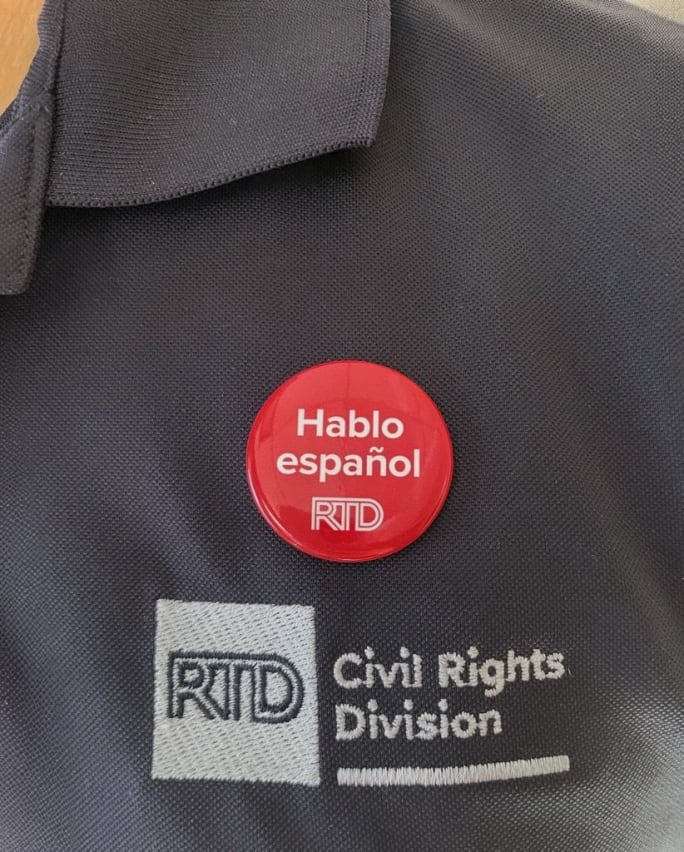
Employees are encouraged to wear a button if they speak the language fluently, meaning they can speak or read it easily and accurately.
Denver RTD
Boosting Transit Equity
Bus operators frequently help customers navigate routes, fares, and schedules, even when there is a language barrier. To support both customers and operators, RTD is installing clearly visible QR code decals near bus entry doors. If a customer needs help, operators can point to the decal so customers can access translated information without delaying service or compromising safety.
When scanning with a smartphone, the QR code directs customers to a dedicated RTD Language Help webpage with information customers most often ask operators about, including Next Ride trip planning, Customer Care contact information, fares, and security.
The webpage can be translated into multiple languages, including Spanish, Amharic, Simplified Chinese, French, Korean, Nepali, Russian, Somali, and Vietnamese. When scanned from the bus decal, the webpage defaults to Spanish.
"Our priority throughout the project was keeping bus operator and customer safety at the center of the conversation," said Andrew Garcia, transit safety specialist at RTD. "At the same time, we wanted to make sure the solution would be a meaningful resource for customers. By giving operators a simple tool they can point to, customers can quickly access language assistance and transit information, improving the overall RTD experience while allowing operators to stay focused on the safe operation of the vehicle.”
These initiatives support RTD’s 2025-2028 Language Access Plan, which outlines how the agency provides meaningful access to services for individuals with limited English proficiency under Title VI of the Civil Rights Act.
From 2022 through 2025, RTD expanded translation of vital documents for accessing services, improved website language functionality, enhanced telephonic interpretation services, increased multilingual public meeting materials, and strengthened partnerships with community-based organizations serving immigrant and refugee communities. The “I Speak” buttons and Language Help decals build on this progress and support the goals outlined in RTD’s Language Access Plan.
RTD began distributing “I Speak” buttons to customer-facing staff the week of March 6. Bus operator follow-up training will include information about the Language Help decal throughout March, with decals installed on vehicles over the coming months.
Quick Answers
RTD has launched multilingual 'I Speak' buttons and QR decals to improve language access for riders.
*Summarized by AI
More Management

Bus Tech Talk: Keeping Transit Technicians Ahead of the Technology Curve
In this episode of Bus Tech Talk, Complete Coach Works’ Business Development Manager Mark Hollenbeck and METRO’s Executive Editor Alex Roman sit down with Obed Mejia, Senior Technical Trainer for Bus Maintenance, at LA Metro to discuss how rapidly evolving bus technology is changing the maintenance shop — and the skills technicians need to keep pace.
Read More →
Michael Schneider Joins Paslay Group to Expand Transportation Practice
The longtime transportation executive will help Paslay Group grow its advisory and program management work across transit, highway, and other infrastructure sectors.
Read More →
People Movement: Connectpoint Expands Leadership Team, Stadler Names New Group CEO, and More
In this edition, we also spotlight recent personnel moves at Burns, UZURV, and more, highlighting the people taking on new roles across the transportation industry.
Read More →
More Than a Summer Job: Building the Next Generation of Transit Talent
The Delaware River Port Authority and PATCO have transformed their internship program into a hands-on professional development experience that introduces students to the breadth of transportation careers — and creates a pipeline for future employees.
Read More →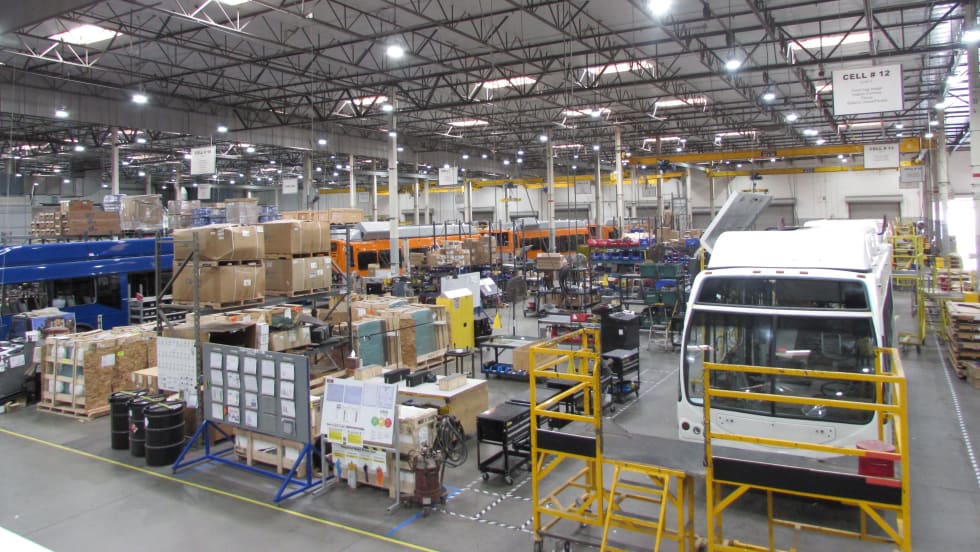
LA Metro Board Awards 220 Battery-Electric Bus Contract to ENC
The contract, which is the largest base award of battery-electric buses by a U.S. transit agency, will be built in Southern California, sustaining good jobs as LA prepares to welcome the world in 2028
Read More →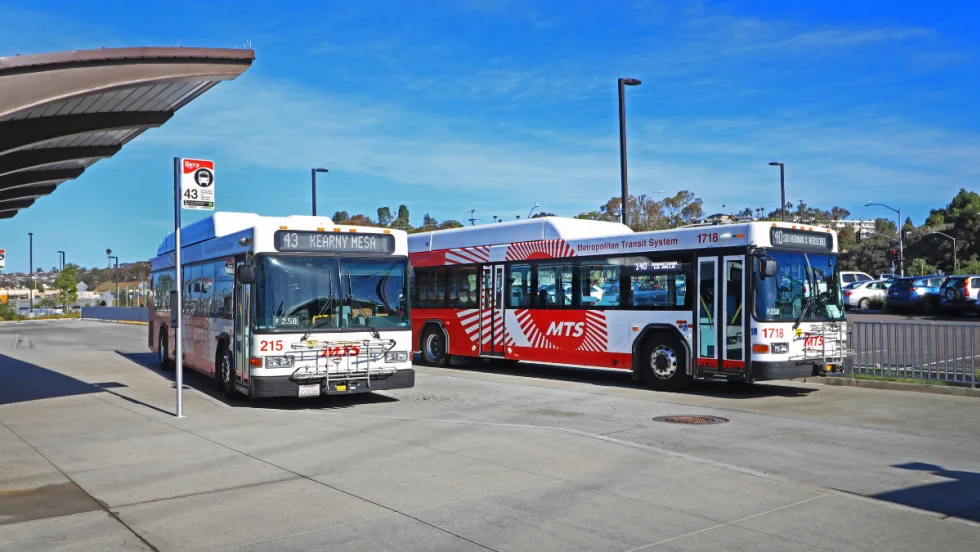
What’s Behind San Diego MTS’s Award-Winning Transit Strategy
Named one of APTA’s 2026 Outstanding Public Transportation Systems with 50 million or more annual passenger trips, California’s San Diego Metropolitan Transit System points to gains in ridership, safety, technology, and reliability as foundations of its success.
Read More →
Public Transit Conference Returning to GFX in 2027, Call for Papers Now Open
The Call for Papers is now open, allowing transit agency professionals and industry experts to help shape the PTC educational program by submitting session ideas for consideration.
Read More →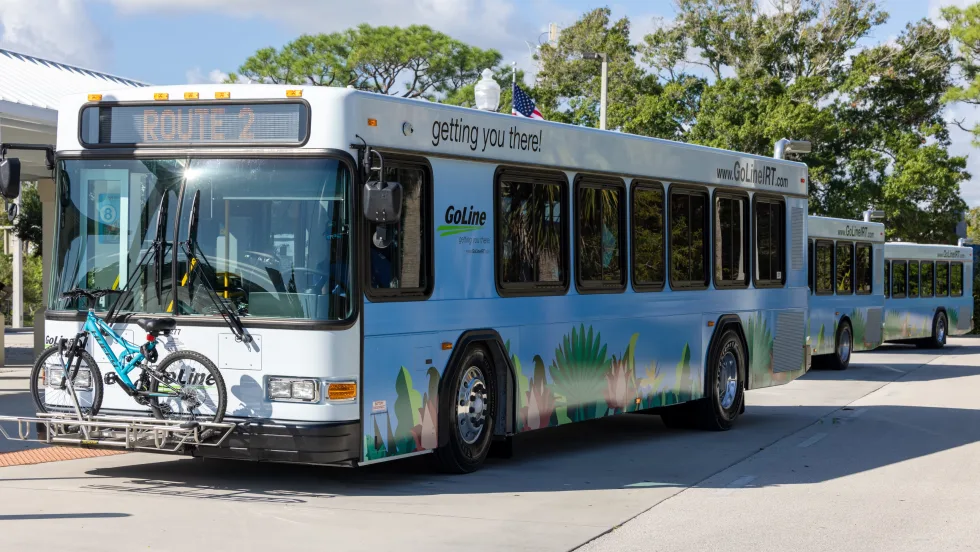
Indian River Transit’s Community-Focused Approach Earns National Recognition
Named APTA’s 2026 Outstanding Public Transportation System in its size category, Florida’s Indian River County transit system continues to grow ridership through fare-free service and a focus on evolving community needs.
Read More →
ENC Lands MATA Contract and More in Biz Briefs
In this edition of Biz Briefs, we spotlight the latest developments shaping the future of mobility.
Read More →From Surviving to Thriving: Building Stronger Transportation Organizations
Bus Business Consultants founder Brian Dickson shares lessons on leadership, organizational health, and creating options for long-term success in a changing transportation industry.
Read More →