



Are your bus operators square?
If you are in transit, you know this question has nothing to do with lifestyle and everything to do with left hand turns. And in transit, we prefer squares. For the sake of clarity, we are talking about the difference between taking extra care to square off a left-hand turn as opposed to simply rounding the turn. A square turn involves setting up the pivot point of the bus and by its very nature requires the operator to conduct the turn at a much slower rate of speed.

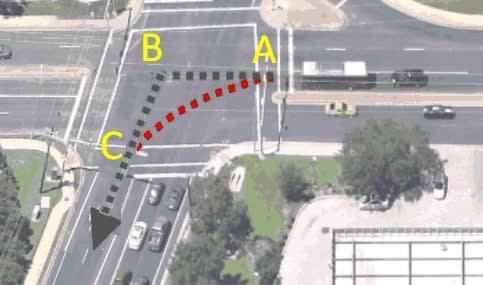
If you are in transit, you know this question has nothing to do with lifestyle and everything to do with left hand turns. And in transit, we prefer squares.
For the sake of clarity, we are talking about the difference between taking extra care to square off a left-hand turn as opposed to simply rounding the turn. A square turn involves setting up the pivot point of the bus and by its very nature requires the operator to conduct the turn at a much slower rate of speed.
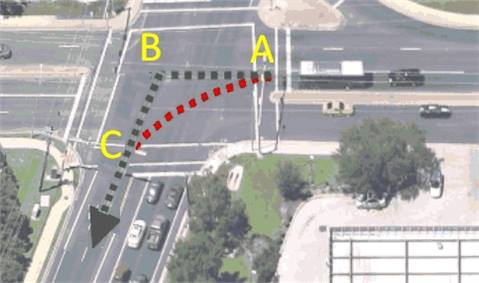
We have heard the phrase “walking the bus through the turn” used to describe the discipline of covering the brake while the bus is turning. This allows an operator to halt the bus safely if a pedestrian should enter into the crosswalk area.
A sweeping turn generally requires the operator to apply the accelerator, but even if they are covering the brake—the bus is still likely to be carrying more speed, which will require a greater distance to stop the bus.
A slower rate of speed allows for greater control of the bus during the turn, enabling the bus operator greater opportunity to “rock and roll” in the seat—so they can look around visual obstructions and resolve blockages that may be temporarily imposed by the structure of the bus (pillars) and/or mirror assemblies.
The deeper angle of entry into the turn during set up and positioning (Point B) within the intersection also allows for an improved view of the crosswalk area through the front windshield, side window, and rear view mirror.
By crunching over the wheel, the mirror can be used during a square turn to view the portion of the crosswalk positioned to the rear of the operator all the way back to the curb before the bus begins turning and enters into the crossing zone.
The sweeping turn (which begins at Point A and follows the path of red dots) does not allow the mirror to be utilized to its full capacity, making it more difficult to determine whether someone has begun crossing from a position rearward of the bus operator. Don’t forget, the bus will likely be traveling at a higher rate of speed when it reaches Point C, too. What could happen if a distracted pedestrian--engrossed in their handheld device--continues walking as the bus enters the crosswalk area?
I’m sure we could list many more benefits; however, we likely can agree that a square turn poses less risk and is considerably safer than a sweeping turn.
This then, begs the question… are your bus operators squares or sweepers? Which type of turn is being executed most frequently within your transit system? Is there a greater tendency to conduct sweeping turns during “dead head” runs back to the depot? Do you have hard evidence to support your answers?
If not, try to get out there and work with your operators to help them identify any unsafe habits and replace them with techniques and behaviors that promote safe bus operations. It’s all about prevention. Show your operators the benefits of being square.
This post expands on a safety bulletin produced by Don Jans while at Transit Mutual Insurance Corp. The photo (originally marked up by James Hoskins, Capital Metro, Austin, Texas) has also been used to promote safety messaging within Veolia Transportation.
Additional Teaching Points:
Full scan of crosswalk area should be made as bus approaches intersection (Point A).
Likewise, Point C requires a full scan as the bus prepares to enter the crossing zone.
Don’t accelerate during the turn, wait until the bus is straight before going to the throttle.
Slow turns also improve the customer’s ride and reduces the risk of falls (particularly when turns are followed by service stops as customers often rise early and move toward the doorway during the turn).
There are many more scenarios and teaching points that can be integrated into a training session on left turns, so have fun and be creative.
In case you missed it...
Read our previous blog, "Deprogramming the new hire candidate."
More Blog Posts
Improving Transit Accessibility by Offering Assistive Listening
Did you know that there are literally tens of millions of people worldwide with hearing loss, many of whom will use some form of public transit at some point?
Read More →
35 Years of the ADA, Making Travel Easier for Seniors
Thirty-five years after the passage of the Americans with Disabilities Act of 1990 (ADA), the impact of this landmark piece of civil rights legislation cannot be overstated.
Read More →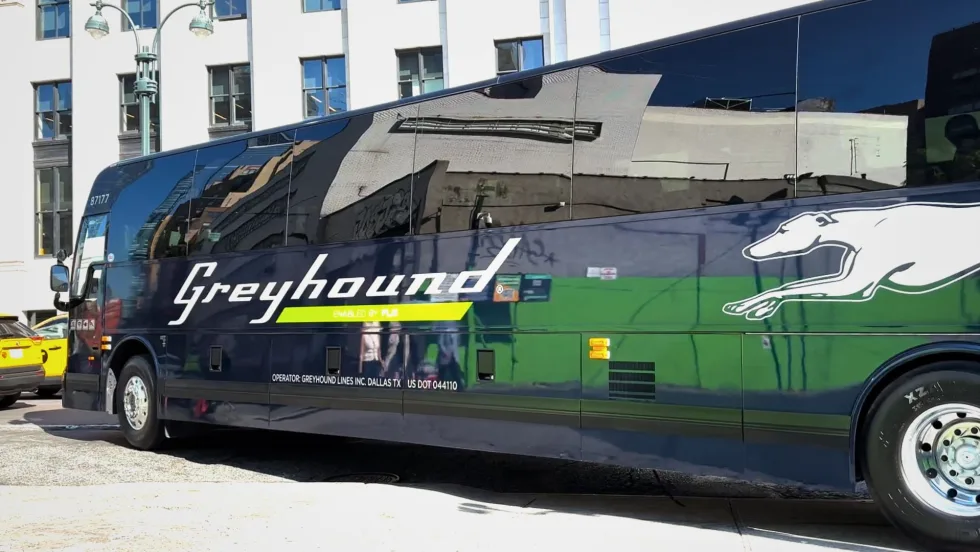
Driving Performance with Purpose: How I Lead One of Greyhound’s Top Teams
Safety, on-time performance, and customer experience are critical elements in intercity bus operations. But getting them right doesn’t come down to plans or protocols alone. It comes down to execution. How well your team performs on the ground, in real time, is what defines success.
Read More →
Navigating Emerging Privacy Laws: A Call to Action for Service Providers in Mass Transit
With Data Privacy Day Jan. 28, I want to spotlight a critical challenge faced by service providers in the mass transit sector: managing personal information responsibly in an era of rapidly evolving privacy regulations.
Read More →
Human Trafficking Awareness: What Public Transportation Can Do?
January is National Slavery and Human Trafficking Prevention Month in the U.S., and January 11 is National Human Trafficking Awareness Day.
Read More →
Want to Improve Transit Safety and Operations? Break Down the Silos
Retrieving and reviewing data and video can be a cumbersome process for fleet managers. Each system or tool provides a piece of the puzzle, but seeing the complete picture requires tedious manual synchronization.
Read More →
Ensuring Public Transit Cybersecurity Through Robust Protective Measures
In today’s highly connected world, cybersecurity is of utmost importance, particularly for transportation agencies overseeing transit bus systems that rely increasingly on sophisticated technologies, including the use of data analytics in traffic signal networks, to manage and operate their systems.
Read More →
How Advances in Thermal Management Revolutionize Urban Mobility
In the daily hustle and bustle of city life, transit buses serve as the backbone of urban transportation, allowing millions of city dwellers to get from point A to point B each day reliably.
Read More →
The Evolution of Bus Design
Thirty years ago, drivers not only had to drive the bus and navigate heavy traffic, but they were also responsible for tasks like supervising passenger loading and unloading, selling tickets, and providing passengers with various kinds of information, all while sitting in an often ill-fitting workstation.
Read More →
What 'Transit Safety 101' Really Means
Safety, Safety, Safety. This word is used repeatedly, and in many contexts, without most people understanding what it actually means.
Read More →