



How AEDs Can Help Save Lives on Public Transit
Sudden cardiac arrest does not discriminate, it can strike anyone regardless of age or gender and at any time or place.

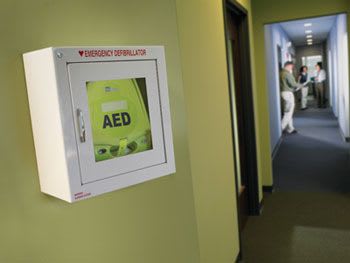
A life-saving shock from an automated external defibrillator along with effective CPR is the only definitive treatment for sudden cardiac arrest. Photo: defibshop
A life-saving shock from an automated external defibrillator along with effective CPR is the only definitive treatment for sudden cardiac arrest. Photo: defibshop
Sudden cardiac arrest (SCA) is a leading cause of death in America. Knowing what to do in the event of an SCA can be the difference between life and death.
Despite the fact that there are approximately 350,000 SCA’s that occur in the U.S. each year, there is still a lack of awareness which makes it an even bigger issue. This is indicated in the following facts:
Just 46% of people who suffer an out-of-hospital cardiac arrest (OHCA) receive the immediate treatment that they need.
Without treatment, 90-95% of SCA victims will die.
If an Automated External Defibrillator (AED) is used and effective CPR is performed within three to five minutes of a cardiac arrest, the victim’s chance of survival increases from 6% to 74%.
In 2014, nearly 45% of OHCA victims survived when bystanders performed effective CPR.
Why Should AEDs be on Forms of Transportation
In 2017, Americans took 10.1 billion trips on public transportation.
34 million times each weekday, people board a form of public transportation.
Since 1995, public transportation ridership has increased by 30%, which is a growth rate higher than the 22% U.S. population increase.
Public transport is a $68 billion industry that employs more than 420,000 people.
Changes to make passengers safer can be made by having AEDs readily available as this will help increase the chance of survival if someone were to fall victim to sudden cardiac arrest on public transportation.
A life-saving shock from an AED along with effective CPR is the only definitive treatment for sudden cardiac arrest.
Time is precious when responding to a victim of sudden cardiac arrest. It is essential to ensure treatment is carried out immediately after the victim has collapsed. Having available AEDs and staff who are trained in their use is the best way to prepare for a sudden cardiac event.
Sudden cardiac arrest does not discriminate, it can strike anyone regardless of age or gender and at any time or place. Given the number of people that use public transportation each day in America, it is highly likely for sudden cardiac arrest to occur in transit.
Case stories
In 2009, Boston became the first state to install defibrillators on commuter trains and stations after a man died of cardiac arrest.
In a crowded Boston North Station during a busy time, three bystanders waiting for a train heard a man cry out and immediately sprang into action to help him. They began chest compressions and administered a life-saving shock from an AED that was thankfully available.
After a passenger died on a Metra commuter train in Chicago, transit officials installed life-saving AEDs on all trains and began to offer CPR training to commuters on train platforms.
Six lives have been saved since NJ TRANSIT began placing AEDs in its train stations, bus terminals and employee facilities.
Importance of AEDs in Transit
Legislation (SB 502) requires the state of California to equip all commuter rail systems with life-saving AEDs. Whilst this is not required by law in all states, it remains to be an extremely important matter. As SCA is a leading cause of death in America, it is vital for everyone to take the necessary steps to prepare for and protect people from sudden cardiac death.
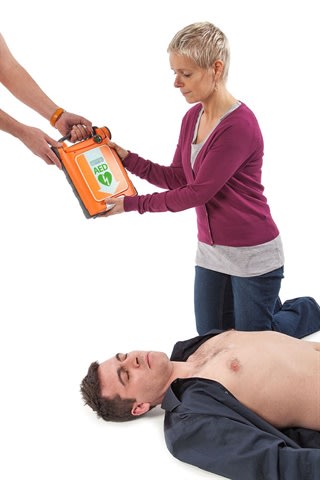
Having available AEDs and staff who are trained in their use is the best way to prepare for a sudden cardiac event. Photo: defibshop
Amtrak carries on average 31 million passengers per year. They claim that nearly every employee has been trained in the operation of AEDs as well as their mandatory CPR qualification. Passengers can therefore travel with the peace of mind knowing that in the event of a cardiac emergency, they are surrounded by people who know how to respond with access to a life-saving AED. This ultimately will increase the chance of survival if a passenger were to fall victim to sudden cardiac arrest.
MARTA installed 100 AEDs throughout the transit system in 2009 to allow for a more rapid response in the event of a cardiac emergency. Boston's MBTA took a similar approach, equipping their rail fleet with AEDs and Go Transit installed also installed defibrillators and made sure their staff were trained in CPR and first aid.
With more AEDs available along with people who are trained in CPR and the use of AEDs, less people would die as a result of sudden cardiac arrest as currently around 95% of SCA victims die due to a delay in medical response.
Lindsay Atherton is VP of North American AED Sales at the defibshop, which works to raise awareness of cardiac arrest and the importance of having available AEDs.
More Blog Posts
Improving Transit Accessibility by Offering Assistive Listening
Did you know that there are literally tens of millions of people worldwide with hearing loss, many of whom will use some form of public transit at some point?
Read More →
35 Years of the ADA, Making Travel Easier for Seniors
Thirty-five years after the passage of the Americans with Disabilities Act of 1990 (ADA), the impact of this landmark piece of civil rights legislation cannot be overstated.
Read More →
Driving Performance with Purpose: How I Lead One of Greyhound’s Top Teams
Safety, on-time performance, and customer experience are critical elements in intercity bus operations. But getting them right doesn’t come down to plans or protocols alone. It comes down to execution. How well your team performs on the ground, in real time, is what defines success.
Read More →
Navigating Emerging Privacy Laws: A Call to Action for Service Providers in Mass Transit
With Data Privacy Day Jan. 28, I want to spotlight a critical challenge faced by service providers in the mass transit sector: managing personal information responsibly in an era of rapidly evolving privacy regulations.
Read More →
Human Trafficking Awareness: What Public Transportation Can Do?
January is National Slavery and Human Trafficking Prevention Month in the U.S., and January 11 is National Human Trafficking Awareness Day.
Read More →
Want to Improve Transit Safety and Operations? Break Down the Silos
Retrieving and reviewing data and video can be a cumbersome process for fleet managers. Each system or tool provides a piece of the puzzle, but seeing the complete picture requires tedious manual synchronization.
Read More →
Ensuring Public Transit Cybersecurity Through Robust Protective Measures
In today’s highly connected world, cybersecurity is of utmost importance, particularly for transportation agencies overseeing transit bus systems that rely increasingly on sophisticated technologies, including the use of data analytics in traffic signal networks, to manage and operate their systems.
Read More →
How Advances in Thermal Management Revolutionize Urban Mobility
In the daily hustle and bustle of city life, transit buses serve as the backbone of urban transportation, allowing millions of city dwellers to get from point A to point B each day reliably.
Read More →
The Evolution of Bus Design
Thirty years ago, drivers not only had to drive the bus and navigate heavy traffic, but they were also responsible for tasks like supervising passenger loading and unloading, selling tickets, and providing passengers with various kinds of information, all while sitting in an often ill-fitting workstation.
Read More →
What 'Transit Safety 101' Really Means
Safety, Safety, Safety. This word is used repeatedly, and in many contexts, without most people understanding what it actually means.
Read More →