



Raising the bar with bus simulation training
Readers most likely are not familiar with my past work with driver training simulation, so I want to devote this month's space to a brief description of what I discovered working with this technology and what it enabled me to do within the training department I was affiliated with.

Readers most likely are not familiar with my past work with driver training simulation, so I want to devote this month's space to a brief description of what I discovered working with this technology and what it enabled me to do within the training department I was affiliated with.
Simulation is a training episode — it isnot a reality and it is never a perfect replication. It enables you to selectively emphasize what is important. The purpose of simulation training is to evaluate the judgment of the operator. Judgment is the mind's ability to come up with the correct action to stave off disaster. Judgment cannot be taught, only evaluated. Will the trainee make a correct judgment to stave off disaster? Knowing how to blend supplemental simulator training into an existing training curriculum will lead to favorable results and positive benefits to a training program. Attempting to build a curriculum around the simulator can be a costly and unfavorable venture.
The simulator enhances training by giving the student the opportunity to repeat a particular skill set until mastery sets in. The result is a better-trained operator better prepared to face actual high-risk driving situations as well as identify and avoid many potential collisions.
The simulator also enhances the instructor's capabilities. It exposes training inconsistencies among the trainers. Uniting instructors as one voice in the administration of a standardized curriculum ensures that the best students rise to the top. It also identifies those who must seek other types of employment. Utilized properly in the hands of a knowledgeable, enthusiastic and creative instructor, benefits will come in the form of collision reductions, lower claims, a decrease in the student washout rate and an increase in the safest students qualifying for operations.
Three reasons for not recognizing the benefits that should be achieved with simulation training include a lack of:
Upper management buy-in
Instructor accountability
Pilot programs
Solution
Ensure that there is a buy-in from upper management, and have a sound plan to have a smooth and thorough transfer of simulator knowledge and application theory from the instructor/upper managerial ranks when personnel changes occur. This is as important to have in place as the simulator itself, to ensure that the simulator does not become idle and that it produces benefits for the training program. The simulator should continue in the role it was purchased for, despite departmental personnel changes.
Case Studies
When looking at those transit agencies that do supplement their curriculum with simulation training, their positive results stand on their own with regard to a reduction in washout rates, right- and left-side collisions, pedestrian contact and collisions overall.
Conclusion
Probably the most enhancing element of simulation training is allowing a student to see his or her results when not applying the best corrective measure in avoiding a particular situation, then allowing the student a chance to remedy the problem in a low-risk simulated environment until the solution has been demonstrated. Remember, reality sets in when a student can pause and reflect on what was not done correctly and what will have to be done differently in the future to avoid a possible reoccurrence, or even a more serious involvement.
In case you missed it...
Read our METRO blog, "Transit provides heightened point of view" here.
More Blog Posts
Improving Transit Accessibility by Offering Assistive Listening
Did you know that there are literally tens of millions of people worldwide with hearing loss, many of whom will use some form of public transit at some point?
Read More →
35 Years of the ADA, Making Travel Easier for Seniors
Thirty-five years after the passage of the Americans with Disabilities Act of 1990 (ADA), the impact of this landmark piece of civil rights legislation cannot be overstated.
Read More →
Driving Performance with Purpose: How I Lead One of Greyhound’s Top Teams
Safety, on-time performance, and customer experience are critical elements in intercity bus operations. But getting them right doesn’t come down to plans or protocols alone. It comes down to execution. How well your team performs on the ground, in real time, is what defines success.
Read More →
Navigating Emerging Privacy Laws: A Call to Action for Service Providers in Mass Transit
With Data Privacy Day Jan. 28, I want to spotlight a critical challenge faced by service providers in the mass transit sector: managing personal information responsibly in an era of rapidly evolving privacy regulations.
Read More →
Human Trafficking Awareness: What Public Transportation Can Do?
January is National Slavery and Human Trafficking Prevention Month in the U.S., and January 11 is National Human Trafficking Awareness Day.
Read More →
Want to Improve Transit Safety and Operations? Break Down the Silos
Retrieving and reviewing data and video can be a cumbersome process for fleet managers. Each system or tool provides a piece of the puzzle, but seeing the complete picture requires tedious manual synchronization.
Read More →
Ensuring Public Transit Cybersecurity Through Robust Protective Measures
In today’s highly connected world, cybersecurity is of utmost importance, particularly for transportation agencies overseeing transit bus systems that rely increasingly on sophisticated technologies, including the use of data analytics in traffic signal networks, to manage and operate their systems.
Read More →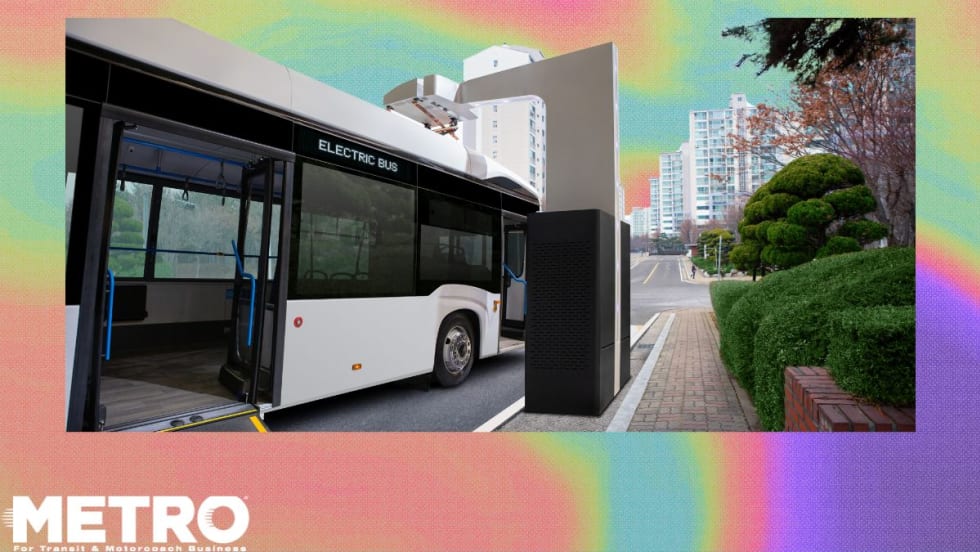
How Advances in Thermal Management Revolutionize Urban Mobility
In the daily hustle and bustle of city life, transit buses serve as the backbone of urban transportation, allowing millions of city dwellers to get from point A to point B each day reliably.
Read More →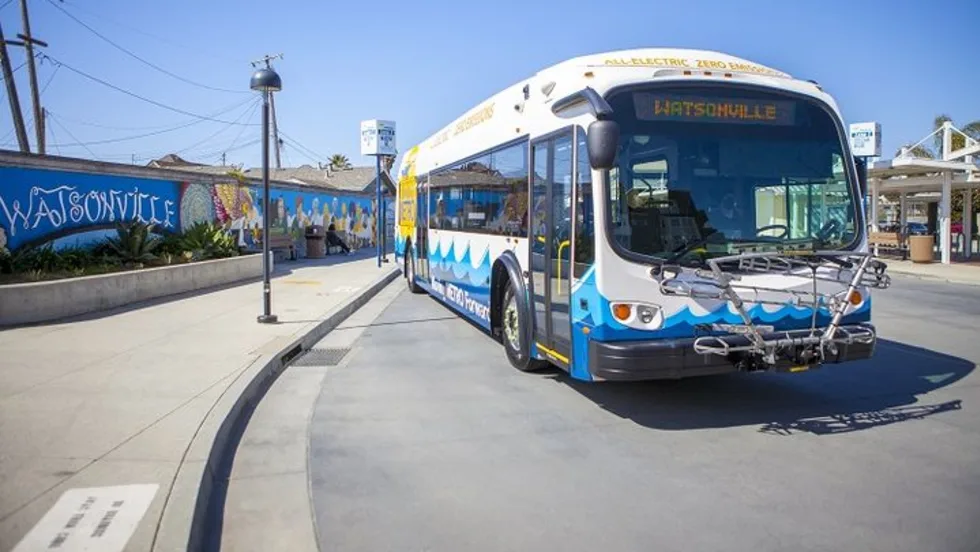
The Evolution of Bus Design
Thirty years ago, drivers not only had to drive the bus and navigate heavy traffic, but they were also responsible for tasks like supervising passenger loading and unloading, selling tickets, and providing passengers with various kinds of information, all while sitting in an often ill-fitting workstation.
Read More →
What 'Transit Safety 101' Really Means
Safety, Safety, Safety. This word is used repeatedly, and in many contexts, without most people understanding what it actually means.
Read More →