



Tips for Improving the Bus Boarding, Alighting Process
The servicing of several types of bus stops, in particular their locations, presents unique challenges involving the safe boarding and alighting process of customers.

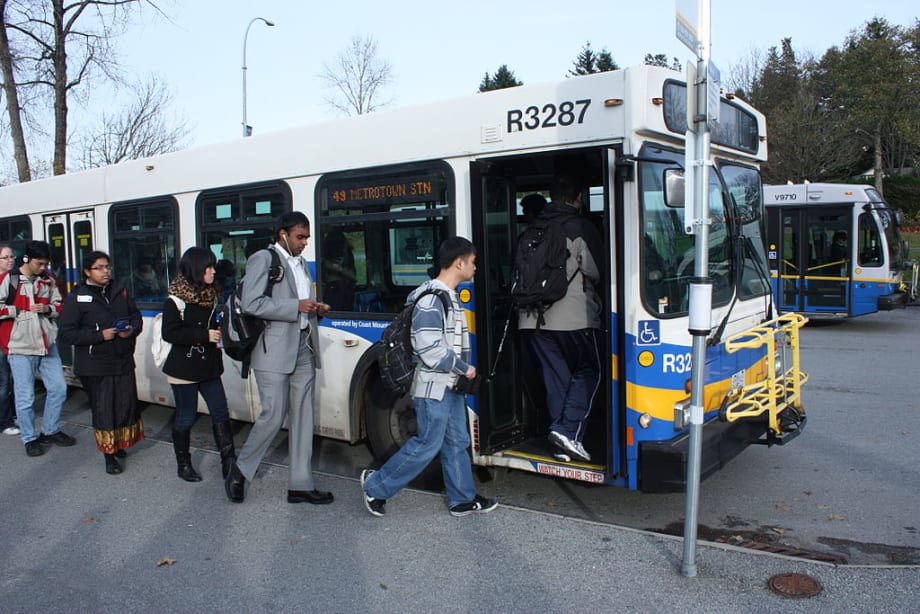
Is your agency experiencing a high amount of incidents during the boarding and alighting process of its customers? It appears these numbers are high with some agencies. Let’s take a look at what conditions might encourage these incidents to occur.
Bus stop placement, wherever they may be located, brings many challenges to a bus operator. The servicing of several types of bus stops, in particular their locations, presents unique challenges involving the safe boarding and alighting process of customers. Thought it was simple? Let’s not forget those agencies located in parts of the country that experience snow and icy conditions and have an additional burden. If your agency utilizes articulated buses, when comparing the number of incidents involving articulated buses versus shorter bus models, do you find the articulated buses having a greater share of incidents because of their 60-foot length, or a lesser share?
Let’s review where some bus stops are placed and their relation to boarding and alighting incidents:
In general, with all “types of bus stops” regardless of where a bus stop is located, failure to follow SOPs will encourage incidents. The chances of a potential boarding and alighting incident occurring will be minimized at the pre-trip stage. Observing and reporting a hazardous condition on board in the door areas "before" entering passenger service can be the difference.
Many incidents involve customers who are still in the farebox area as the bus begins to move and have not entered the seating area beyond the standee line to be given the opportunity to at least secure themselves in some manner. Cause is usually an urgency to depart the bus stop in an attempt to remain on schedule or perhaps make up some lost running time. A perfect example of putting schedule before safety, which is a definite no-no.
When unable to position the bus within the recommended distances from the curb, or in the case of a kneeler being requested to be activated, is the request satisfied? Many injuries can occur by not complying with the request and not following SOPs and ADA requirements regarding proper deployment of lifts, kneelers, etc.
Are “forward planning” skills being utilized to ensure that placement of the front and rear doors are not at an existing hazardous condition “before” stopping? (Pot holes, depressions in roadway, uneven curbs, overhanging bus stop signs, tree branches, or any fixed object?)
Is the operator attaining “clearance confirmation” before, during, and after the closing of front and middle/rear doors? Are mirrors being utilized correctly to anticipate a late arrival of a desirous customer at front doors and are eyes posted on the doorway area while closing to ensure the door areas remain unoccupied?
In “snowy and icy conditions” have the proper clearance allowances been made to accommodate snow banks in the bus stop area? Has the interior front door area been routinely checked for accumulated slush and slippery conditions to minimize the possibility someone slipping and falling?
“Middle and rear door areas.” I recall many incidents occurring at these locations due to bus being angled (nose in) toward the curb. Although front doors may be properly aligned, the middle and rear doors are nowhere near the curb, forcing those that are alighting to step into the street with a deeper incline causing a fall.
“Farside stops,” in general, involving articulated buses are troublesome. If the entire articulated bus is not straight after stopping in a farside stop, proper approach technique might be lacking. The approach (set-up) determines if the stopping position will result in all doors being aligned with the curb. Are all instructors aware of what is required to have the bus aligned straight at the curb? Are they in need of training?
Bus stops immediately “after a right turn" are the most troublesome.” I think we need to do a better job during “basic skill development” in teaching how to position the entire bus straight when servicing a bus stop located “immediately after a right turn.” Many times the only door positioned at the curb is the front one. Because of improper positioning, the rear doors do not appear in the curbside mirrors and these areas cannot be seen by the operator. Again, as stated, this results in alighting customers having to navigate a steep step down into the street resulting in them to possibly lose their balance and fall.
Left turns into bus stops should be the least of our worries if a square left turn is conducted rather than an angled (nose dive) turn. Squaring the turn and “walking” the bus through the turn with controlled push-pull steering will provide plenty of time to survey the stop ahead for safest placement and having the bus aligned straight upon stopping.
It might be time to get all hands on deck and get out of the cubicle for an hour or two and conduct a safety blitz to determine what might be the cause of (in some cases) a high amount of incidents. By “diagnosing” the problems you are witnessing, writing the proper “prescription” and ensuring that those responsible for applying the “corrective action” are doing it most effectively, “boarding and alighting” type incidents should be the exception rather than the rule.
Louie Maiello is the former director of training for the New York City Transit Dept. of Buses Safety & Training Division and 2003 NTI Fellow. Currently, he is Director, Training Services, for Transit Training Solutions.
More Blog Posts
Improving Transit Accessibility by Offering Assistive Listening
Did you know that there are literally tens of millions of people worldwide with hearing loss, many of whom will use some form of public transit at some point?
Read More →
35 Years of the ADA, Making Travel Easier for Seniors
Thirty-five years after the passage of the Americans with Disabilities Act of 1990 (ADA), the impact of this landmark piece of civil rights legislation cannot be overstated.
Read More →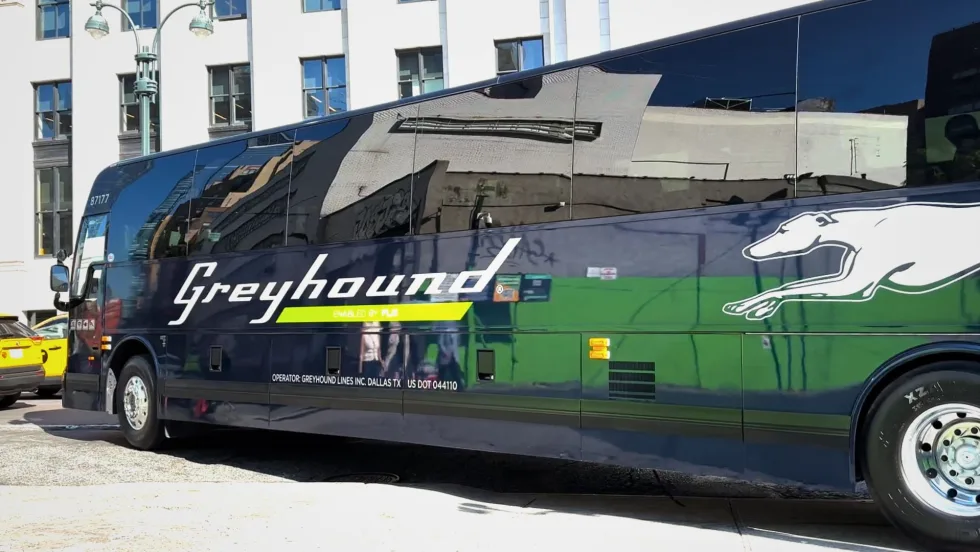
Driving Performance with Purpose: How I Lead One of Greyhound’s Top Teams
Safety, on-time performance, and customer experience are critical elements in intercity bus operations. But getting them right doesn’t come down to plans or protocols alone. It comes down to execution. How well your team performs on the ground, in real time, is what defines success.
Read More →
Navigating Emerging Privacy Laws: A Call to Action for Service Providers in Mass Transit
With Data Privacy Day Jan. 28, I want to spotlight a critical challenge faced by service providers in the mass transit sector: managing personal information responsibly in an era of rapidly evolving privacy regulations.
Read More →
Human Trafficking Awareness: What Public Transportation Can Do?
January is National Slavery and Human Trafficking Prevention Month in the U.S., and January 11 is National Human Trafficking Awareness Day.
Read More →
Want to Improve Transit Safety and Operations? Break Down the Silos
Retrieving and reviewing data and video can be a cumbersome process for fleet managers. Each system or tool provides a piece of the puzzle, but seeing the complete picture requires tedious manual synchronization.
Read More →
Ensuring Public Transit Cybersecurity Through Robust Protective Measures
In today’s highly connected world, cybersecurity is of utmost importance, particularly for transportation agencies overseeing transit bus systems that rely increasingly on sophisticated technologies, including the use of data analytics in traffic signal networks, to manage and operate their systems.
Read More →
How Advances in Thermal Management Revolutionize Urban Mobility
In the daily hustle and bustle of city life, transit buses serve as the backbone of urban transportation, allowing millions of city dwellers to get from point A to point B each day reliably.
Read More →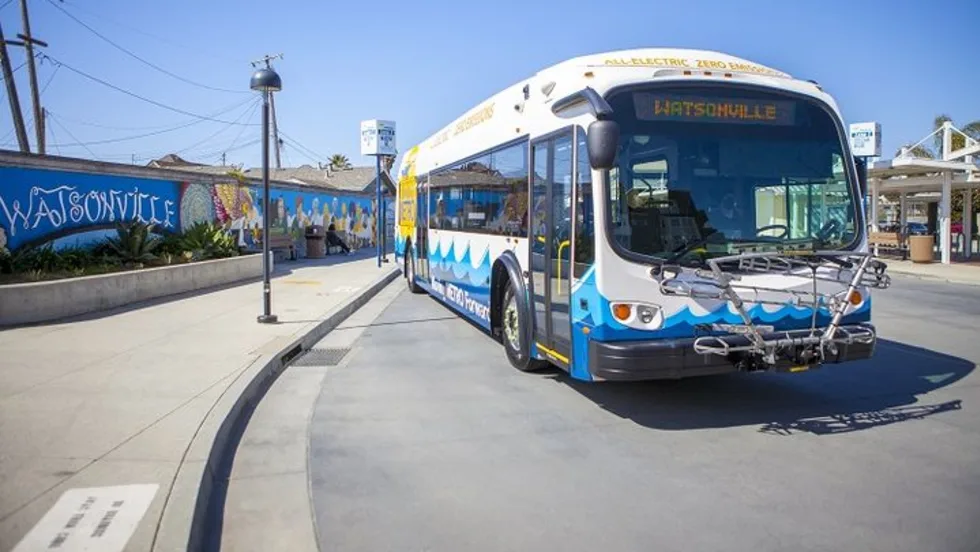
The Evolution of Bus Design
Thirty years ago, drivers not only had to drive the bus and navigate heavy traffic, but they were also responsible for tasks like supervising passenger loading and unloading, selling tickets, and providing passengers with various kinds of information, all while sitting in an often ill-fitting workstation.
Read More →
What 'Transit Safety 101' Really Means
Safety, Safety, Safety. This word is used repeatedly, and in many contexts, without most people understanding what it actually means.
Read More →