



Transporting E-bikes: 4 Tips to Ensure a Safe and Efficient Ride
Over the past 18 months, sales of bicycles have exploded — with the pandemic spurring an unprecedented demand for outdoor recreation and transportation modes that are compatible with social distancing.

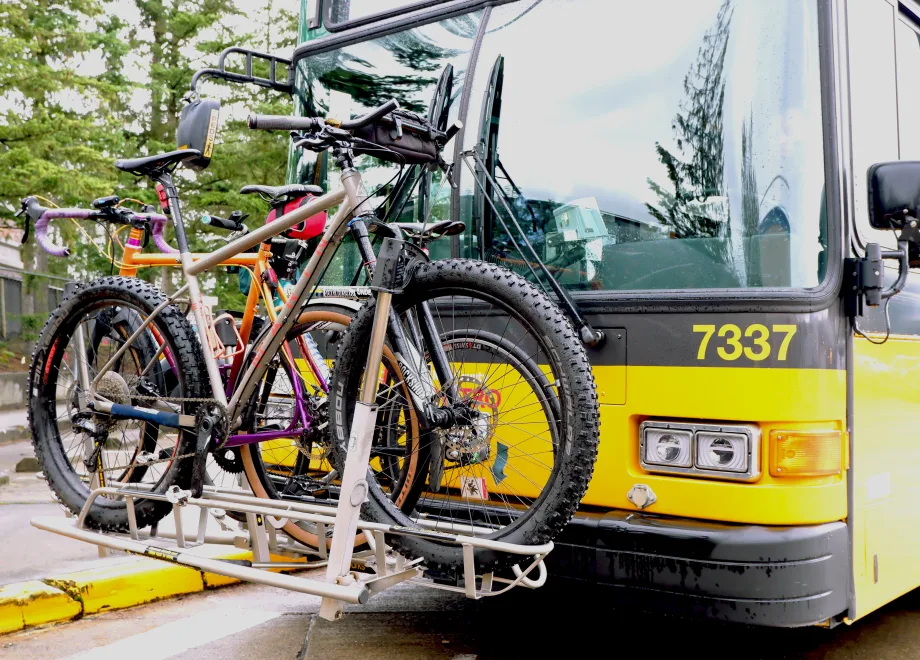
The increase in bike commuting has impacted the transit industry in many positive ways for cyclists that utilize transit services.
Sportworks
Over the past 18 months, sales of bicycles have exploded — with the pandemic spurring an unprecedented demand for outdoor recreation and transportation modes that are compatible with social distancing. The adoption of E-bikes is a particularly impressive trend. Market research firm NDP Group reports North American sales of E-bikes grew 145% in 2020. As 2021 has progressed, sales trends suggest that E-bikes are more than a pandemic fad and are here to stay as a mode critical to addressing issues of congested city traffic.
The increase in bike commuting has impacted the transit industry in many positive ways for cyclists that utilize transit services. Transit networks that connect with bikeshare programs have expanded and many agencies now equip riders with transit apps to help plan multimodal routes that incorporate transit and bikeshare. However, due to the massive increase in private sales, transit agencies are faced with another opportunity to adapt — the growing demand to transport E-bikes on public transit vehicles.
With E-bikes offering an efficient and environmentally friendly “last mile,” how do transit authorities make sure they can support this new trend and leverage the opportunity to increase ridership?
While each transit authority will need to develop its own localized strategy and policy regarding E-bikes, some transit vehicle racks are optimized to support a variety of bicycles. Here are the factors that you need to know to ensure safe transportation:
1. Bicycle Weight and Wheelbase - E-bikes are often heavier than their non-electric counterparts. Look for racks that support up to 55 lbs. per position, and a wheelbase up to 48-inches to accommodate a wide range of bicycles.
2. Tire Width - Many E-bikes have wider tires; therefore, the rack must be able to accommodate the additional width. Fat tire wheel trays are designed to support tire widths up to 5.5 inches. By comparison, standard racks, typically accommodate bicycle tire widths up to 2.3 inches or 3.2 inches, depending upon the exact model.
3. Flexibility - To support the widest range of bicycles and therefore riders, select a rack with an adaptable design. Racks that can be easily retrofit with fat tire wheel trays are key to accommodating E-bikes and can be customized to fit the unique needs of your riders — accommodating one, two, or three fat tire wheel trays. Additionally, if fat tire wheel trays can also be used for standard bikes, you’ll be able to provide full flexibility for a wide variety of bicycle types.
4. Protect Rider’s Investments - Damage-free transport is critical. Be sure the design of the rack prevents bike to bike entanglement and allows for easy loading and removal. Riders will be confident that their E-bike investment is safe and secure — and route delays caused by securement and removal issues will be minimized.
As E-bikes continue to grow in popularity, it will be increasingly beneficial for public transit vehicles to support them as a long-term strategy toward increased mobility. Communicating the capabilities and compatibility of E-bikes on-board is critical to ensuring a safe and efficient experience for riders.
More Blog Posts
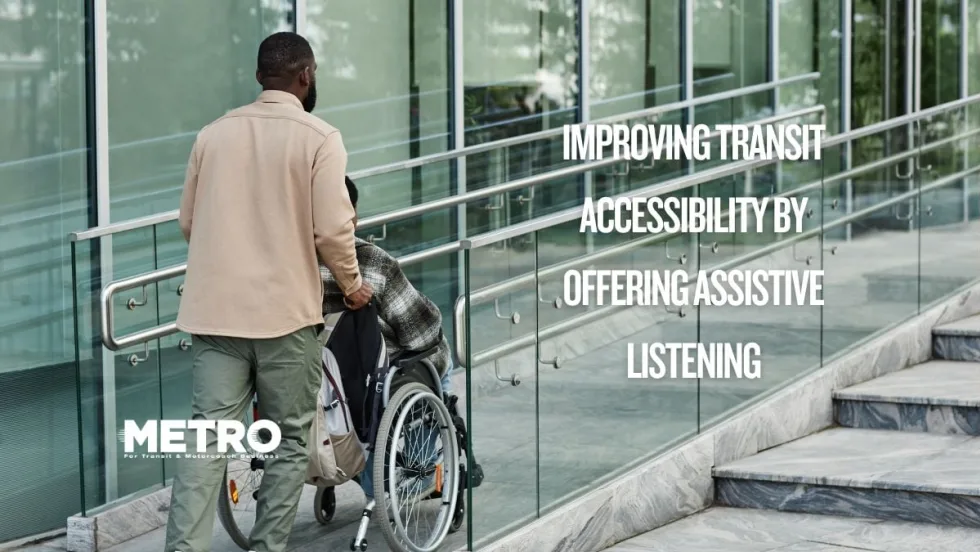
Improving Transit Accessibility by Offering Assistive Listening
Did you know that there are literally tens of millions of people worldwide with hearing loss, many of whom will use some form of public transit at some point?
Read More →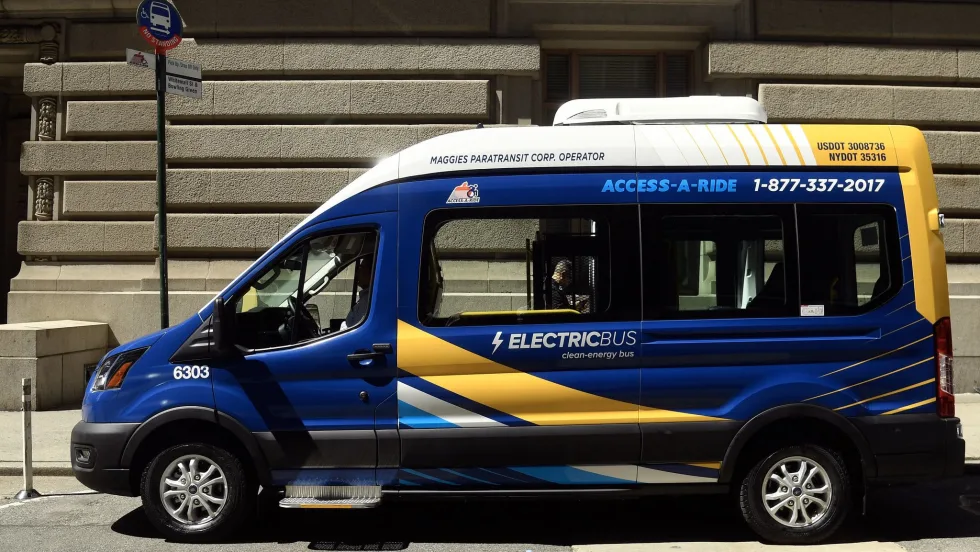
35 Years of the ADA, Making Travel Easier for Seniors
Thirty-five years after the passage of the Americans with Disabilities Act of 1990 (ADA), the impact of this landmark piece of civil rights legislation cannot be overstated.
Read More →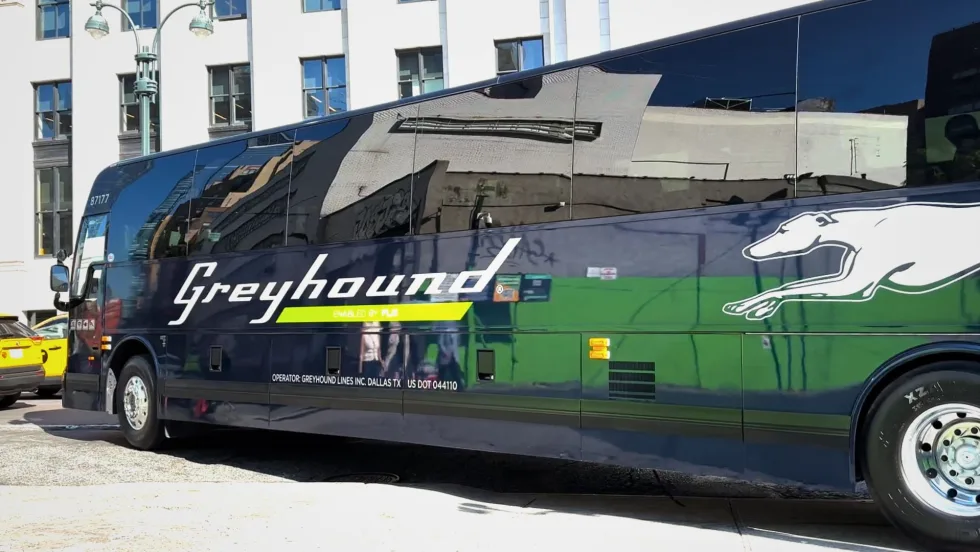
Driving Performance with Purpose: How I Lead One of Greyhound’s Top Teams
Safety, on-time performance, and customer experience are critical elements in intercity bus operations. But getting them right doesn’t come down to plans or protocols alone. It comes down to execution. How well your team performs on the ground, in real time, is what defines success.
Read More →
Navigating Emerging Privacy Laws: A Call to Action for Service Providers in Mass Transit
With Data Privacy Day Jan. 28, I want to spotlight a critical challenge faced by service providers in the mass transit sector: managing personal information responsibly in an era of rapidly evolving privacy regulations.
Read More →
Human Trafficking Awareness: What Public Transportation Can Do?
January is National Slavery and Human Trafficking Prevention Month in the U.S., and January 11 is National Human Trafficking Awareness Day.
Read More →
Want to Improve Transit Safety and Operations? Break Down the Silos
Retrieving and reviewing data and video can be a cumbersome process for fleet managers. Each system or tool provides a piece of the puzzle, but seeing the complete picture requires tedious manual synchronization.
Read More →
Ensuring Public Transit Cybersecurity Through Robust Protective Measures
In today’s highly connected world, cybersecurity is of utmost importance, particularly for transportation agencies overseeing transit bus systems that rely increasingly on sophisticated technologies, including the use of data analytics in traffic signal networks, to manage and operate their systems.
Read More →
How Advances in Thermal Management Revolutionize Urban Mobility
In the daily hustle and bustle of city life, transit buses serve as the backbone of urban transportation, allowing millions of city dwellers to get from point A to point B each day reliably.
Read More →
The Evolution of Bus Design
Thirty years ago, drivers not only had to drive the bus and navigate heavy traffic, but they were also responsible for tasks like supervising passenger loading and unloading, selling tickets, and providing passengers with various kinds of information, all while sitting in an often ill-fitting workstation.
Read More →
What 'Transit Safety 101' Really Means
Safety, Safety, Safety. This word is used repeatedly, and in many contexts, without most people understanding what it actually means.
Read More →