On the Front Lines of Transit Maintenance: Lessons from Connect Transit
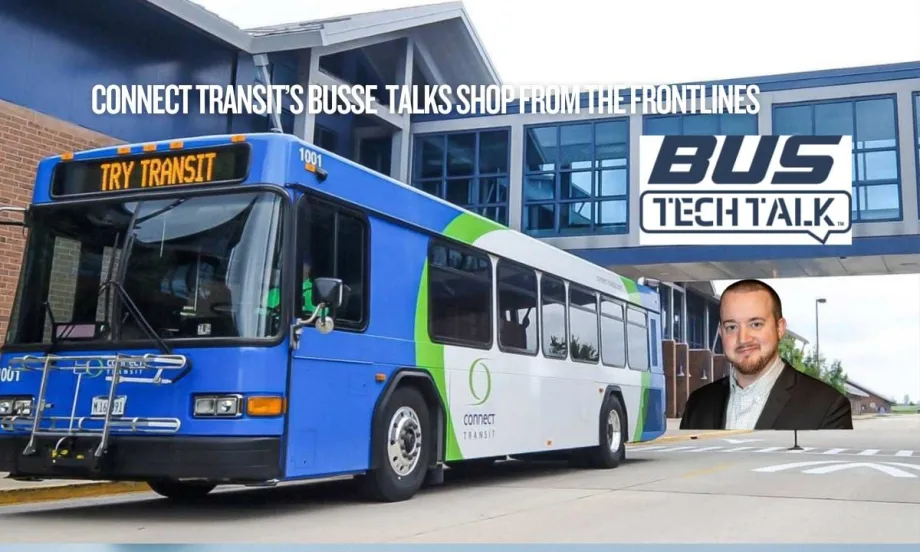
In the first episode of Bus Tech Talk, METRO’s Executive Editor Alex Roman and CCW’s Business Development Manager Mark Hollenbeck were joined by Charlie Busse, Maintenance Manager at Connect Transit, to explore the realities of managing a fleet in Bloomington-Normal, Illinois.
Charlie Busse’s story offers a window into the challenges, creativity, and resilience required to keep buses on the road, especially at a smaller agency.
Photo: Connect Transit/METRO
4 min to read
Charlie Busse, Maintenance Manager at Connect Transit, shares insights on managing a transit fleet in Bloomington-Normal, Illinois.
The discussion is part of the first episode of Bus Tech Talk featuring METRO's Executive Editor and CCW's Business Development Manager.
The conversation provides a realistic view of the challenges and operations of transit maintenance.
*Summarized by AI
When most people think about public transit, their minds go straight to buses arriving on time, operators behind the wheel, or the larger debates about funding and service expansion. What’s less visible — but just as essential — are the shops and maintenance teams that keep those vehicles rolling every day.
In our first episode, METRO’s Executive Editor Alex Roman and CCW’s Business Development Manager Mark Hollenbeck were joined by Charlie Busse, Maintenance Manager at Connect Transit, to explore the realities of managing a fleet in Bloomington-Normal, Illinois.
Busse’s story offers a window into the challenges, creativity, and resilience required to keep buses on the road, especially at a smaller agency.
A Path Into Transit — By Accident
Like many in the industry, Busse never set out to build a career in public transit. His early work in the auto parts industry and at independent shops eventually led to a chance opportunity with Connect Transit.
“I had never even ridden a city bus before,” he admitted. But mentorship from colleagues, combined with his natural knack for shop management, soon pulled him into the heart of fleet operations.
Over time, Busse rose to lead the maintenance department, guided by a belief that transit is more than just a service — it’s a necessity.
Ad Loading...
“At a dealership, you’re fixing cars one at a time,” he said. “Here, you’re helping a community.”
The Big Impacts of Being Small
Operating a smaller agency comes with unique pressures. With just over 40 buses in its fixed-route fleet, any out-of-service vehicle has an outsized impact. When Connect Transit adopted battery-electric buses, the stakes grew even higher.
At one point, a quarter of the agency’s fleet was electric. While larger systems can absorb downtime, Busse’s six-person shop had to cut service when electric buses went out of commission.
The lesson, he said, is that zero-emission adoption requires not just vehicles but the infrastructure, training, and staffing capacity to support them.
“We jumped in with both feet,” Busse reflected, “but without hybrid experience to build from, it was a steep climb.”
Ad Loading...
Today, Connect Transit is backfilling with hybrids to balance environmental goals with operational reliability — an honest acknowledgment that technology adoption is rarely one-size-fits-all.
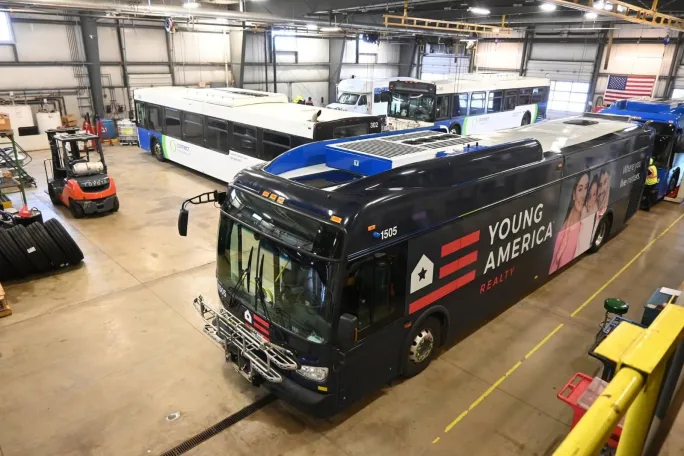
With just over 40 buses in Connect Transit's fixed-route fleet, any out-of-service vehicle has an outsized impact.
Photo: Connect Transit
The Power of Mentorship and Growing Talent
For Busse, professional growth has come not only from local mentorship but also from industry connections forged at conferences, state rodeos, and training events.
“Transit isn’t competitive,” he noted. “We all share what we know, because everyone’s goal is the same — safe, reliable service.”
He’s built a network of peers across the country, sometimes fielding questions from much larger agencies. That spirit of collaboration, he explained, has been just as formative as any formal training.
Perhaps the most challenging task is developing the next generation of technicians.
Ad Loading...
Bloomington-Normal lacks a local diesel training pipeline, and national shortages exacerbate the recruitment challenge.
Connect Transit has responded by promoting from within — identifying promising service techs and upskilling them into mechanic roles.
“It’s the only way we’ve been able to stay ahead,” Busse explained. “And the growth I’ve seen from these guys in just a few years has been incredible.”
Partnerships with community colleges, including efforts to expand heavy-duty training programs, are also in motion.
The agency hopes its planned facility expansion will provide classroom and training space not just for Connect Transit, but also for the broader workforce pipeline.
Ad Loading...
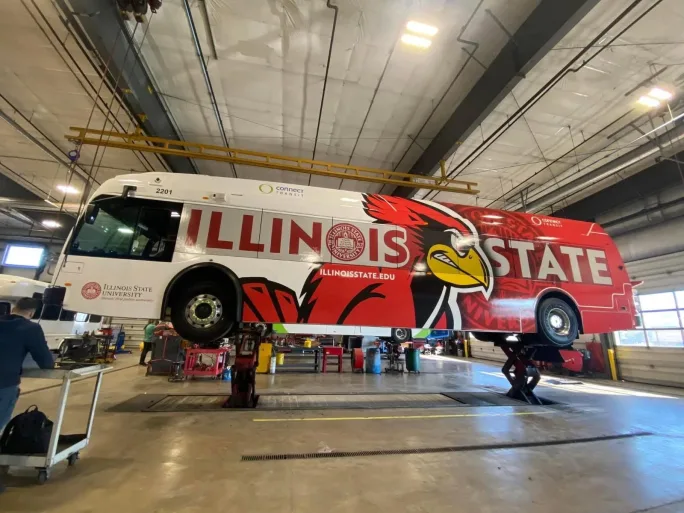
Today, Connect Transit is backfilling with hybrids to balance environmental goals with operational reliability — an honest acknowledgement that technology adoption is rarely one-size-fits-all.
Photo: Connect Transit
A Shop in Transition: Lessons from the Industry
Like many transit garages, Connect Transit’s maintenance floor is evolving rapidly.
New diagnostic tools, hybrid propulsion systems, and even predictive maintenance pilots are reshaping daily operations.
For Busse’s young team, technology isn’t a barrier but an opportunity.
“They see it as something that helps them do their jobs better and faster,” he said.
Still, the pace of change requires a careful balance, ensuring that training aligns with the real-world moment when buses actually need servicing.
Ad Loading...
Busse’s experience underscores an essential truth: technology alone doesn’t drive transit forward; people do.
Whether it’s adopting electric buses, investing in predictive software, or recruiting the next generation of technicians, success depends on leadership, training, and collaboration.
Smaller agencies, such as Connect Transit, may not always make headlines, but their lessons resonate industry-wide. Their challenges highlight the realities of scaling innovation in environments where every vehicle matters, and their solutions showcase the creativity and dedication that keep buses on the road.
“We provide an essential service. It feels good to know we’re helping people, and that we’re doing it with safe, clean, reliable vehicles,” said Busse.
Key Takeaways
🔧 Mentorship Matters Charlie Busse credits strong mentors for helping him transition from auto shops into transit maintenance leadership. Guidance and knowledge-sharing remain central to his team’s growth.
⚡ Technology Isn’t One-Size-Fits-All Moving straight from diesel to battery-electric proved challenging for a small fleet. Connect Transit is now incorporating hybrids to balance sustainability with reliability.
🤝 Collaboration Over Competition In transit, agencies share lessons instead of competing. Networking at conferences and roadeos gives smaller shops access to expertise nationwide.
👨🔧 Building Talent From Within With few local diesel programs, Connect Transit develops its own pipeline—promoting service techs into mechanic roles and investing in workforce training partnerships.
🛠 Shops Are Changing Fast From diagnostic tools to predictive maintenance pilots, new technology is reshaping how maintenance teams keep buses on the road.
This article, generated using OpenAI, was edited for accuracy and style and based on an episode of METROspectives
Quick Answers
The episode focuses on the realities of managing a fleet, as shared by Charlie Busse, the Maintenance Manager at Connect Transit in Bloomington-Normal, Illinois.
The hosts were Alex Roman, METRO’s Executive Editor, and Mark Hollenbeck, Business Development Manager at CCW.
Charlie Busse serves as the Maintenance Manager at Connect Transit.
Connect Transit serves the Bloomington-Normal area in Illinois.
Understanding fleet management is crucial for ensuring efficient operations, reliability, and safety in public transit systems.
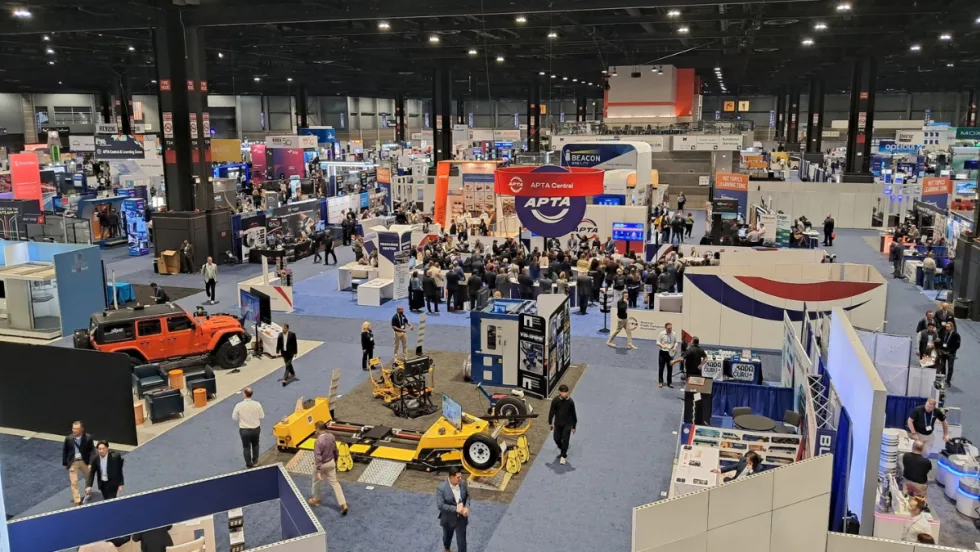
Transit leaders, manufacturers, and industry professionals gathered in Chicago to explore new technologies, share ideas, and discuss the future of public transportation.
Dr. Carol Parker Walsh discusses leadership development, employee retention, workplace culture, and preparing transit’s workforce for AI and automation.
After 45 years, APTA returns to Chicago with a focus on next-generation fleets, AI, connected transit networks, and the funding strategies shaping public transportation’s future.
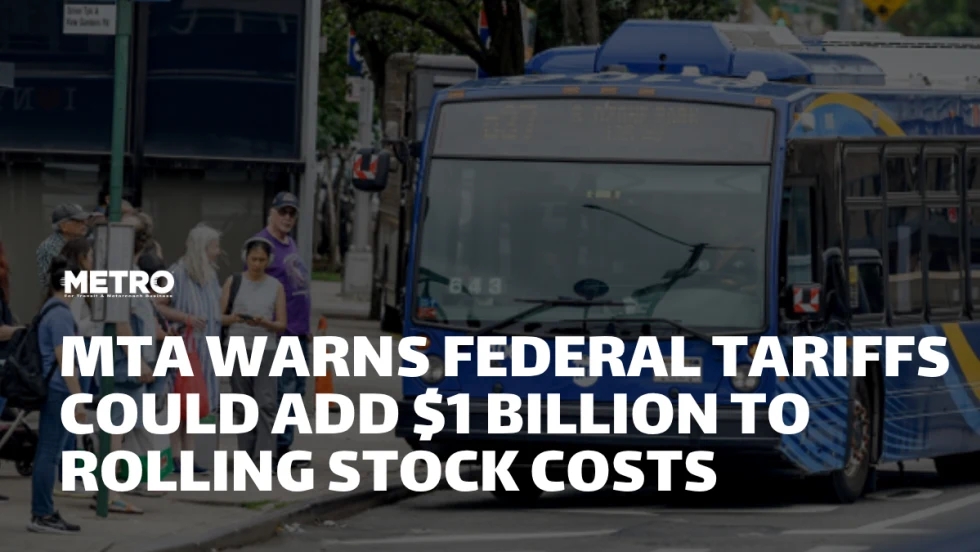
The agency said tariffs on specialized imported components could reduce the purchasing power of its $23 billion investment in new subway cars, railcars, and buses.
The APTA award-winning agency is pairing rapid system expansion with investments in workforce, safety, technology, and the fundamentals of transit service.
In this episode of Bus Tech Talk, Complete Coach Works’ Business Development Manager Mark Hollenbeck and METRO’s Executive Editor Alex Roman sit down with Obed Mejia, Senior Technical Trainer for Bus Maintenance, at LA Metro to discuss how rapidly evolving bus technology is changing the maintenance shop — and the skills technicians need to keep pace.
The longtime transportation executive will help Paslay Group grow its advisory and program management work across transit, highway, and other infrastructure sectors.
In this edition, we also spotlight recent personnel moves at Burns, UZURV, and more, highlighting the people taking on new roles across the transportation industry.