




RELATED: 4 Things Every Transit Leader Should Know About Their Front Line
Why Investing in 'Half Measures' When Hiring Frontline Employees Will Bring Public Transit to Its Knees
The public transit industry faces a severe human resources crisis... we began to focus on the science behind identifying and hiring more resilient human beings up front, in order to make it easier to build resilience and preparedness with employees once they are onboard.
June 14, 2017

The public transit industry faces a severe human resources crisis. However, this crisis isn’t new.
7 min to read
The public transit industry faces a severe human resources crisis. However, this crisis isn’t new.
Becoming more sustainable isn’t a suggestion, it’s a reality that public transit must face as federal dollars shrink and ridership declines in many areas across the U.S. Industries continue to be disrupted by technology and innovative practices, and once mighty stalwart giants of business fade into antiquity. Blockbuster, the king of movie rentals? Gone. Borders Books, ubiquitous at every mall? No longer. In 2013, e-books and discounts put 98 book publishers out of business. Sears, J.C. Penney, K-Mart, and Macy’s are all closing stores as Amazon grows. How many travel agents do you know? I am, however, very familiar with how to use Expedia and Priceline. Farmers used to make up 50% of the U.S. workforce, and now that number sits at 2.5%; the rest is automated. Taxi and Limo services are being overtaken by Uber and Lyft. Since the ride-hailing services began operating in Southern California three years ago, the number of L.A. taxi trips arranged in advance has fallen by 42%, according to city records, and the total number of trips has plummeted by nearly 30%. We will come back to this in a bit.
The public transit industry faces a severe human resources crisis. However, this crisis isn’t new. Because so many authorities we work with are facing these obstacles, we began to focus on the science behind identifying and hiring more resilient human beings up front, in order to make it easier to build resilience and preparedness with employees once they are onboard. During our research dives, we discovered that these current challenges in HR were well documented in transportation, dating back to the 1950s.
Furthermore, in 1996, APTA joined forces with the Department of Labor, The FTA, and leading organizational development psychologists to try to solve the massive “Driver burnout problem.” Over 42% of public transit budgets were being spent on covering driver labor costs. One-quarter of all operations’ budgets were being used to cover expenses related to absenteeism. Turnover and absenteeism were getting so high that the transit industry commissioned a special research project to uncover methods to stop the bleeding. Yet, here we are, in 2017, two decades later, the same problems exist and have mostly gotten worse. TCRP syntheses have repeatedly identified huge holes in recruiting, onboarding, training, and retention for transit labor. Some authorities are experiencing daily absenteeism rates of 30% to 50% of their frontline workforce.
Back in 1996, it was identified that the average driver absence costs an authority $130 per day. Let’s say you have 1,500 drivers in your workforce. If one-third of your workforce calls out absent, you are losing $64,350 per day. That figure has increased since 1996 and doesn’t include all the other costs you have to deal with operationally from those absences. How much do you spend training your new hires? If 50% are turning over, all that money is walking out the door. Beyond the financial and operational nightmare this creates, it has a very damaging effect on employee morale. Many career operators wistfully remember a time when their transit authority felt "like a family," rather than an endless parade of new faces who don't last long enough to connect with the mission of the authority. Over time, that erosion in morale also adds to turnover and absenteeism issues. For an industry that moves people, many transit authorities haven’t moved very far on dealing with this huge financial, operational, and cultural problem.

The American Institute of Preventative Medicine, Gallup research, and Harvard all found a return on investment of between $3 to $6 for every $1 invested in employee wellbeing.
The good news? Solutions to these problems exist. Transit isn’t the only industry dealing with high burnout, turnover, absenteeism, and performance challenges. The military struggled with these problems in the 1980s and developed "Biodata screenings," while also shifting soldiers’ “workload” as a response. Healthcare is working to come to grips with their burnout epidemic, which is costing them tens of billions of dollars per year (they lose almost $50,000 for every employee who “turns over”). About 400 physicians commit suicide every year, and over 50% of care providers are burned out, which has led to the third leading cause of death in America becoming "medical errors." The healthcare industry has begun to adopt the use of things like yoga and incentivized exercise programs, better access to high-quality employee assistance program, and industry-wide psychological education as a means of lowering costs and preventing errors. The research shows that these issues can be prevented and reduced, but it requires making industry-wide changes, organizational-wide shifts, and providing support for workers in ways that transit has traditionally not done or not been able to do.
First, recognize that the wrong people are being hired (Yes, there is a research proven behavior and value profile of a successful high performing transit professional, and you can screen for it during the application process). Second, the way transit onboards, trains, and uses their new hires dramatically increases the risk of turnover and high costs. Giving the newest and least experienced employees the most difficult work (with little understanding of what the greener pasture looks like, i.e. seniority) causes potential top talent and high-performing employees to leave. High-stress employees not only have 50% higher healthcare expenditures, but they are twice as likely to look for a new job than their lower-stress colleagues.
The American Institute of Preventative Medicine, Gallup research, and Harvard all found a return on investment of between $3 to $6 for every $1 invested in employee wellbeing. A tiny fraction of transit authorities implemented a tool, which was developed, researched, and proved in 1996 by the joint task force to lower absenteeism and accidents. Most transit authorities either don’t use behaviorally valid or scientifically valid hiring tools when picking drivers, or they use no screening tools at all besides the notoriously ineffective “interview” process.
To find the best fit for frontline public transit, authorities should be screening for things like:
Rule adherence
Low distractibility
Safety compliance
Low risk taking
Patience versus irritability
High-stress tolerance
History of job stability
Every single one of these traits can be measured and screened for before you bring a potential job applicant in for an interview. These tools cost money up front, but it is costing authorities an incomparable fortune to ignore them. Investing in a penny of prevention is worth a pound of cure.
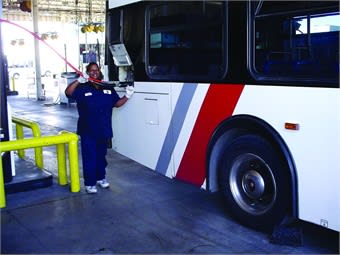
Photo courtesy COTA
An analysis done by the FTA on transit spending found that the transit industry spends the least amount of money of any industry in the U.S. on training. Job training quality directly correlates to retention and performance. This compounds the hiring challenges and creates an epidemic of low-performing employees, who aren’t prepared to interact with the increasing challenges posed by a riding public that expects more and interacts with drivers very differently than in decades past.
Lastly, as the workforce “grays out,” younger “performers” aren’t interested in a para-militaristic job experience when they are constantly bombarded by stories of what other industries are doing to woo new employees with positive health-focused work environments and on-the-job perks like “in-house massage sessions.” Even the military has evolved how they do business because of their past retention and performance issues. Programs like M-Fit (mindfulness/fitness) have become standard as a way to support new recruits, who have to deal with a stressful work experience.
The work world has changed and so has the workforces’ expectations. Attracting the most talented and hardworking folks will require making some cultural shifts. Otherwise, transit will end up attracting workers who either, A, don’t see a career, but a temporary stepping stone, or B, will be a major drain on your resources and deliver low performance. You won't be getting the best or most professional candidates.
This industry has some choices to make about how it wants to deal with these very real issues. Investing in half measures, lowest bid options, and "a Band-Aid to stem the bleed until next fiscal year" will ultimately compound what is already an unsustainable situation. Our nation didn’t need Blockbuster. We didn’t need Borders. We don’t really need Macy’s. We do need public transportation. The most vulnerable need public transit. Our nation's economy is supported by public transit. Our communities need public transit. We as a public transit industry need public transit. However, if innovation isn’t embraced and real organizational and cultural change aren’t made, this industry could suffer a very painful and possibly grotesque “disruption,” leaving many without jobs and accessibility.
Zach Stone is co-founder/chief strategy officer for Red Kite Project, a resiliency building firm.
Subscribe to Our Newsletter
More Blog Posts
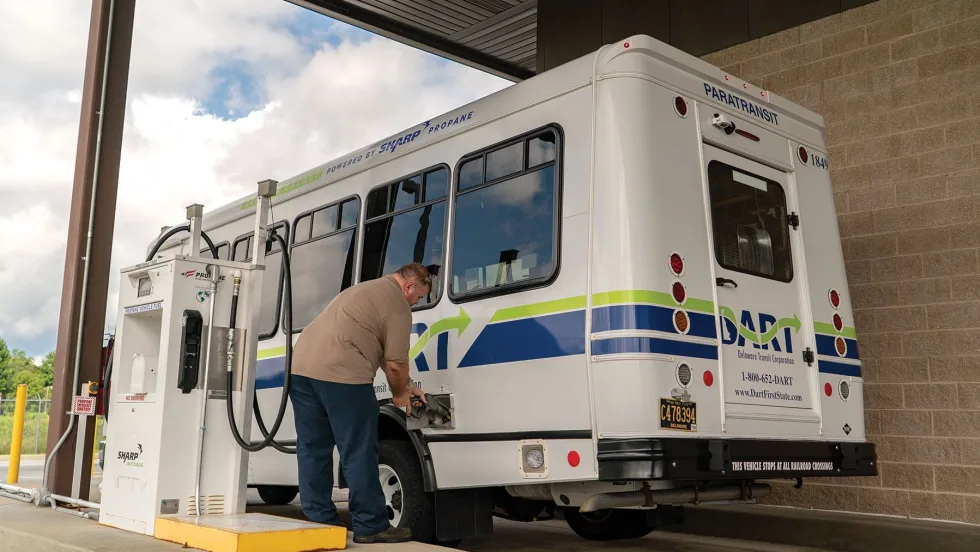
Building a Winning FTA Grant Proposal: Why Propane Autogas is the Pragmatic Choice for Fleet Resilience
With $610 million available through the FY 2026 Buses and Bus Facilities Competitive Program and the Low or No Emission Grant Program, agencies must build a compelling case before the September 21 deadline that balances environmental compliance with operational feasibility.
Read More →
Velo-city Conference 2026: Latest Trends in Cycling as Part of Urban Mobility
The global cycling conference highlighted how cities are integrating bicycles into multimodal transportation networks, expanding cycle tourism and reshaping urban mobility.
Read More →
Kindness Isn’t Soft...It’s Strategic.
Mike Bismeyer — often known as “The Kindness Guy” — has spent more than 17 years in public transit and mobility, serving in industry leadership roles, speaking across North America, and advocating for stronger workplace cultures. But his message doesn’t come from theory. It comes from lived experience.
Read More →
Inside ITF 2026: Transport Reacts to A Challenging World
Transport leaders from around the world gathered in Leipzig, Germany, for the 2026 International Transport Forum to discuss resilience, climate impacts, supply chains and the future of sustainable mobility.
Read More →
Every Ride Tells a Story — But You’re Not Just Selling the Ride
You’re selling the moment, the meaning, and the emotion behind it.
Read More →
How Digital Signage is Reshaping the Traveler Experience at Transportation Hubs
What was once a landscape of static signs has evolved into a responsive, immersive environment powered by real-time visual communication.
Read More →
Latest Trends in Urban Mobility from Polis Conference 2025
Polis comprises cities and regions, as well as corporate partners, from across Europe, promoting the development and implementation of sustainable mobility. This year’s event had over a thousand attendees across various policy forums and an exhibition.
Read More →
Why Transit Leaders Require Better Tools for Operational Clarity In Today’s Tech-Fragmented Environment
Across North America and beyond, transit agency officials are contending with a perfect storm of operational headaches and strategic challenges that hamper daily service and long-term progress.
Read More →
The Powerless Brokers: Why California Can’t Build Transit
It is no secret that transit in the U.S. is slow and expensive to build.
Read More →
Why Transport Sustainability Should Focus on People Instead of Cars
Simply incentivizing electrification is not enough to make a meaningful impact; we must shift our focus toward prioritizing public transportation and infrastructure.
Read More →