



RELATED: European cities respond to growing demand for transport
How Transportation Works in Stockholm and Copenhagen: Part I
The UITP Global Congress was held in the Swedish capital between June 9 and 12 and gave the author a chance to explore the region.
by Giles Bailey
July 17, 2019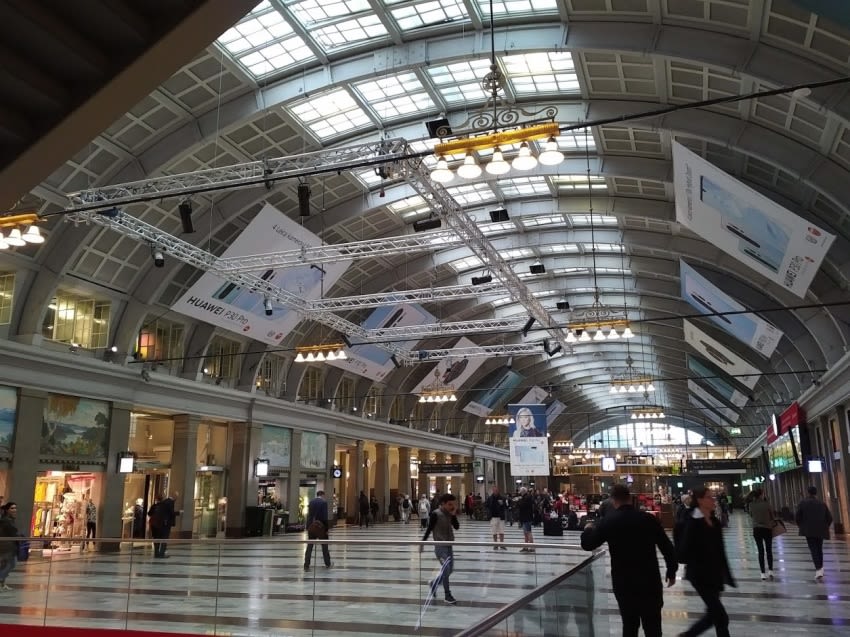
Stockholm's Central Station.
Photo: Giles Bailey
10 min to read

Stockholm city hall view at sunrise.
Photo: Björn Olin/mediabank.visitstockholm.com
The UITP Global Congress was held in Stockholm, Sweden between June 9 and 12. This was the largest UITP Congress yet with almost 500 exhibitors from over 40 countries and almost 3,000 attendees from 80 countries. The Congress was an excellent chance to experience an overview of the global transport industry, and particularly, public transport’s role in developing and enhancing the quality of life, sustainability, and economic vitality of our communities.
The overall theme of this year’s event was “The Art of Public Transport.” The event was formally hosted by “Storstockholms Lokaltrafik” (SL), who is the city’s authority for public transport in the Stockholm area.
In the opening plenary, Kristoffer Tamsons, Regional Minister for Transport of the Stockholm Region and Chairman for SL, outlined the concept of “The Stockholm Way” of developing and delivering effective transport. This includes a local mix of concepts and interventions reflecting the Nordic context in Scandinavia, wider European policy and goals, as well as global best practice.
These include: a strong regional authority working with local cities; private operators for the various modes on long-term partnership-based contracts but, behind a public authority-led brand; actively embracing new innovations in operations and modes; high levels of investment in modernizing and expanding the core public transport network; restraint of car travel via a regional congestion charge; and the strong Swedish support for environment sustainability in all aspects of operation.
Stockholm, as capital of Sweden, is the largest and dominant city in the country. It has a regional population of over two million. The city has a long history extending back to the early medieval period. The historic city center is on a small island in a channel connecting an inland lake with the route to the nearby Baltic Sea. The modern city spreads across the neighboring islands, the mainland on both sides of the channel, and is a very scenic water-laced setting. Much of the central and city government, business, and commercial activities of the city are concentrated on the historic center island and immediately north on the mainland. However, employment is spread widely across the urban area and there are many activity centers. Thus, transport needs are dispersed. The widespread waterways and islands form a number of transport barriers.
The urban area is served by a Metro system, which was initially constructed in the 1950s, and now covers much of the urban area with 100 stations over a 66-mile network, a series of LRT, tram, and narrow gauge rail systems in various central and suburban parts of the urban area, ferry services, a regional rail system covering the wider urban area and which is operationally distinct from the long distance trains in Sweden, as well as a robust network of cycle routes. Taxis are plentiful and Uber is available in Stockholm, but uses licensed taxi drivers.
Over half of the daily trips in Stockholm are by sustainable modes.
Unique Transport Options for Unique Conditions
A unique feature of the city, particularly in European terms, is the inclusion of an urban multi-lane divided highway through the city center and adjacent to the historic city center — the “Centralbron.” The route is particularly intrusive and noisy and passes immediately adjacent to some of the most prominent historic, political, and cultural centers in the city and country. It was opened in 1959 in the era of urban roads as the solution to new mobility and provides an odd contemporary solution in what is otherwise such an environmentally conscious city. The highway travels underground through the southern inner suburbs and has recently been extended further south through the city in a controversial highway development. Immediately adjacent to the highway in the city center is the main north-south railway for the region.
Transport interventions and innovations in the city are numerous and some are outlined below.
A city-wide congestion charging scheme has been in operation since 2007. It covers access and egress to much of the inner city including the peripheral orbital highway. Funds are dedicated to improving transport infrastructure in the region while the charge acts as a congestion reduction and environmental improvement measure. The scheme uses variable time pricing based on license plate recognition.
Stockholm’s Central railway station forms the focus for passenger rail services throughout Sweden with routes from the north, west, and south converging on the station. This has historically created significant operational pressure on the facility as it was servicing overlapping local, regional, national, and freight demand. To alleviate pressure on the main station, reduce the impact of trains on the city center rail bridges adjacent to the above mentioned central city highway, as well as provide operational redundancy to the network, a new “Citybanan” was constructed in 2017 for regional rail services. The route connects services from several routes north of the city into a five mile tunnel that services two intermediate subterranean city center stations, travels under the central harbor and suburbs, and emerges in the southwest suburbs where the route is shared with the main intercity route to the south and west and links a range of suburbs south of the city center.
The system is very impressive and has created deep level stations below the existing rail and subway systems in the city. Due to the nature of the hard rock under Stockholm, it has been possible to create large cavern like spaces for these stations. The system reminds me of the expected benefits we will see when Crossrail (Elizabeth Line) opens in London in 2021.
The “Tunnelbana” metro/ subway system is fairly comprehensive in coverage and the three main lines provide branches both north and south of the city. The network has again been focused on a node adjacent to the Central Rail station. This reinforces the importance of this transport node, but provides few alternative routes across the city and its waterways.
The last few years have seen a new approach to operating public transport in the city and operations of the subway, as well as bus and other rail services have been contracted to private operators who work in partnership with the regional transport authority — SL. The current operator of the subway is MTR — the operator of the metro in Hong Kong. As part of this contracting process over a number of years, labor relations, services, rolling stock maintenance, etc., have been redesigned and generally significantly improved. The metro system seems to work very well and is scrupulously clean. Historic problems with station graffiti have also been largely addressed. The entire metro system is accessible via level access through elevators, including the relatively unique “inclined elevators” that operate alongside many of the escalators.
Major station work is ongoing to refurbish and modernize stations, and other assets, as well as introduce a new generation of rolling stock.
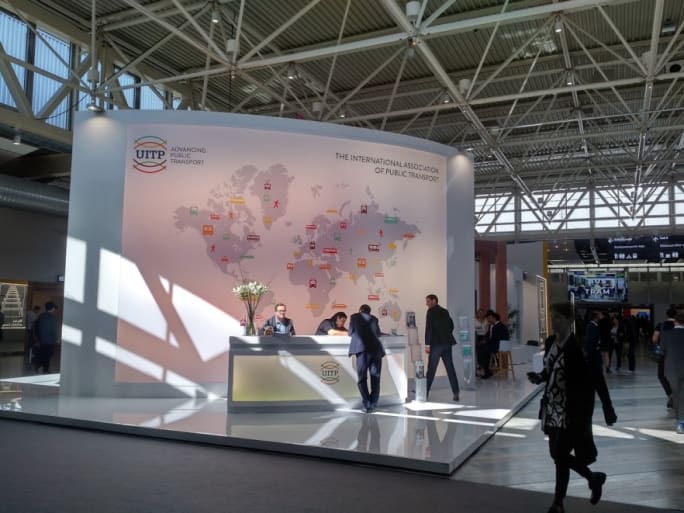
UITP Global Congress was held in Stockholm, Sweden in June.
Photo: Giles Bailey
Growth and Mobility
Due to the growth in the urban area and the desire for the public transport system to remain at the center of urban mobility, a substantial expansion in the system is now underway. This will involve outer suburban extensions to lines, two new lines, as well as the construction of a new cross harbor connection in the inner city. The first extensions will open by the mid-2020s.
There are also a range of light rail systems connecting some of the branches of the subway and the central city to the eastern inner suburbs and an orbital LRT route south, west, and north of the inner city.
The MTR also won the contract to operate the regional rail system in Stockholm in 2016. MTR also operates franchised rail services in the UK.
Even with its northern location, cycling in Stockholm remains very popular, and somewhat like cities in Germany, for example, the innercity is designed with spacious roads that now lend themselves to cycle routes, as well as space for car parking and other micromobility modes. The city authorities have also included dedicated and often quite substantial cycling routes across the main inter-island bridges in the city, as well as into suburban communities making medium to longer distance cycling trips readily practical. Designated cycle parking locations are clearly marked at major rail stations and spaces are allocated within trains for bikes.
Stockholm is a very livable and pleasant city and fits with Sweden’s reputation for having amongst the highest quality of life in the world — along with its Nordic neighbors. The city also, aligns itself with the key priority of environmental sustainability in public and business planning in Sweden and CO2 reduction, issues such as recycling, clean environments, and equity.
A key transport goal in the European Union is the liberalization of train service markets and the introduction of competitive tendering. This is being progressively rolled out for local, regional, national, and cross border services. A milestone next year is for liberalized international passenger rail services. Along with countries such as UK, Czech Republic, Austria, and Italy, Sweden has seen some of the most domestic progress in these developments.
Sweden is a big and sparsely populated country by European terms. The population is concentrated in Stockholm, Gothenburg to the West, and Malmo to the south. There are a range of smaller cities of circa 100,000 people spread out between these cities mainly in the south of the country. Railways have been developed since the mid-19th century and are frequent, reliable, and relatively extensive. Fully high-speed corridors are very limited, but a full network amongst the three key cities remains a medium-term government ambition.
Air services are highly developed. And, of course, travel to the rest of mainland Europe has traditionally involved air or sea travel. Although, this has now changed as will be described.
“Statens Järnvägaris” (SJ AB), the former state railway monopoly, continues to be the dominate player in regional and intercity services — however it doesn’t run the commuter services around Stockholm.
SJ’s intercity product is based on the X2000 train from the early 1990s. They provide a visible and distinctive service offer for intercity travel — albeit from an increasingly old platform. This is particularly versus the services that are currently seen, for example, in Italy or Switzerland.
Train deregulation in Sweden has developed effectively since 2010 and a number of new operators have begun operation. There is an ongoing issue of access to the SJ booking website by new entrants, which is impeding the creation of open and fair market.
“Snalltaget” — owned by Transdev — has been running services on the Stockholm to Malmo route for the last decade, as well as seasonal service to resorts in central Sweden and overnight services, including a ferry connection to Berlin. Snalltaget seems to position itself as a lower cost option to the incumbent SJ. It uses older ex-German rolling stock rather than the titling rolling stock used by SJ and so offers a slower journey. Three to four daily services operate on a typical day on the approximately four-hour journey between Stockholm and Malmo.
MTR has also since 2015 operated services in competition with SJ to Gothenburg in the west of Sweden. MTR has targeted the market with distinct branding and new Stadler Flirt vehicles.
Connecting Countries
As part of the trip to Stockholm, I wanted to experience the developing intercity train market in Scandinavia, travel to Malmo in southern Sweden, use the new international services across the Oresund Strait to Denmark and explore the transport situation in Copenhagen, Denmark.
The first part of this journey was using a Snalltaget train from Stockholm to Malmo. The journey was slightly over four hours and the one way cost for a standard seat approximately $79, which was booked two weeks in advance.
The train, which began its journey in Stockholm at 9:30 p.m., was comfortable, clean, and spacious and offered great scenery of the local landscape. Free Wi-Fi and power outlets were available at every seat and there was ample room to work on a laptop at your seat. It made a number of stops in southern Sweden on its journey and was generally at seated capacity for most of the trip. Food and drink was available in the Bistro car, although most people tended to bring their own snacks. While the SJ X2000 service seemed to be slightly faster, more luxurious, and comfortable, the Snalltaget service offer was more than acceptable and arrived at Malmo’s central station on time.
It was, however, great to have the choice of operators on this long distance intercity service and a choice between price points and levels of comfort. This process is evolving across Europe and it is fundamentally making intercity train travel more appealing. Given a robust regulatory framework for the rail infrastructure and capacity to enable the entrance of new operators, it is a positive evolution of rail services and should increase the overall attractiveness of rail travel versus alternative modes, which usually have higher environmental impacts.
The journey to Malmo was followed by a trip to Copenhagen, Denmark, again by train via the Oresund bridge/tunnel. This journey and impressions of the transport situation in the Danish capital will be described in a future article.
The next UITP Global Congress will be in Melbourne, Australia in June 2021.
About the Author: Giles K. Bailey is a director at Stratageeb Ltd., a London-based consultancy assisting businesses think about their strategic vision and innovation.
More Management
People Movement: ABC Names John Walsh as Chief Commercial Officer
In this edition, METRO also covers recent appointments and announcements at the DART, STV, and more, showcasing the individuals helping to shape the future of transportation.
Read More →
From Surviving to Thriving: Building Stronger Transportation Organizations
Bus Business Consultants founder Brian Dickson shares lessons on leadership, organizational health, and creating options for long-term success in a changing transportation industry.
Read More →
LA Metro Ridership Continues Growth as Rail Gains Accelerate
New rail connections and major events help drive continued ridership gains, with Metro recording its eighth consecutive month of year-over-year rail growth.
Read More →
TransDASH Summit Focuses on Measuring What Matters in Transit
Transit agencies unveil a national performance platform designed to benchmark customer experience, safety, community value, and other outcomes.
Read More →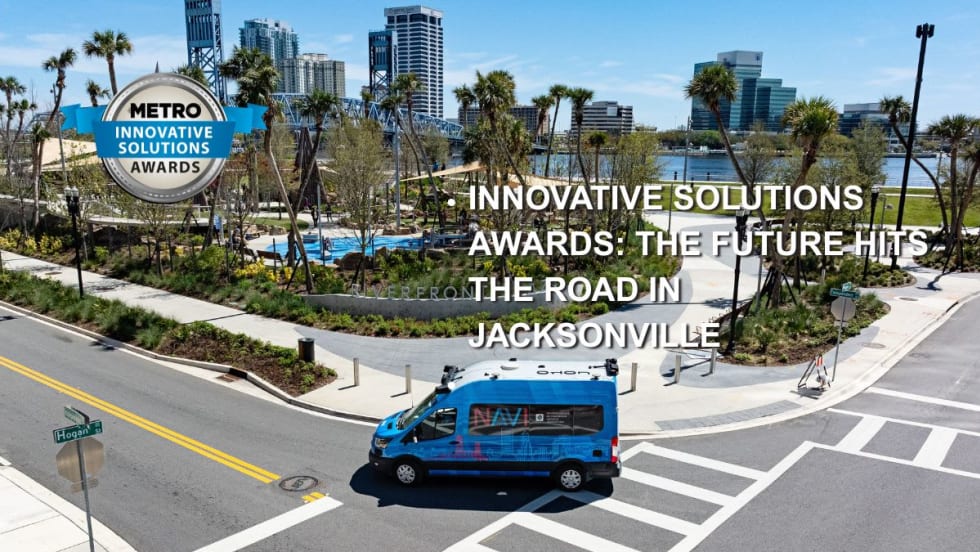
Jacksonville’s NAVI Project Charts a New Course for Autonomous Public Transportation
Through its NAVI program, JTA is showing how autonomous vehicles, intelligent infrastructure, and coordinated operations can work together to deliver everyday public transportation.
Read More →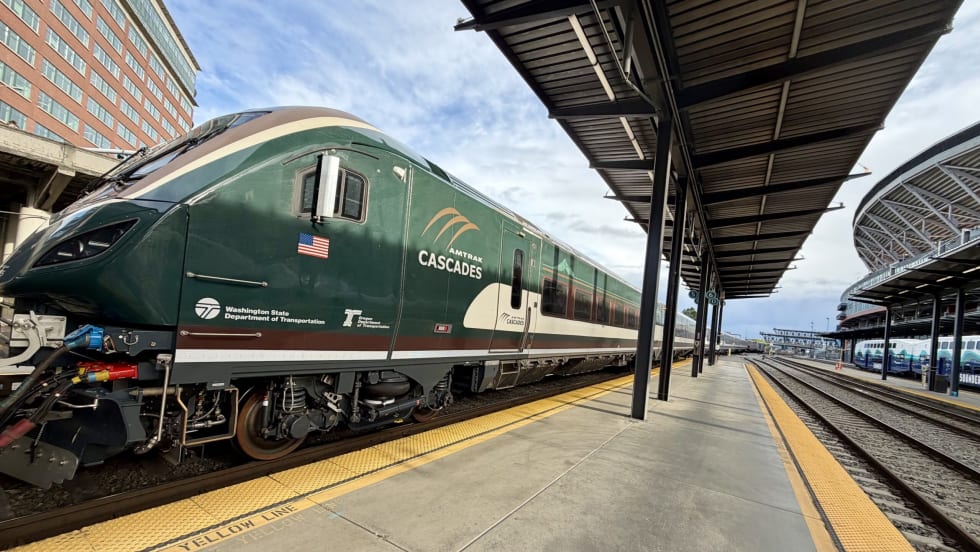
FRA Announces $5.3B in Rail Investments, Including $2B for Amtrak
Funding will support grade-crossing improvements, infrastructure upgrades, and new Amtrak equipment in 23 states.
Read More →
Finding the ‘Happy Medium’: Optimizing Maintenance Without Sacrificing Reliability
The key to maintenance optimization isn’t doing less work—it’s doing the right work at the right time on the right assets.
Read More →
People Movement: MARTA Drops Interim Tag on GM/CEO Hunt and More
In this edition, METRO covers recent appointments and announcements at the FMCSA, HDR, SilverRide, and more, showcasing the individuals helping to shape the future of transportation.
Read More →
VIA Metropolitan Transit Reports 2 Million More Passenger Trips as Better Bus Plan Gains Momentum
San Antonio's transit agency said accelerated service improvements are driving ridership growth, offering another example of how increased frequency and workforce investments can translate into stronger transit performance.
Read More →
ABAF Study Reveals Growing Insurance Crisis for Motorcoach Operators
Preliminary findings show 98% of operators faced premium increases over the past five years, while shrinking insurer participation is putting added pressure on businesses and customers.
Read More →