




RELATED: TNC partnerships can boost transit's mobility options, save money
Massport plan mitigates airport congestion by tweaking TNC operation
Board voted to reduce certain fees and add incentives to Logan International Airport's Express service to help boost ridership.
May 14, 2019
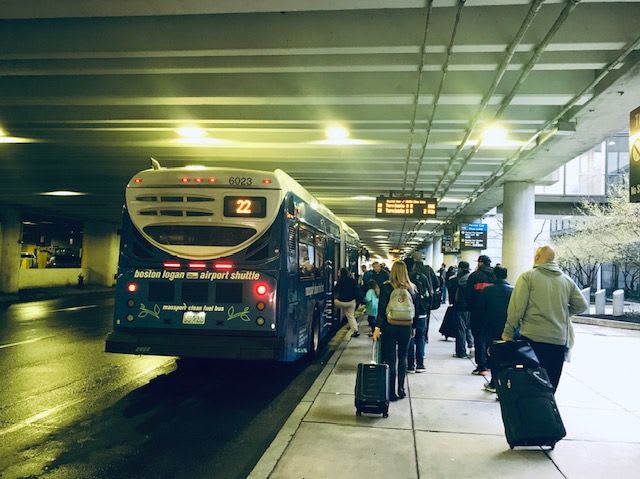
By reducing congestion at Boston Logan International Airport, Massport is looking to improve the experience for all passengers and getting them to or from the airport quicker.
METRO Magazine/J.Starcic
3 min to read
By reducing congestion at Boston Logan International Airport, Massport is looking to improve the experience for all passengers and getting them to or from the airport quicker.
METRO Magazine/J.Starcic
The Massachusetts Port Authority (Massport) approved a new ground transportation plan to help mitigate traffic congestion in and around Boston Logan International Airport by changing how Transportation Network Companies (TNCs) Uber and Lyft operate at Logan.
By reducing congestion, Massport is looking to improve the experience for all passengers and getting them to or from the airport quicker. In March, the board voted to reduce certain fees and add incentives to Logan Express with the goal of doubling ridership.
Updated plan:
Keep the pickup fee at $3.25, and add a $3.25 drop off fee effective Oct.1
Incentivize shared-ride customers with a discounted fee of $1.50
Allow drop offs at the terminal curb Arrivals level from 4-10 a.m.
All pickups at the new, dedicated central location
Subject to review in six months
“The increasing congestion is negatively impacting the airport roadway, the tunnels and Rte. 1A,” said Massport Board Chairman and Worcester County Sheriff Lew Evangelidis. “This is the best plan for the long-term sustainability of Logan Airport, by reducing the traffic for all airport passengers, as well as the residents of our surrounding communities. This will be subject to review as we move forward.”
At Logan, Uber and Lyft currently pay $3.25 for pickups only, which is among the lowest fees at major U.S. airports. By adding this drop-off fee, Logan will be ranked in the middle. Any revenue from these fees will go toward improving HOV modes.
Allowing drop-offs at the Arrivals level terminal curb works in the early morning hours since the bulk of airport activity are departing flights. TNCs are a popular mode during this period since the MBTA is not available until 5:30 a.m. Rematch and shared rides will work as the TNC driver can drop off a passenger at the Arrivals level curb and then head directly to the garage without recirculating the airport.
The new, dedicated area in the Central Garage is safer, more efficient, and with less congestion, the overall trip time for all passengers is expected to be shorter. The current Uber and Lyft pickup lots were originally small employee parking lots, exposed to the elements and not designed to handle thousands of daily trips. Moving TNC operations to a new, dedicated central space that allows for Rematch and Shared Rides is estimated to reduce TNC vehicles with no passengers by as much as a third. Massport is giving up 1,000 revenue-generating parking spaces to make this happen.
The new, dedicated TNC areas in Central Garage will have:
Baggage check and Sky Caps
Improved Wi-Fi
Better lighting
Wheelchair assistance
Increased enforcement of TNC drivers and vehicles
Can be implemented as early as this fall
Will be weather-protected and climate-controlled
Moving TNC operations to the Central Garage will allow for Rematch and shared-ride options to be put into place effectively. This will make it easier for a TNC driver dropping off a passenger to match with a waiting pickup passenger. Passengers will have a shorter wait time to be picked up, in a weather-protected area (unlike the current set up), and will have the option to take a 50% discounted shared-ride, such as uberPOOL and Lyft Shared. TNC drivers will also wait less time between customers, and experience less congestion on our roadways and the tunnels.
More New Mobility

From Hardware to Digital Partner: Luminator Charts Its Next Chapter
CEO Magnus Friberg discusses Luminator’s shift toward becoming a digital partner, the growing importance of software and interoperability, and how AI can help agencies improve operations and passenger experience.
Read More →
Biz Briefs: Alstom Lands Canadian Contract, LYT to Supply California TSP, and More
In METRO's latest installment, we take a look at recent news from Complete Coach Works, Beep, FlixBus, and more partnerships making headlines across the transportation sector.
Read More →
CharterUP’s Armir Harris on Technology, AI, and the Future of Group Mobility
In a recent episode of METROspectives, CharterUP Founder/CEO Armir Harris discussed the company’s evolution from an online charter bus marketplace into a technology platform supporting public- and private-sector mobility and much more.
Read More →
Jacksonville’s NAVI Project Charts a New Course for Autonomous Public Transportation
Through its NAVI program, JTA is showing how autonomous vehicles, intelligent infrastructure, and coordinated operations can work together to deliver everyday public transportation.
Read More →
Biz Briefs: Luminator Marks Milestone and More
From manufacturers and suppliers to transit agencies and motorcoach operators, these updates offer a snapshot of the projects, partnerships and business moves driving the industry forward.
Read More →
New Tricks for Old Bureaucracies: Joshua Schank on Making Transit Innovation Stick
Former LA Metro Chief Innovation Officer Joshua Schank discusses why good ideas aren't enough, how transit agencies can overcome resistance to change, and why today's challenges demand more innovation.
Read More →
How DART's GoPass Is Redefining Regional Mobility
Serving 14 transit agencies, GoPass simplifies multimodal travel by allowing riders to plan, pay for, and manage an entire trip through one app.
Read More →
Biz Briefs: OCTA Taps Clean Energy for Hydrogen Station, Stadler to Supply Via Rail Vehicles, and More
From manufacturers and suppliers to transit agencies and motorcoach operators, these updates offer a snapshot of the projects, partnerships and business moves driving the industry forward.
Read More →CharterUP Expands Into New Mobility and Autonomous Transportation
Vice President of New Mobility Stephen Joos discusses how CharterUP is leveraging its nationwide transportation network, technology platform, and autonomous vehicle partnerships to expand into workforce mobility, campus shuttles, and transit solutions.
Read More →
METRO Magazine Announces 2026 Innovative Solutions Awards Winners
Projects Recognized for Advancing Mobility Through Technology, Accessibility, Workforce Innovation, and Operational Excellence
Read More →