METRO Magazine Logo
MenuMENU
SearchSEARCH

King County Metro ceases operations of 2 on-demand pilot programs

The pilots were designed as 12-month research projects to test innovative solutions to immediate transportation needs.

December 11, 2019
King County Metro ceases operations of 2 on-demand pilot programs

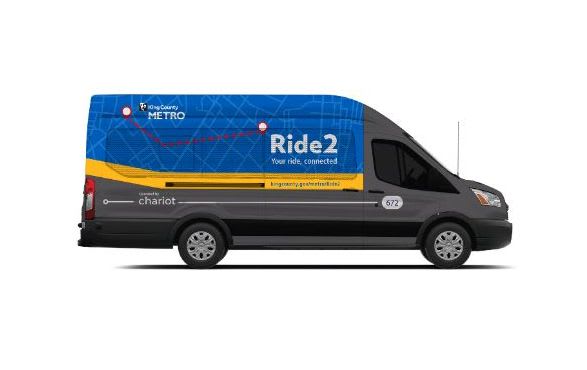
Combined, the two Ride2 services delivered 125 trips per day on average.

King County Metro

2 min to read


Combined, the two Ride2 services delivered 125 trips per day on average. King County Metro

Seattle’s King County Metro will not renew the on-demand shuttle service Ride2 West Seattle, which was funded by the voter-approved Seattle Transportation Benefit District and served the Alaska Junction and King County Water Taxi dock at Seacrest Park.

At the same time, the agency announced it will also cease Ride2 Eastgate, which serves Eastgate Park & Ride. Both one-year pilot programs will end on Dec. 20.

Ad Loading...

Combined, the two services delivered 125 trips per day on average.

The agency’s Via to Transit, which serves Southeast Seattle and Tukwila, will continue, however. By comparison, it currently serves around 240 trips per day in the Rainier Beach service area alone, and nearly 1,000 rides per day across its five service areas.

The pilots were designed as 12-month research projects to test innovative solutions to immediate transportation needs. West Seattle’s Ride2 launched just before phase one of the “Seattle Squeeze,” in which the viaduct was coming down and City of Seattle sought to provide an alternative to driving downtown via the West Seattle Bridge. Eastgate’s immediate need stemmed from the fact that Eastgate Park & Ride — the county’s largest park-and-ride — was often full early in the morning and is located in an area with limited local bus service and walking and biking infrastructure.

Ride2’s key performance indicators included average wait time and in-vehicle time; however the project team kept an open mind in terms of expected ridership. A total of 7,155 users downloaded the Ride2 app used in both service areas, though less than 15% have used the service in the last 30 days.

The Ride2 pilots provided valuable data on the need for certain on-demand services, but ultimately did not meet the milestones necessary to continue the programs given financial constraints, reported Metro.

Lessons Learned by King County Metro


  • On-demand shuttle services draw the most riders when deployed in areas where they significantly improve access to jobs compared to traditional bus or other fixed-route service.

  • On-demand shuttles work best when connecting to very frequent service like light rail and very active bus routes. The service doesn’t work as well to connect to lower frequency bus routes or the Water Taxi, which sails every 30 minutes during peak periods.

  • On-demand shuttles like Ride2 can be a successful model to feed Metro’s fixed-route system. There is a higher than 90% transfer rate between Ride2s and traditional bus system or water taxi, as was intended.

  • Riders really liked the convenience of Ride2, and services performed within the targeted wait time of 10 minutes or less, and the targeted in-vehicle time of 15 minutes or less.

  • Greater efficiencies can be gained from operating on-demand shuttle service in connected areas, like Via to Transit in southeast Seattle and Tukwila, since vehicles can cross between service areas. In contrast, Ride2 has fixed fleets that can only serve one specific service area.



More New Mobility

The Future Hits the Road
Technologyby Alex RomanAugust 17, 2026

Jacksonville’s NAVI Project Charts a New Course for Autonomous Public Transportation

Through its NAVI program, JTA is showing how autonomous vehicles, intelligent infrastructure, and coordinated operations can work together to deliver everyday public transportation.

Read More →
Luminator software product example
Technologyby Staff and News ReportsAugust 14, 2026

Biz Briefs: Luminator Marks Milestone and More

From manufacturers and suppliers to transit agencies and motorcoach operators, these updates offer a snapshot of the projects, partnerships and business moves driving the industry forward.

Read More →
An LA Metro bus and railcar.
New Mobilityby Alex RomanAugust 7, 2026

New Tricks for Old Bureaucracies: Joshua Schank on Making Transit Innovation Stick

Former LA Metro Chief Innovation Officer Joshua Schank discusses why good ideas aren't enough, how transit agencies can overcome resistance to change, and why today's challenges demand more innovation.

Read More →
Ad Loading...
Innovative Solutions Awards: DART, Kuba Pay Launch Next-Gen Fare Payment
Technologyby Alex RomanAugust 5, 2026

How DART's GoPass Is Redefining Regional Mobility

Serving 14 transit agencies, GoPass simplifies multimodal travel by allowing riders to plan, pay for, and manage an entire trip through one app.

Read More →
An OCTA ZEB.
Technologyby Alex RomanJuly 31, 2026

Biz Briefs: OCTA Taps Clean Energy for Hydrogen Station, Stadler to Supply Via Rail Vehicles, and More

From manufacturers and suppliers to transit agencies and motorcoach operators, these updates offer a snapshot of the projects, partnerships and business moves driving the industry forward.

Read More →
A CharterUP branded Holon AV.
New Mobilityby Alex RomanJuly 31, 2026

CharterUP Expands Into New Mobility and Autonomous Transportation

Vice President of New Mobility Stephen Joos discusses how CharterUP is leveraging its nationwide transportation network, technology platform, and autonomous vehicle partnerships to expand into workforce mobility, campus shuttles, and transit solutions.

Read More →
Ad Loading...
Driving Change: Award Winners Redefine Industry Standards
Technologyby Staff and News ReportsJuly 29, 2026

METRO Magazine Announces 2026 Innovative Solutions Awards Winners

Projects Recognized for Advancing Mobility Through Technology, Accessibility, Workforce Innovation, and Operational Excellence

Read More →
A photo of an Amtrak train with a logo
Managementby Alex RomanJuly 24, 2026

Biz Briefs: STV teams with Amtrak, Motorcoach Operators Boost Fleet and Land Contracts, and More

From manufacturers and suppliers to transit agencies and motorcoach operators, these updates offer a snapshot of the projects, partnerships and business moves driving the industry forward.

Read More →
A rider validating a tap payment on a Masabi validator.
Technologyby Staff and News ReportsJuly 17, 2026

Biz Briefs: Masabi Teams with St. Louis Metro and More

In METRO's latest installment, we take a look at recent news from Transdev, Hitachi, and more partnerships making headlines across the transportation sector.

Read More →
Ad Loading...
A Freebee microtransit van in Miami with text reading "Microtransit as Part of the Network."
New Mobilityby Elora HaynesJuly 10, 2026

Microtransit's Next Test: Becoming Part of the Network

Freebee shows how electric microtransit is moving beyond pilots to fill network gaps, connect riders to transit, and prove lasting value.

Read More →