



$197M in federal grants awarded for PTC implementation
The FRA was responsible for the selection of the grant recipients, and the FTA will award and administer the grants during Fiscal Year 2017.

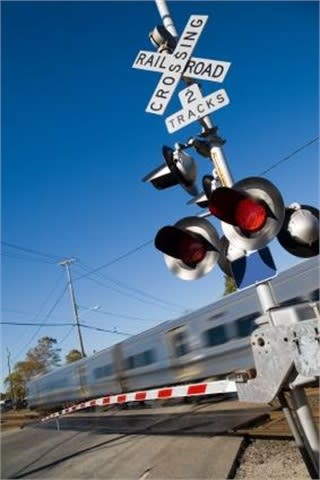
The FRA and FTA received 27 eligible applications requesting $455 million, more than double the $197 million that Congress authorized.

The FRA and FTA received 27 eligible applications requesting $455 million, more than double the $197 million that Congress authorized.
The Federal Railroad Administration (FRA) and Federal Transit Administration (FTA) announced the grant recipients who will receive $197 million in competitive grant funding to help commuter and intercity passenger railroads meet the Dec. 31, 2018 deadline to implement Positive Train Control (PTC) systems to improve safety.
The $197 million in PTC grant funding, authorized under the FAST Act, will be provided to 17 projects in 13 states. The FRA and FTA received 27 eligible applications requesting $455 million, more than double the $197 million that Congress authorized. The FRA was responsible for the selection of the grant recipients, and the FTA will award and administer the grants during Fiscal Year 2017.
"The number of passengers depending on rail has increased dramatically, which means PTC is needed now more than ever," said FRA Executive Director Patrick Warren. "This funding will get us closer to PTC implementation on some of the most significant railroads in the country that transport several million passengers to and from work every day."
PTC systems are designed to prevent certain train-to-train collisions, over-speed derailments, incursions into established work zones, and trains routed to the wrong tracks because a switch was left in the wrong position. The grants under this program will be used to install PTC technology, including back office systems and wayside, communications, and onboard hardware equipment associated with railroads’ PTC systems.
"Millions of people rely on our nation’s commuter railroads and Positive Train Control will help ensure safe and reliable service," said FTA Executive Director Matthew Welbes. "Today’s announcement means that commuter railroads can move forward with the implementation of an important rail safety feature."
Some of the more notable grants include:
Peninsula Corridor Joint Powers Board (JPB) – Calif. Up to $21.68 million to dual equip seven Caltrain trains with the Incremental Train Control System (ITCS) and Interoperable Electronic Train Management System (I-ETMS) PTC systems for approximately 32 miles from south of San Jose to Gilroy, Calif., on Union Pacific Railroad (UP) territory by Dec. 31, 2018. Caltrain trains will come to a full stop within Caltrain territory, deactivate the ITCS system, and then activate the I-ETMS system before proceeding onto the UP line. The project will upgrade the performance, operating efficiency, safety, and reliability of Caltrain’s commuter rail service, providing Peninsula communities with a modernized rail service that will help meet growing ridership demand.
South Florida Regional Transportation Authority (SFRTA) – Fla. Up to $31.63 million to complete installing SFRTA’s Interoperable Electronic Train Management System (I‐ETMS) PTC system — which consists of wayside interface units, near side station controls, base radio stations, a back office server, on‐board PTC kits, and a crew training simulator — on the South Florida Rail Corridor. SFRTA's 72-mile-long Tri-Rail commuter line runs through Palm Beach, Broward, and Miami‐Dade Counties, where Tri-Rail operates 50 weekday and 30 weekend passenger trains and rail safety will be improved for over 14,000 passengers per day. Additionally, CSX Transportation Inc. operates approximately 11 through and local freight trains per day, and Amtrak operates four trains per day and serves six Tri‑Rail stations within the SFRC.
Illinois Department of Transportation (IDOT) – Ill. Up to $18.87 million to complete the design, delivery, installation, and testing of a fully integrated Interoperable Electronic Train Management System (I-ETMS) PTC system on two routes for Amtrak’s use on 14.7 route miles of Terminal Railroad Association of St. Louis (TRRA) right-of-way in a dense urban area of St. Louis on both the Illinois and Missouri banks of the Mississippi River. Amtrak ridership figures for 2014 show 1,136,271 passengers pass through the St. Louis Station that would directly benefit from PTC system implementation on this rail line.
Regional Transportation Authority (Metra) – Ill. Up to $20.2 million for three subprojects on Metra’s Commuter Rail Division to implement wayside PTC signals, reconfigure signals, and upgrade an existing PTC automatic block signaling systems on Metra’s Milwaukee District West (MD-W) and North (MD-N) lines in the Chicago, Illinois region. Metra’s commuter rail network is the fourth busiest in the country, with nearly 14 million passenger trips on the MD-W and MD-N lines each year. Each day, over 1,300 Metra, freight, and Amtrak trains operate in the region. Since they frequently share the same track, precise scheduling and close coordination among railroad partners are required to plan the complex interaction between these trains each day.
New York State Department of Transportation (NYSDOT) – N.Y. Up to $33.75 million to implement the Advanced Civil Speed Enforcement System (ACSES) PTC system on the Amtrak-controlled section of the Empire Corridor Hudson Line, a federally designated high-speed rail corridor that spans multiple jurisdictions along its 94 miles from Poughkeepsie to Hoffman, N.Y. A full PTC system will be constructed, along with all hardware, software, and databases required for the ACSES system. Implementing PTC on the Hudson Line — where passenger trains operate at speeds up to 110 mph, ridership is over 1.7 million passengers per year, and 30 trains operate over the territory daily — will result in a more reliable, secure rail system.
To view a list of when railroads predict that they will achieve full PTC system implementation, click here.
More Security and Safety

Transit Agencies Highlight Safety Gains at National Summit
Leaders from 15 major transit systems shared crime-reduction results and safety initiatives while discussing the role of continued federal support.
Read More →
DART Launches Major Security, Fare Enforcement Initiative
The 90-day demonstration will deploy coordinated security teams at five light rail stations while testing controlled access and gathering data to guide future investments.
Read More →
RTD Launches NextRide App to Consolidate Trip Planning, Fares, Security Reporting
The app expands on RTD’s existing NextRide web application and allows customers to view real-time vehicle locations and service alerts, purchase and store digital fares, and access customer support.
Read More →

TAPTCO Updates OSHA Compliance Training for Transit Maintenance Operations
The revamped program addresses 26 OSHA standards for maintenance facilities, with TAPTCO pointing to training, documentation, and everyday shop hazards as continuing challenges for transit operations.
Read More →
How VaporVision Adds Value to Transit Door Systems
Wabtec engineers explain how the system improves doorway detection, strengthens diagnostics and gives transit agencies and OEMs greater operating flexibility.
Read More →
FRA Announces $5.3B in Rail Investments, Including $2B for Amtrak
Funding will support grade-crossing improvements, infrastructure upgrades, and new Amtrak equipment in 23 states.
Read More →
Chicago, Maryland Expand Non-Law-Enforcement Safety, Rider Support
The CTA and MTA are launching new programs aimed at de-escalation, crisis response, rider assistance, and greater transparency.
Read More →
LA Metro, City of West Hollywood, and Partners Advance Smarter Bus Lane Enforcement
The award-winning partnership combines AI-powered detection with human oversight to improve bus reliability, accessibility, and enforcement efficiency.
Read More →
LA Metro Reports 57% Decline in Homelessness on Transit System Since 2024
The agency's latest homelessness count offers new data on how care-based services and cross-sector partnerships can complement traditional transit security strategies.
Read More →
FTA Launches 'Transit Moves America' Dashboard to Highlight Agency Safety and Performance
The online dashboard transforms National Transit Database information into a public-facing resource that allows users to compare transit agencies on key operational and safety metrics.
Read More →