




Inaccessibility places an undue economic strain on families, seniors, and the mobility-impaired.
640K New Yorkers have no accessible rail station nearby, report says
Roughly half of the neighborhoods served by the NYC subway system – 62 out of 122 – lack a single accessible station.
July 18, 2018
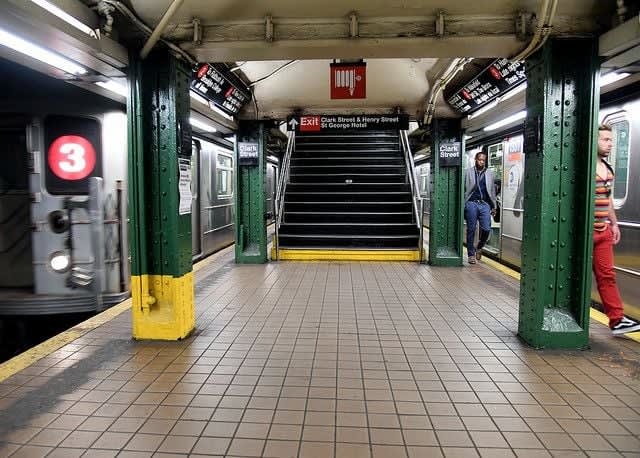
MTA New York City Transit subway car departing the Clark St. Station. Photo: Marc A. Hermann/MTA New York City Transit
3 min to read
MTA New York City Transit subway car departing the Clark St. Station. Photo: Marc A. Hermann/MTA New York City Transit
According to a new report, roughly half of the neighborhoods served by the New York City subway system – 62 out of 122 – are “ADA Transit Deserts,” meaning they lack a single accessible station. Fifty five of these neighborhoods are in the Bronx, Brooklyn, and Queens. Combined, these communities are home to 200,000 mobility-impaired residents, 340,000 seniors, and 200,000 children below the age of five, the report, “Service Denied: Accessibility and the New York City Subway System,” released by New York City Comptroller Scott M. Stringer.
“Decades of underinvestment and neglect have real life consequences," said Comptroller Scott M. Stringer. "For every inaccessible station, there is a New Yorker who can’t get to work, pick up their children from daycare, or visit their doctors. It’s simple – a person’s livelihood should not be dictated by their mobility status, and we must take action immediately to address this crisis. The MTA’s Fast Forward plan is a step in the right direction, but we can and must do more.”
ADA Transit Deserts Worsen the Affordable Housing Crisis
For New Yorkers with disabilities and seniors, the housing crisis is magnified by ADA Transit Desert, which limits housing options and forces mobility impaired New Yorkers to pay higher rents;
Median rents in neighborhoods with at least one accessible station are over $100 higher than in neighborhoods with only inaccessible stations; and
Given that people with disabilities or injuries, the elderly, and families with young children already bear heavy expenses for medical care and other services, these higher rents can be prohibitive.
ADA Transit Deserts Restrict Job Opportunities
Accessibility gaps can severely restrict opportunities for the mobility impaired;
Those living in areas without accessible stations will struggle to reach the 2.7 million jobs in areas that are accessible by subway;
The 608,258 jobs in neighborhoods without subway accessibility, meanwhile, are even more challenging to reach;
Barriers to the labor market already exacerbate the high rates of unemployment and low rates of workforce participation among those living with disabilities;
In New York City, only 23% of the mobility impaired are employed or actively looking for work — compared to 74% of the non-disabled; and
For those who are participating in the labor force, unemployment rates are a disturbing 16% for the mobility-impaired.
Chart 5: Employment Outcomes for New Yorkers with and without a Mobility-Impairment
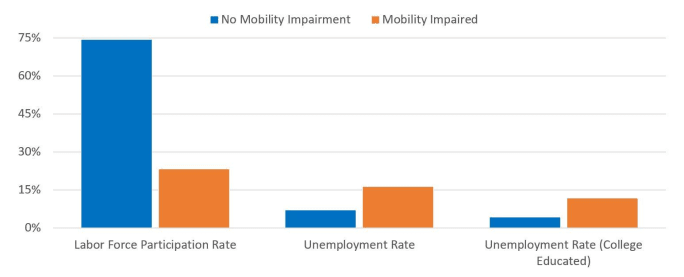
United States Census Bureau. American Community Survey 2012-2016, 5-Year Estimates.
New York Should Lead the Nation
Only 24% of the subway’s 472 stations are accessible, by far the lowest share among the country’s metropolitan rail systems. While some of these systems were built after ADA legislation was introduced and were pre-engineered for accessibility, those in Boston and Chicago are nearly as old or older than the New York City subway system, but are far more accessible.
Fixing ADA Transit Deserts Necessitates New Funding
In addition to offering support for the MTA’s new Fast Forward plan, the Comptroller is calling for a new funding mechanism to support accessibility investments. Comptroller Stringer’s report recommends that the state legislature introduce a new Transportation Bond Act in the next session and bring it to referendum. Voters have not had a chance to approve additional transit funding since 2005, when a $3.5 billion bond act was approved by voters, with proceeds divided fairly between upstate and downstate needs. A new bond act could vastly increase resources for ADA upgrades, dramatically enhancing the reach of the subway system and improving the lives of hundreds of thousands of New Yorkers.
More New Mobility

From Hardware to Digital Partner: Luminator Charts Its Next Chapter
CEO Magnus Friberg discusses Luminator’s shift toward becoming a digital partner, the growing importance of software and interoperability, and how AI can help agencies improve operations and passenger experience.
Read More →
Biz Briefs: Alstom Lands Canadian Contract, LYT to Supply California TSP, and More
In METRO's latest installment, we take a look at recent news from Complete Coach Works, Beep, FlixBus, and more partnerships making headlines across the transportation sector.
Read More →
CharterUP’s Armir Harris on Technology, AI, and the Future of Group Mobility
In a recent episode of METROspectives, CharterUP Founder/CEO Armir Harris discussed the company’s evolution from an online charter bus marketplace into a technology platform supporting public- and private-sector mobility and much more.
Read More →
Jacksonville’s NAVI Project Charts a New Course for Autonomous Public Transportation
Through its NAVI program, JTA is showing how autonomous vehicles, intelligent infrastructure, and coordinated operations can work together to deliver everyday public transportation.
Read More →
Biz Briefs: Luminator Marks Milestone and More
From manufacturers and suppliers to transit agencies and motorcoach operators, these updates offer a snapshot of the projects, partnerships and business moves driving the industry forward.
Read More →
New Tricks for Old Bureaucracies: Joshua Schank on Making Transit Innovation Stick
Former LA Metro Chief Innovation Officer Joshua Schank discusses why good ideas aren't enough, how transit agencies can overcome resistance to change, and why today's challenges demand more innovation.
Read More →
How DART's GoPass Is Redefining Regional Mobility
Serving 14 transit agencies, GoPass simplifies multimodal travel by allowing riders to plan, pay for, and manage an entire trip through one app.
Read More →
Biz Briefs: OCTA Taps Clean Energy for Hydrogen Station, Stadler to Supply Via Rail Vehicles, and More
From manufacturers and suppliers to transit agencies and motorcoach operators, these updates offer a snapshot of the projects, partnerships and business moves driving the industry forward.
Read More →CharterUP Expands Into New Mobility and Autonomous Transportation
Vice President of New Mobility Stephen Joos discusses how CharterUP is leveraging its nationwide transportation network, technology platform, and autonomous vehicle partnerships to expand into workforce mobility, campus shuttles, and transit solutions.
Read More →
METRO Magazine Announces 2026 Innovative Solutions Awards Winners
Projects Recognized for Advancing Mobility Through Technology, Accessibility, Workforce Innovation, and Operational Excellence
Read More →