



AHSRA urges Congress to act on volcanic threat
Alliance president, Eric C. Peterson, noted the important role Europe's high-speed rail service played in helping to reduce the full impact of aviation disruptions brought on by volcanic ash in the atmosphere.

The American High Speed Rail Alliance (AHSRA), a Washington, D.C. advocacy organization, urged Congress and the Obama Administration to accelerate efforts to build America's high-speed rail program in the wake of worldwide transportation disruptions caused by the eruption of Mt. Eyjafjallajökull in Iceland, and the potential for similar and possibly larger seismic events, especially in the Western U.S.
Alliance president, Eric C. Peterson, noted the important role Europe's high-speed rail service played in helping to reduce the full impact of aviation disruptions brought on by volcanic ash in the atmosphere. "For over a week international and domestic air travel in Europe has been disrupted, stranding travelers and affecting the shipment of goods around the world," said Peterson.
Volcanologists are now holding their breath and crossing their fingers that the larger Hekla volcano does not erupt. Records show that on at least three occasions in recorded history where the Eyjafjallajökull volcano became active it was followed by an eruption of the Hekla volcano that lasted for more than a year.
"Such an event would devastate the world economy, and depending where the volcanic ash blew, could severely affect the U.S. economy and transportation system," Peterson said.
Noting that most of North America's volcanoes are located in the west, and that the prevailing North American winds are from the west to the east, if the United States experienced a volcanic event even the size of Eyjafjallajökull, the impact on the U.S. economy could be catastrophic without a dependable passenger rail program, according to AHSRA.
More Rail
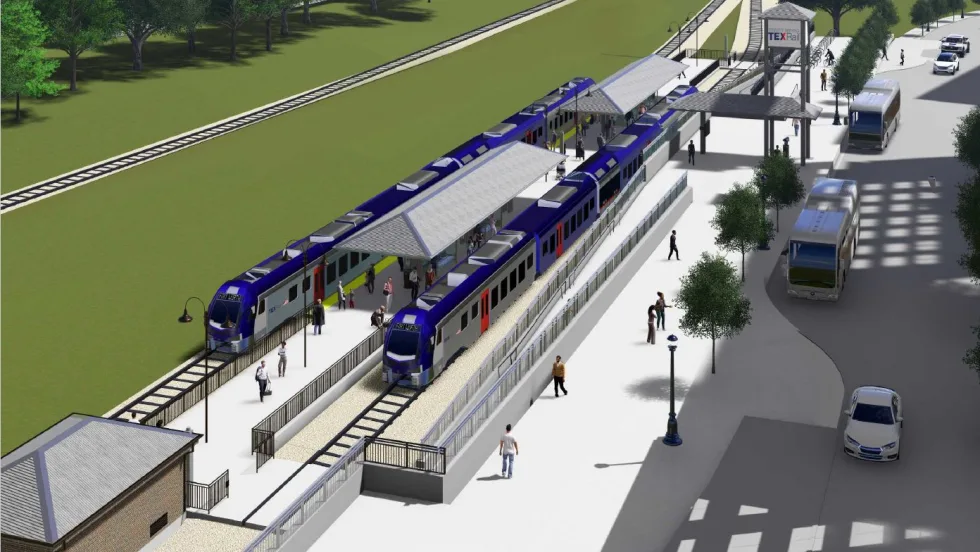
Trinity Metro Breaks Ground on $270M TEXRail Extension
The 2.1-mile extension will connect Fort Worth’s Medical District and Near Southside to downtown, surrounding communities, and Dallas-Fort Worth International Airport.
Read More →
Bringing Austin’s First Light Rail System to Life
Austin Transit Partnership CEO Greg Canally discusses the city's nearly 10-mile light rail project, its collaborative approach to project delivery, the importance of community engagement, and the milestones ahead as construction approaches in 2027.
Read More →
Metra Draft Plan Outlines Costs, Service Improvements for Regional Rail
The Systemwide Network Plan identifies infrastructure needs and potential investments to expand all-day, bidirectional rail service across the Chicago region.
Read More →
Amtrak Completes First Street Tunnel Upgrades, Restores Service
The nine-day construction project included replacing aging track infrastructure and modernizing switch systems near Washington Union Station.
Read More →
FRA Announces $2.3B for Passenger, Freight Rail Projects Nationwide
The CRISI Grant Program funding will support rail infrastructure improvements, safety upgrades, and projects aimed at improving freight and passenger rail service across 45 states and Washington, D.C.
Read More →
Caltrain’s Electrification Drives a New Era of Ridership Growth
The railroad’s shift to electric service has brought more frequent trains, stronger customer satisfaction, and increased ridership, earning it APTA’s Outstanding Public Transportation System award.
Read More →
FTA Advances $164M Broward County Commuter Rail Project
The proposed 10.5-mile commuter rail extension would connect Fort Lauderdale and Aventura, expanding passenger rail options in South Florida.
Read More →
New York MTA Launches Historic $1.9B Signal, Track Modernization Project
Funded in part by congestion pricing revenue, the project will replace nearly century-old signals along the A and C lines in Brooklyn and Queens.
Read More →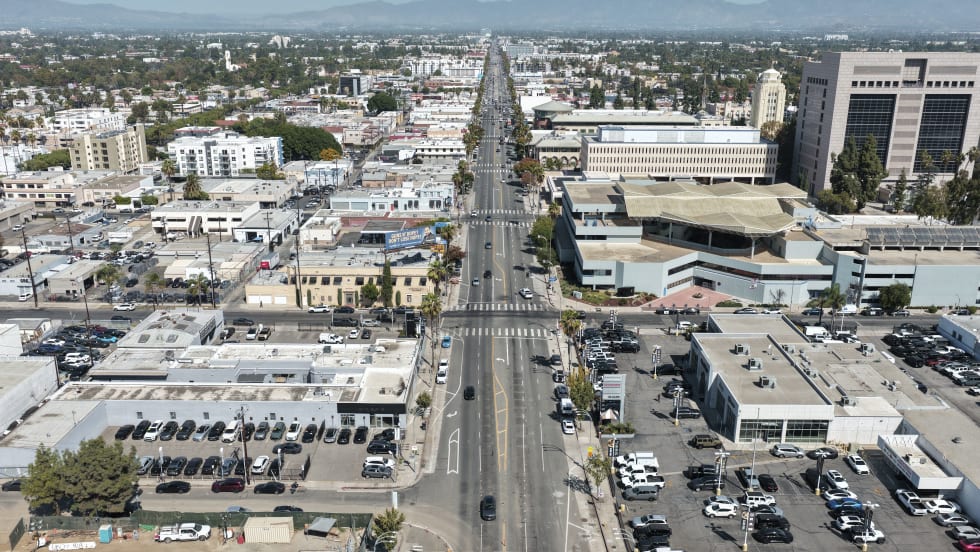
LA Metro Breaks Ground on East San Fernando Valley Light Rail Project
The 6.7-mile line will add 11 stations along Van Nuys Boulevard, expand access to jobs and regional transit connections, and support Metro’s broader efforts to improve mobility as rail ridership grows.
Read More →
CSA Group Releases Climate Resilience Standard for Transit, Passenger Rail
Developed with support from the Standards Council of Canada, CSA D700 guides assessing climate-related risks and planning adaptation measures for transit and passenger rail systems.
Read More →