



Alstom delivers last vehicle for SBB Pendolino fleet
This last delivery completes SBB’s tilting fleet, which now counts 19 Pendolino trains.

Alstom
Alstom
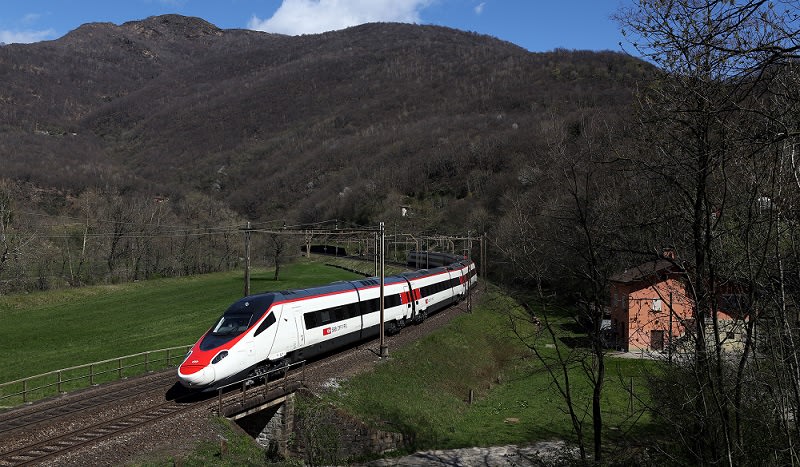
Alstom delivered the last Pendolino ETR 610 high-speed train to Switzerland’s SBB, in accordance with the planned schedule defined within the contract signed in 2015 for four additional trains. They will operate as EuroCity trains on the Gotthard and Simplon line to Milan.
This last delivery completes SBB’s tilting fleet, which now counts 19 Pendolino trains.
“We are thankful for the trust that SBB put in us and pleased to meet that trust again. Over the years we have built a strong relationship with our Swiss customer. With its unique tilting technology and its cross-border performance, Pendolino is perfectly adapted to the SBB network,” said Michele Viale, managing director, Italy and Switzerland, at Alstom.
The Pendolino train for SBB is a seven-car train, which can accommodate up to 430 passengers. The train offers an excellent level of passenger accessibility and comfort thanks to, among other features, wide gangways and corridors, reclining seats, individual reading lights, and electric sockets, as well as large panoramic windows.
The train is equipped with the latest generation of flexible bogies reducing track and wheel wear. It also benefits from Alstom’s unique tilting technology that allows for trains to run safely at a speed 35% faster through curves on conventional lines.
Designed to be eco-friendly, Pendolino is 95% recyclable and is equipped with an electric braking system enabling almost 10% reduction in energy consumption.
All trains were manufactured in Savigliano (Italy), Alstom’s worldwide competence center for tilting high-speed trains and an example of Factory 4.0. Its innovative 3D virtual reality room enables Alstom engineers to design trains for easier maintainability. Over 500 Pendolino trains have been produced in Savigliano since 30 years.
More Rail

New York MTA Advances Final Contract for Second Avenue Subway Expansion
Contract Four is the largest in the Second Avenue Subway Phase 2 project and includes construction of station infrastructure, tracks, and signals for the subway expansion, MTA officials said. Work on Contract Four will begin in 2027.
Read More →
San Diego MTS Breaks Monthly Trolley Ridership Record
Agency officials said July’s ridership indicates MTS’s continued recovery from the pandemic.
Read More →
Report Examines NJ TRANSIT Reliability, Funding Challenges
The Garden State Initiative analysis examines the roles of Amtrak infrastructure, fleet management, and agency operations while recommending a more performance-based approach to improving reliability.
Read More →
Stadler, CapMetro Sign Long-Term Rail Fleet Support Agreement
Beginning in 2027, Stadler will provide on-site technical expertise, spare parts support, training, and obsolescence management to help extend the reliability and longevity of CapMetro’s GTW fleet.
Read More →
Biz Briefs: Alstom Lands Canadian Contract, LYT to Supply California TSP, and More
In METRO's latest installment, we take a look at recent news from Complete Coach Works, Beep, FlixBus, and more partnerships making headlines across the transportation sector.
Read More →
CATS Gold Line Marks 5 Years of Service, 2.8M Passenger Trips
With a six-mile expansion planned, the Charlotte streetcar is positioned to connect more neighborhoods and major transit hubs across the region.
Read More →
Why Simulating Pedestrian Movement Has Become Essential for Modern Rail Stations
Pedestrian microsimulation is helping rail planners identify bottlenecks, test station designs, and prepare complex transit hubs for growing passenger volumes.
Read More →
Amtrak Begins Major Construction at New York’s Sunnyside Yard
The new maintenance facility will support Amtrak’s Airo trainsets while improving maintenance efficiency and turnaround times in New York.
Read More →
Chicago Leaders Unveil Plans for O’Hare Airport Express Train
The privately developed project would offer a 15-minute trip between downtown and O’Hare’s Terminal 2, with trains operating every 15 minutes on a dedicated track. The service would use battery-electric trains and three existing freight rail rights-of-way.
Read More →
OCTA Maps Out 30-Year Strategy to Protect Coastal Rail Corridor
The draft feasibility report identifies strategies to protect the coastal rail line for decades as the agency continues near-term stabilization and sand placement efforts.
Read More →