



Alstom to Supply Additional NJ TRANSIT Railcars
The purchase of additional rolling stock is part of NJ TRANSIT’s continuing efforts to create a more modern, efficient, and reliable fleet to serve passengers traveling within the state and commuting to New York City and Philadelphia.

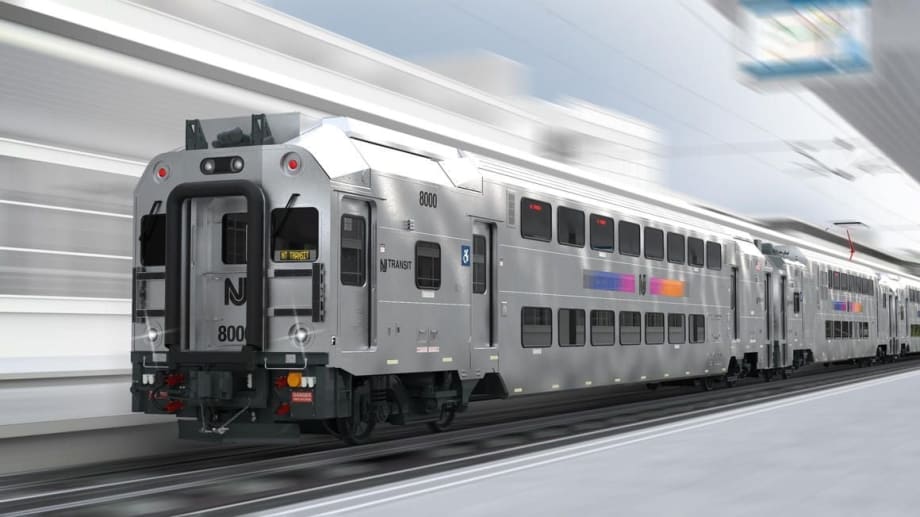
The Multilevel III cars will replace 40-year-old single-level vehicles with a model that can travel between 10 and 20 times further between critical repairs. The new cars will also increase capacity by more than 12%.
Photo: Alstom Advanced Creative & Design
NJ TRANSIT exercised options to purchase an additional Alstom 200 Multilevel III commuter car and 12 ALP 45 dual-powered locomotives. The total value of this purchase is approximately $1.1 billion.
The purchase of additional rolling stock is part of NJ TRANSIT’s continuing efforts to create a more modern, efficient, and reliable fleet to serve passengers traveling within the state and commuting to New York City and Philadelphia.
The Multilevel III cars will replace 40-year-old single-level vehicles with a model that can travel between 10 and 20 times further between critical repairs. The new cars will also increase capacity by more than 12%.
“These third-generation multi-level trains that we will start delivering to NJ TRANSIT in the coming months are designed with energy-efficient features, redundancy, and durability to maximize the value of NJ TRANSIT’s fleet over its lifecycle,” said Michael Keroullé, president of Alstom Americas.
More Reliable, Comfortable
Passenger amenities for the Multilevel III cars include USB charging ports, digital screens, and automated audio announcements with route and station information.
The new order comes on top of 174 Multilevel III vehicles that NJ TRANSIT previously ordered from Alstom.
Approximately a third of the total orders are multilevel power cars (MLPCs), meaning that they are equipped with a power system that eliminates the need for a locomotive. A 12-car trainset will typically travel with four MLPCs, providing redundancy and improving reliability if one of the power cars malfunctions, said Alstom officials.
The additional 12 ALP 45 dual-power locomotives will replace some of NJ TRANSIT’s older, diesel-only engines. The ALP 45s can utilize overhead catenary wires for cleaner electric power, where available.
On parts of NJ TRANSIT’s network that are not electrified, the ALP 45s will switch to diesel engines that meet Tier IV emission requirements from the U.S. Environmental Protection Agency. With this new purchase, NJ TRANSIT will own a total of 72 ALP 45 dual-power locomotives.
Alstom’s Vehicles
The Multilevel cars for NJ TRANSIT are part of Alstom’s Adessia commuter rail portfolio. The backbone of urban life, Adessia commuter trains are one of the most sustainable means of travel across cities and suburbs.
The wide range of high-floor multiple units and coaches is available in single- or double-deck configurations and is suitable for all climatic conditions. They can run between 75 and 125 mph on electrified as well as non-electrified networks.
The ALP 45 dual-power locomotive is part of Alstom’s portfolio of state-of-the-art Traxx Passenger multi-system and multi-power locomotives designed to support operators in providing comfortable, borderless passenger operations. This portfolio includes locomotive types that operate under diverse standards and operational requirements — such as multi-country, push-pull, and catenary-free operation and environmental prerequisites.
More Rail
Amtrak, CN Reach Agreements to Strengthen Passenger Rail Service, Safety
The agreement resolves a more than decade-long proceeding before the Surface Transportation Board concerning the terms and conditions for Amtrak services, such as the City of New Orleans, Illini/Saluki, and Wolverine.
Read More →
New York MTA Advances Final Contract for Second Avenue Subway Expansion
Contract Four is the largest in the Second Avenue Subway Phase 2 project and includes construction of station infrastructure, tracks, and signals for the subway expansion, MTA officials said. Work on Contract Four will begin in 2027.
Read More →
San Diego MTS Breaks Monthly Trolley Ridership Record
Agency officials said July’s ridership indicates MTS’s continued recovery from the pandemic.
Read More →
Report Examines NJ TRANSIT Reliability, Funding Challenges
The Garden State Initiative analysis examines the roles of Amtrak infrastructure, fleet management, and agency operations while recommending a more performance-based approach to improving reliability.
Read More →
Stadler, CapMetro Sign Long-Term Rail Fleet Support Agreement
Beginning in 2027, Stadler will provide on-site technical expertise, spare parts support, training, and obsolescence management to help extend the reliability and longevity of CapMetro’s GTW fleet.
Read More →
Biz Briefs: Alstom Lands Canadian Contract, LYT to Supply California TSP, and More
In METRO's latest installment, we take a look at recent news from Complete Coach Works, Beep, FlixBus, and more partnerships making headlines across the transportation sector.
Read More →
CATS Gold Line Marks 5 Years of Service, 2.8M Passenger Trips
With a six-mile expansion planned, the Charlotte streetcar is positioned to connect more neighborhoods and major transit hubs across the region.
Read More →
Why Simulating Pedestrian Movement Has Become Essential for Modern Rail Stations
Pedestrian microsimulation is helping rail planners identify bottlenecks, test station designs, and prepare complex transit hubs for growing passenger volumes.
Read More →
Amtrak Begins Major Construction at New York’s Sunnyside Yard
The new maintenance facility will support Amtrak’s Airo trainsets while improving maintenance efficiency and turnaround times in New York.
Read More →
Chicago Leaders Unveil Plans for O’Hare Airport Express Train
The privately developed project would offer a 15-minute trip between downtown and O’Hare’s Terminal 2, with trains operating every 15 minutes on a dedicated track. The service would use battery-electric trains and three existing freight rail rights-of-way.
Read More →