



Amtrak, Siemens demo testing of new locomotives
Testing includes maximum speed runs, acceleration and braking, operating with Amtrak passenger coach cars attached and testing the overall performance capabilities of the locomotive.


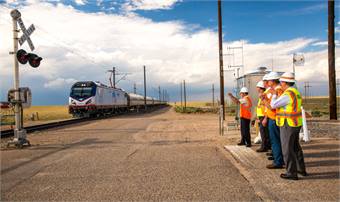
The new Amtrak Cities Sprinter (ACS-64) electric locomotives are now in a comprehensive and rigorous testing program, and are being put through the paces before entering Northeast service this fall.
Amtrak President/CEO Joe Boardman, Federal Railroad Administrator Joseph Szabo and Siemens Rail Systems President Michael Cahill traveled to the U.S Department of Transportation (DOT) Transportation Technology Center (TTC) facility in Pueblo, Colo., to get an update on the testing program and to observe a testing demonstration.
"These locomotives are the new workhorses of the Amtrak fleet in the Northeast and they must meet our performance-based specifications and reliability needs so we can keep the region's people and economy moving," said Boardman.
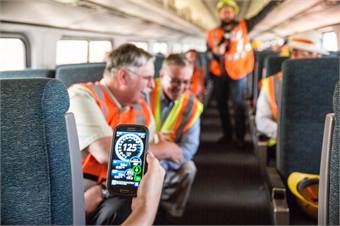
Two locomotives are at the TTC facility to undergo a series of tests, including maximum speed runs, acceleration and braking, operating with Amtrak passenger coach cars attached and testing the overall performance capabilities of the locomotive. Engineers are also validating the on-board computer system and software, as well as evaluate ride quality by using instruments to measure things such as noise and wheel vibrations.
A variety of additional tests and validation exercises are being conducted as part of the commissioning process to ensure the locomotive is operating and performing as designed and that it is ready to provide reliable service for Amtrak passengers.
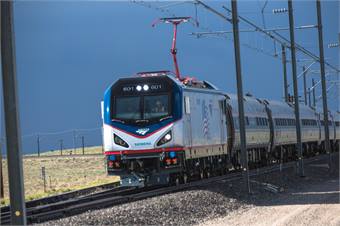
"Safety is our number one priority," said Szabo. "Today's testing regime demonstrates the extraordinary safety standards FRA requires manufacturers and railroads to meet when building passenger rail equipment. One in seven Americans lives along the Northeast Corridor and as demand for passenger rail service continues to grow across the country, we will continue to ensure that rail equipment is safe, reliable and efficient."
In addition to the robust testing regime at TTC, a third locomotive will run field tests on the Northeast and Keystone Corridors this summer and be used for training Amtrak locomotive engineers and mechanical crews. A fourth locomotive will be tested in a climate-controlled chamber to determine how well it performs in extreme heat and cold temperatures.
Amtrak selected Siemens to design and manufacture 70 next-generation, electric locomotives that will provide improved reliability, efficiency and mobility for intercity rail passengers traveling on the Northeast and Keystone Corridors. The new locomotives will replace existing locomotives in service for 25 to 35 years with an average of 3.5 million miles traveled.
Using Siemens' innovative and proven rail technology, the Amtrak Cities Sprinter (ACS-64) locomotives are being assembled in Siemens' Sacramento, Calif., rail manufacturing plant powered by renewable energy, with parts built from its plants in Norwood, Ohio, Alpharetta, Ga., and Richland, Miss., and nearly 70 suppliers, representing more than 60 cities and 23 states. The first units being used in the testing program rolled off the assembly line in May.
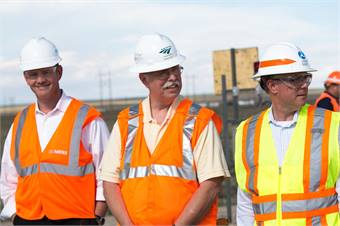
Michael Cahill, Joseph Boardman and Joseph Szabo.
The new locomotives will operate on Northeast Regional trains at speeds up to 125 mph on the Northeast Corridor (NEC) along the Washington – New York – Boston route and on Keystone Service trains at speeds up to 110 mph on the Keystone Corridor from Philadelphia to Harrisburg, Pa. In addition, the new locomotives will power all long-distance trains operating on the NEC.
The new locomotives are designed for easier maintenance, will improve energy efficiency by using a regenerative braking system that will feed energy back into the power grid and will enhance mobility for the people, businesses and economy of the entire Northeast region. They also meet the latest federal rail safety regulations.
Once the locomotives are commissioned in the fall, production of the remaining units will ramp up for monthly delivery through 2016. The new locomotives are part of a comprehensive Amtrak Fleet Strategy Plan to modernize and expand its equipment.
More Rail
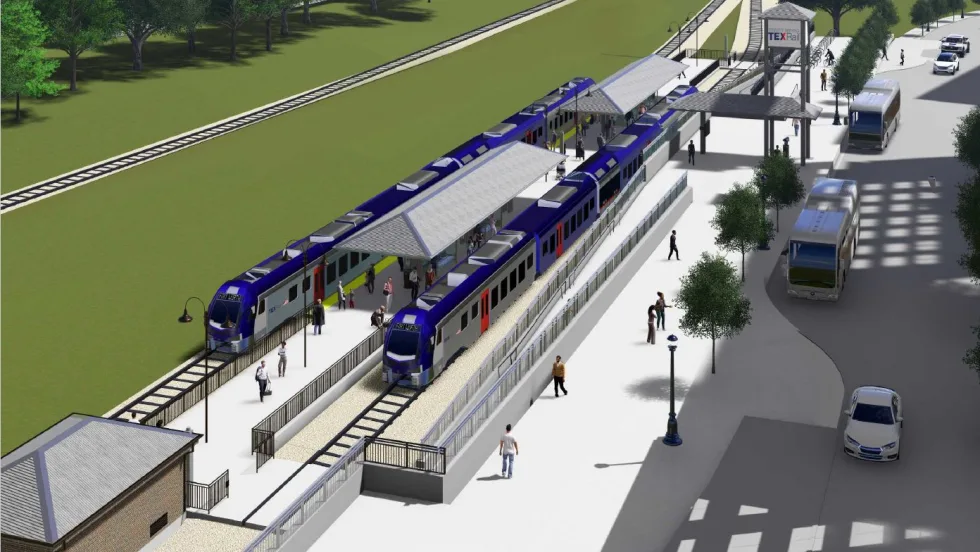
Trinity Metro Breaks Ground on $270M TEXRail Extension
The 2.1-mile extension will connect Fort Worth’s Medical District and Near Southside to downtown, surrounding communities, and Dallas-Fort Worth International Airport.
Read More →
Bringing Austin’s First Light Rail System to Life
Austin Transit Partnership CEO Greg Canally discusses the city's nearly 10-mile light rail project, its collaborative approach to project delivery, the importance of community engagement, and the milestones ahead as construction approaches in 2027.
Read More →
Metra Draft Plan Outlines Costs, Service Improvements for Regional Rail
The Systemwide Network Plan identifies infrastructure needs and potential investments to expand all-day, bidirectional rail service across the Chicago region.
Read More →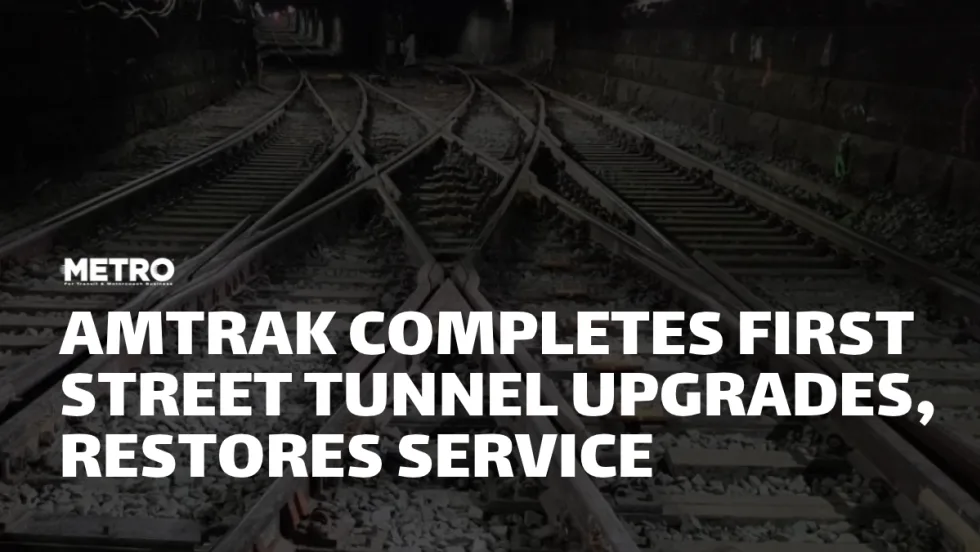
Amtrak Completes First Street Tunnel Upgrades, Restores Service
The nine-day construction project included replacing aging track infrastructure and modernizing switch systems near Washington Union Station.
Read More →
FRA Announces $2.3B for Passenger, Freight Rail Projects Nationwide
The CRISI Grant Program funding will support rail infrastructure improvements, safety upgrades, and projects aimed at improving freight and passenger rail service across 45 states and Washington, D.C.
Read More →
Caltrain’s Electrification Drives a New Era of Ridership Growth
The railroad’s shift to electric service has brought more frequent trains, stronger customer satisfaction, and increased ridership, earning it APTA’s Outstanding Public Transportation System award.
Read More →
FTA Advances $164M Broward County Commuter Rail Project
The proposed 10.5-mile commuter rail extension would connect Fort Lauderdale and Aventura, expanding passenger rail options in South Florida.
Read More →
New York MTA Launches Historic $1.9B Signal, Track Modernization Project
Funded in part by congestion pricing revenue, the project will replace nearly century-old signals along the A and C lines in Brooklyn and Queens.
Read More →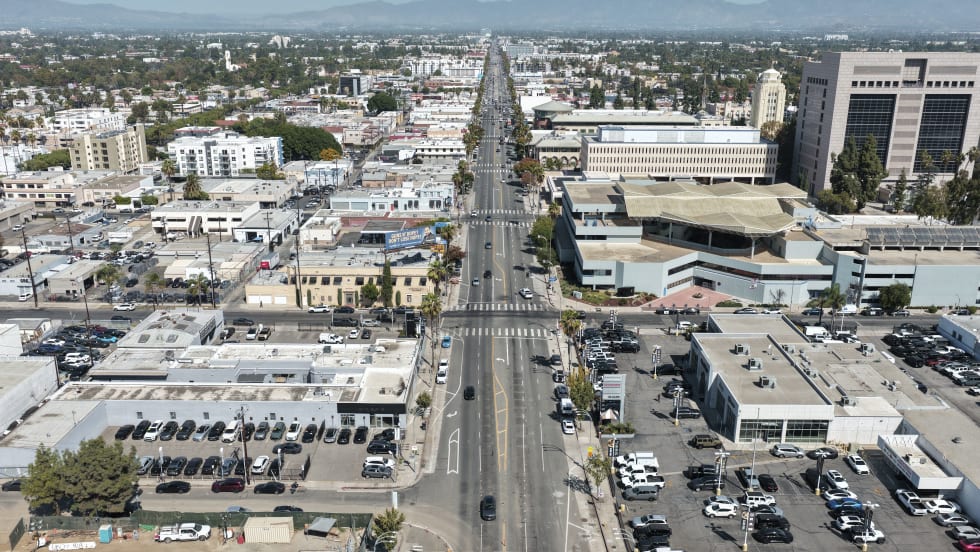
LA Metro Breaks Ground on East San Fernando Valley Light Rail Project
The 6.7-mile line will add 11 stations along Van Nuys Boulevard, expand access to jobs and regional transit connections, and support Metro’s broader efforts to improve mobility as rail ridership grows.
Read More →
CSA Group Releases Climate Resilience Standard for Transit, Passenger Rail
Developed with support from the Standards Council of Canada, CSA D700 guides assessing climate-related risks and planning adaptation measures for transit and passenger rail systems.
Read More →