




Keep Reading: Boston's MBTA Marks Progress in Regional Rail Modernization
MBTA Updates Rail Modernization Plan to Expand Reliability and Accessibility
The strategy outlines near- and long-term upgrades to ease congestion, support housing growth, and advance statewide climate goals.
February 27, 2026
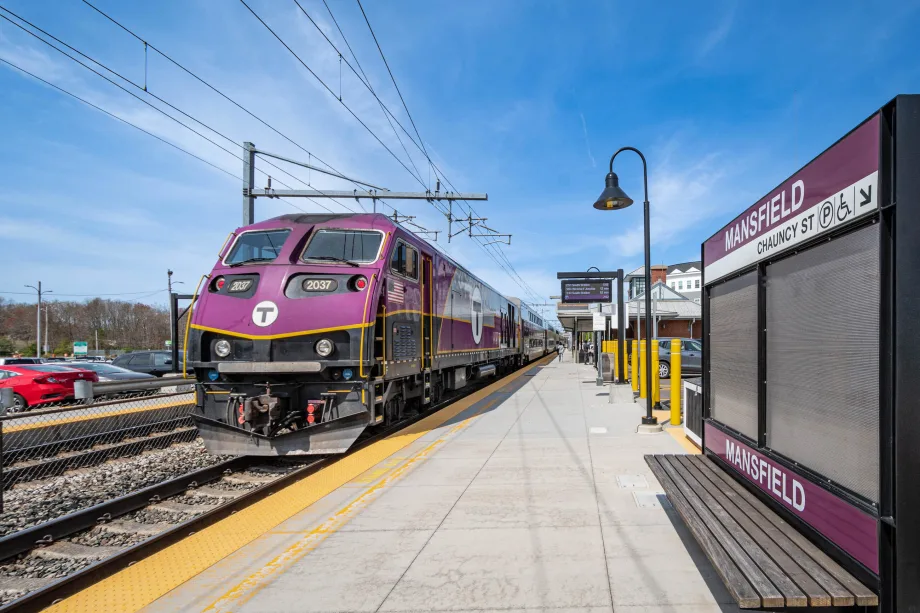
Approximately 64% of commonwealth residents and 39% of Rhode Island residents live within three miles of a Massachusetts Bay Transportation Authority station.
Credit:
Massachusetts Bay Transit Authority
2 min to read
The Massachusetts Bay Transportation Authority recently announced that it is developing an updated regional rail strategy, known as the Rail Modernization Plan, to transform its rail system.
Identifying near-term investments and long-term needs, the Rail Modernization Plan will consider how the MBTA can enhance frequency, reliability, and accessibility across the communities served by rail while advancing decarbonization strategies.
“I know how important it is that we create a robust and complete transportation network across the commonwealth that facilitates access to jobs, homes, economic opportunities, and more,” said Interim MassDOT Secretary and MBTA General Manager Phillip Eng. “Working with the highway system, municipal roadways, and regional transit authorities, rail modernization, bidirectional travel, shorter trips, and tackling congestion through mode shift, is a key piece in making all movement both viable and appealing.”
Supporting many of the Healey-Driscoll Administration’s objectives for regional mobility and connectivity, enhancements to the rail network will ultimately “increase service to the public while supporting the commonwealth in achieving its broader housing, climate, mobility, and economic development goals.”
Investments to Expand Regional Rail Access, Reliability, and Electrification
According to an agency release, almost three-quarters of Massachusetts residents live within the MBTA service area, and more frequent, reliable regional rail service will have major benefits for residents and businesses in Massachusetts and surrounding states.
Approximately 64% of commonwealth residents and 39% of Rhode Island residents live within three miles of an MBTA station. The agency predicts a more robust network will enhance the commonwealth’s goals for commercially viable developments near transit stations, spurring future housing production.
The MBTA will need to make investments in the coming years to:
- Improve frequency by eliminating legacy bottlenecks in MBTA's single-track, at-grade system.
- Increase reliability by investing in new locomotives for passenger service while modernizing layover and maintenance facilities for current and future fleets.
- Enhance accessibility by introducing level-boarding at inaccessible stations throughout the system.
- Pursue decarbonization by developing an electrification plan and through the installation of discontinuous overhead catenary wire, charging, and transmission infrastructure.
The MBTA is inviting the public to engage with the T during this planning process to help determine the vision for future service and prioritize investments as funding becomes available.
The agency will launch a series of public meetings, tabling events, targeted stakeholder conversations, and virtual engagement strategies. More information can be found at MBTA.com/RailModernization.
More Rail

New York MTA Advances Final Contract for Second Avenue Subway Expansion
Contract Four is the largest in the Second Avenue Subway Phase 2 project and includes construction of station infrastructure, tracks, and signals for the subway expansion, MTA officials said. Work on Contract Four will begin in 2027.
Read More →
San Diego MTS Breaks Monthly Trolley Ridership Record
Agency officials said July’s ridership indicates MTS’s continued recovery from the pandemic.
Read More →
Report Examines NJ TRANSIT Reliability, Funding Challenges
The Garden State Initiative analysis examines the roles of Amtrak infrastructure, fleet management, and agency operations while recommending a more performance-based approach to improving reliability.
Read More →
Stadler, CapMetro Sign Long-Term Rail Fleet Support Agreement
Beginning in 2027, Stadler will provide on-site technical expertise, spare parts support, training, and obsolescence management to help extend the reliability and longevity of CapMetro’s GTW fleet.
Read More →
Biz Briefs: Alstom Lands Canadian Contract, LYT to Supply California TSP, and More
In METRO's latest installment, we take a look at recent news from Complete Coach Works, Beep, FlixBus, and more partnerships making headlines across the transportation sector.
Read More →
CATS Gold Line Marks 5 Years of Service, 2.8M Passenger Trips
With a six-mile expansion planned, the Charlotte streetcar is positioned to connect more neighborhoods and major transit hubs across the region.
Read More →
Why Simulating Pedestrian Movement Has Become Essential for Modern Rail Stations
Pedestrian microsimulation is helping rail planners identify bottlenecks, test station designs, and prepare complex transit hubs for growing passenger volumes.
Read More →
Amtrak Begins Major Construction at New York’s Sunnyside Yard
The new maintenance facility will support Amtrak’s Airo trainsets while improving maintenance efficiency and turnaround times in New York.
Read More →
Chicago Leaders Unveil Plans for O’Hare Airport Express Train
The privately developed project would offer a 15-minute trip between downtown and O’Hare’s Terminal 2, with trains operating every 15 minutes on a dedicated track. The service would use battery-electric trains and three existing freight rail rights-of-way.
Read More →
OCTA Maps Out 30-Year Strategy to Protect Coastal Rail Corridor
The draft feasibility report identifies strategies to protect the coastal rail line for decades as the agency continues near-term stabilization and sand placement efforts.
Read More →