



AVM to launch new all-electric mid-size shuttle bus
A portfolio company of the Los Angeles Cleantech Incubator, AVM has commitments from launch customers in the U.S. and abroad for more than 250 vehicles.

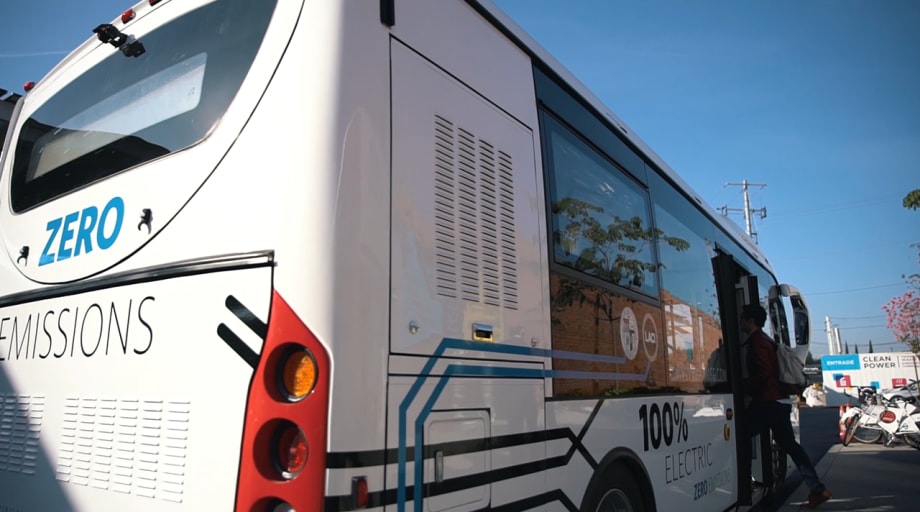
AVM shuttles are powered by Yinlong’s proprietary lithium–titanate battery technology.
AVM
AVM shuttles are powered by Yinlong’s proprietary lithium–titanate battery technology.
AVM
AVM (Advanced Vehicle Manufacturing) is set to unveil the first vehicle in its line of all-electric, mid-size shuttle buses, the EV27 at the upcoming Advanced Clean Expo (ACT) Expo from April 30 to May 3 in Long Beach, Calif.
In about the same time it takes to fill up a gas tank, AVM’s 100% electric, low-floor EV27 shuttle is fully charged and ready to go, maximizing on-duty time. Also available in 21- and 33-foot lengths, AVM’s EV27 is ideal for loop-based routes supporting corporate and school campuses, hotels and rental car facilities, airports, and affording “first/last mile” solutions to private communities.
AVM’s exclusive joint venture is powered by Yinlong Energy, one of the world’s leading energy manufacturers and innovators. AVM shuttles are powered by Yinlong’s proprietary lithium–titanate battery (LTO) technology. An extremely safe and long-lasting lithium-based technology, LTO cells can endure more than 20,000 cycles, ensuring the batteries’ lifespan exceeds that of the vehicle. This robust and proven technology takes full advantage of AVM’s 350 kW CCS 2.0 high-powered charger, enabling the EV27’s rapid charge time.
Having a vehicle charge fully in less than 10 minutes not only maximizes the total time in service for operators, but also eliminates the range anxiety often associated with electric vehicles. While most routes serviced by mid-size shuttles accommodate ten-minute breaks every three to four hours, the EV27, when coupled with AVM’s 350 kW CCS 2.0 charger, has effectively unlimited range under those conditions. Needing only 10 minutes every few hours reduces the number of chargers required compared to an overnight or multiple-hour charging scheme. AVM’s EV27 saves operators as much as 50% in overall total cost of ownership due to reduced maintenance, fuel, and other costs and provides greater reliability and longevity.
Plus, the EV27 affords a quiet, zero-emission solution for neighborhoods, urban areas, and anywhere else air and noise pollution are concerns. The EV27’s unprecedented value equation enables operators to switch to an all-electric solution better aligned with green initiatives and environmental mandates.
“With the debut of the EV27, AVM is making electric-powered commercial shuttles practical as well as truly desirable,” says Larry Brennan, CEO of AVM. “With such a competitive pricing model, short charge-time and proven technology, we’ve removed any remaining deterrents. Moving from traditional combustion-power to 100% electric is finally not just an environmental consideration — it’s the smart business decision.”
Every AVM vehicle connects to AVM’s real-time, cloud-based “smart” technology. Operators can select and customize ridership experience with features such as USB charging and Wi-Fi, fleet management, navigation, route optimization, and remote-access data-collection opportunities.
A portfolio company of the Los Angeles Cleantech Incubator (LACI), AVM has commitments from launch customers in the U.S. and abroad for more than 250 vehicles. AVM is continuing the momentum of the EV27 launch and will be rolling out a full-range of additional commercial electric vehicles, including vans, transit buses, school buses, and tour coaches, in a variety of lengths and capacities.
More Technology

From Hardware to Digital Partner: Luminator Charts Its Next Chapter
CEO Magnus Friberg discusses Luminator’s shift toward becoming a digital partner, the growing importance of software and interoperability, and how AI can help agencies improve operations and passenger experience.
Read More →
Beyond the Checklist: A Structured Approach to Transit Maintenance
Reliability-Centered Maintenance helps transit agencies move beyond routine checklists to focus limited resources on the assets and failures that have the greatest impact on safety, reliability, and service.
Read More →
NJ TRANSIT Advances Bus Technology Upgrades Across Statewide Fleet
More than 1,500 buses now feature upgraded technology designed to improve arrival predictions and provide free Wi-Fi, with deployment expected to reach nearly 2,000 buses by the end of 2026.
Read More →

Building a Flexible Path to Transit Electrification
John Hroncich discusses BAE Systems’ modular and scalable approach, lessons learned from decades of real-world operations, and how agencies can identify electrification strategies that fit their fleets.
Read More →
Biz Briefs: Alstom Lands Canadian Contract, LYT to Supply California TSP, and More
In METRO's latest installment, we take a look at recent news from Complete Coach Works, Beep, FlixBus, and more partnerships making headlines across the transportation sector.
Read More →
From Legacy Silos to Conversational Intelligence
What if transit leaders could ask any operational question and get a trusted answer in seconds? Conversational AI is transforming how agencies use their data.
Read More →
USDOT Announces Rail Vehicle Replacement Grants, Chattanooga AV Shuttle Funding
More than $191 million in federal funding will help three transit agencies replace aging rail vehicles and support a new autonomous shuttle service in Chattanooga.
Read More →
Bus Tech Talk: Keeping Transit Technicians Ahead of the Technology Curve
LA Metro’s Obed Mejia discusses technician training, evolving maintenance technology, fleet replacement, and strategies for getting the most out of today’s transit fleets.
Read More →
Biz Briefs: RIPTA Unveils New Frontrunners, Clevland RTA Adds New Siemens, and More
In METRO's latest installment, we take a look at recent news from Siemens, Prevost, Dodge, and more partnerships making headlines across the transportation sector.
Read More →
Why Simulating Pedestrian Movement Has Become Essential for Modern Rail Stations
Pedestrian microsimulation is helping rail planners identify bottlenecks, test station designs, and prepare complex transit hubs for growing passenger volumes.
Read More →