




RELATED: BART Reaches Out to Customers to Get 'Fleet of the Future' Right
BART to begin onsite testing of first 'Fleet of the Future' railcar
The first car, manufactured by Bombardier Transportation, will now undergo mandated testing on a test track where dynamic qualification testing of 29 separate performance measures will occur.
April 7, 2016
3 min to read
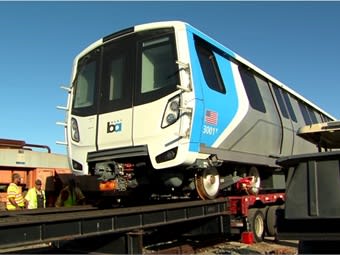
With the arrival of its first new train car, the Bay Area Rapid Transit District (BART) is now set to begin a crucial onsite testing phase. The first train car was unveiled Wednesday at BART’s testing facility in Hayward, Calif. marking the beginning of the arrival of a new fleet of 775 train cars over the next five years.
“This next testing phase is critical to having safe and reliable new train cars,” said Board President Tom Radulovich. “As these new cars arrive and get approved for passenger service, we can finally start running longer trains. That’s something every line on our system needs right now. In fact, the need is so great we’ve been able to get the manufacturer to increase the monthly delivery rate from 10 cars per month to 16 per month, putting the final car delivery 21 months earlier than the original schedule.”
Testing details
The first car will now undergo mandated testing on a test track where dynamic qualification testing of 29 separate performance measures will occur. The first dynamic performance tests are for propulsion and brakes. Then other important features such as wheel-to-axle resistance, noise, and electromagnetic compatibility testing must be verified. These tests are performed under a variety of weight patterns to reflect an empty-car weight, seated-passenger weight, and other variables including very crowded conditions.
The next testing phase will then occur on BART’s mainline system during the overnight hours when BART isn’t open for passenger service. This includes 16 qualification tests that need to be completed before the California Public Utilities Commission can certify the trains to carry passengers. BART is working towards a target date of December 2016 for passenger service if testing goes well and no major re-engineering is required.
Train car details
“The car is chock full of modern amenities based on feedback from our riders,” said BART GM Grace Crunican. “Whether your ride is an hour or 10 minutes, we’ve worked to include features that will help make everyone’s ride easier and more comfortable.”
The very first car, train car 3001, was delivered in March on a flatbed truck after a 3,600-mile road trip from Plattsburgh, N.Y., where the cars are being assembled by Bombardier Transportation, which was awarded the $2.5 billion contract in 2012.
775 new train cars are on order, but the agency's goal is to find the funding to bring that number up to 1,081 — increasing the number of seats in the fleet by 49%.
To date, over 35,000 people have helped BART and Bombardier make design decisions through their input.
New benefits include:
Quieter: "micro-plug" doors will help seal out noise
Cooler: cooling systems will distribute air directly to the ceilings, making it more comfortable for standees on hot days
Comfortable: padded seats with lumbar support will be covered with wipeable fabric for easy cleaning
Easy to use: routes will be color-coded like the BART system map, and next-stop information will be readily available via automated announcements and digital screens.
More space and options: aisles are wider, seats are higher for space to fit luggage underneath, the ceiling is higher for tall folks, there are dedicated bike racks in each car, more reserved seating for seniors and people with disabilities, more handholds for standees of all heights, and a third door makes it easier to board and off-board the train.
TIMELINE
2016- First test cars arrive for safety and reliability testing
2017 - 2021 Subject to successful completion of safety and reliability tests:
by end of 2016: 10 new train cars in service
by end of 2017: at least 60 new cars in service
by end of 2018: at least 230 new cars in service
by end of 2019: at least 420 new cars in service
by end of 2020: at least 610 new cars in service
2021 Balance of cars delivered to reach total of 775 new cars in service.
More Rail

New York MTA Advances Final Contract for Second Avenue Subway Expansion
Contract Four is the largest in the Second Avenue Subway Phase 2 project and includes construction of station infrastructure, tracks, and signals for the subway expansion, MTA officials said. Work on Contract Four will begin in 2027.
Read More →
San Diego MTS Breaks Monthly Trolley Ridership Record
Agency officials said July’s ridership indicates MTS’s continued recovery from the pandemic.
Read More →
Report Examines NJ TRANSIT Reliability, Funding Challenges
The Garden State Initiative analysis examines the roles of Amtrak infrastructure, fleet management, and agency operations while recommending a more performance-based approach to improving reliability.
Read More →
Stadler, CapMetro Sign Long-Term Rail Fleet Support Agreement
Beginning in 2027, Stadler will provide on-site technical expertise, spare parts support, training, and obsolescence management to help extend the reliability and longevity of CapMetro’s GTW fleet.
Read More →
Biz Briefs: Alstom Lands Canadian Contract, LYT to Supply California TSP, and More
In METRO's latest installment, we take a look at recent news from Complete Coach Works, Beep, FlixBus, and more partnerships making headlines across the transportation sector.
Read More →
CATS Gold Line Marks 5 Years of Service, 2.8M Passenger Trips
With a six-mile expansion planned, the Charlotte streetcar is positioned to connect more neighborhoods and major transit hubs across the region.
Read More →
Why Simulating Pedestrian Movement Has Become Essential for Modern Rail Stations
Pedestrian microsimulation is helping rail planners identify bottlenecks, test station designs, and prepare complex transit hubs for growing passenger volumes.
Read More →
Amtrak Begins Major Construction at New York’s Sunnyside Yard
The new maintenance facility will support Amtrak’s Airo trainsets while improving maintenance efficiency and turnaround times in New York.
Read More →
Chicago Leaders Unveil Plans for O’Hare Airport Express Train
The privately developed project would offer a 15-minute trip between downtown and O’Hare’s Terminal 2, with trains operating every 15 minutes on a dedicated track. The service would use battery-electric trains and three existing freight rail rights-of-way.
Read More →
OCTA Maps Out 30-Year Strategy to Protect Coastal Rail Corridor
The draft feasibility report identifies strategies to protect the coastal rail line for decades as the agency continues near-term stabilization and sand placement efforts.
Read More →