




RELATED: Bestmile launches consulting service to deploy new mobility
Bestmile partners with self-driving tech co. StreetDrone
The StreetDrone Xenos platform provides a combination of hardware, including modified Renault Twizy vehicles.
January 29, 2019
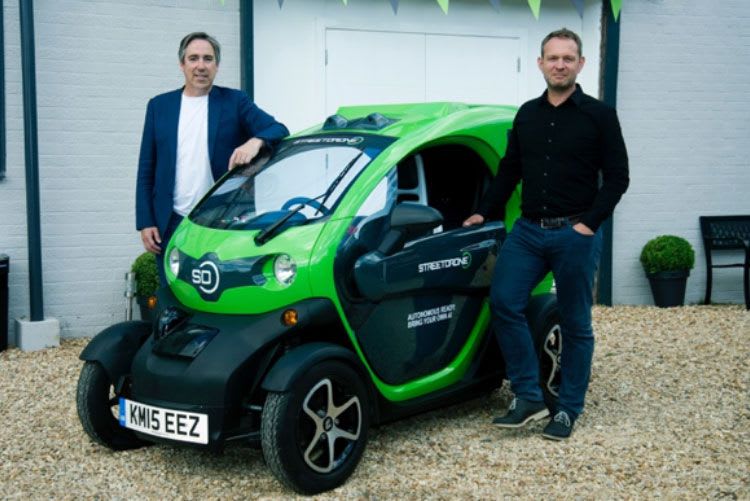
The StreetDrone Xenos platform provides a combination of hardware — including modified Renault Twizy vehicles. Photo: Bestmile
2 min to read
The StreetDrone Xenos platform provides a combination of hardware — including modified Renault Twizy vehicles. Photo: Bestmile
Bestmile, the leading mobility services platform used to plan, manage, and optimize autonomous and human-driven vehicle fleets, has partnered with StreetDrone, maker of intelligent, connected self-driving technology. The integration of the Bestmile Mobility Services Platform into StreetDrone’s Xenos platform enables StreetDrone to offer a complete vehicle and mobility service operating system.
Aside from major automotive manufacturers, companies developing autonomous-and-connected-vehicle technology face a daunting risk of losing critical startup time and money buying and modifying a vehicle to use to test their software. Vehicles must be drivable by wire and equipped with a technology stack that includes onboard cameras and sensors, as well as the processing power to manage the vast data generated by the vehicle. StreetDrone, referring to itself as the “Android of the autonomous vehicle world,” offers an operating system on which others can build self-driving applications.
The StreetDrone Xenos platform provides a combination of hardware — including modified Renault Twizy vehicles — and software to form a foundation for integrating the technologies that need to work together for connected and autonomous vehicles to be safe and reliable. Bestmile makes StreetDrone vehicles “fleet ready” for testing scalable fleet services in addition to testing individual vehicle performance.
Bestmile’s Mobility Services Platform is the only solution of its kind to enable vehicles of any brand or type to communicate and work as intelligent fleets. Its technology enables human-driven and autonomous vehicles to work together to deliver on-demand services with optimized dispatching, routing, pooling, and energy and maintenance management.
Bestmile’s platform also offers advanced matching algorithms that can process traveler, vehicle and third-party data to send the right vehicle to the right place at the right time. Data intelligence and machine learning constantly improve system performance. Service providers around the world use the platform to configure service areas, define key performance metrics such as vehicle utilization and wait times, and monitor services in real time.
More New Mobility

From Hardware to Digital Partner: Luminator Charts Its Next Chapter
CEO Magnus Friberg discusses Luminator’s shift toward becoming a digital partner, the growing importance of software and interoperability, and how AI can help agencies improve operations and passenger experience.
Read More →
Biz Briefs: Alstom Lands Canadian Contract, LYT to Supply California TSP, and More
In METRO's latest installment, we take a look at recent news from Complete Coach Works, Beep, FlixBus, and more partnerships making headlines across the transportation sector.
Read More →
CharterUP’s Armir Harris on Technology, AI, and the Future of Group Mobility
In a recent episode of METROspectives, CharterUP Founder/CEO Armir Harris discussed the company’s evolution from an online charter bus marketplace into a technology platform supporting public- and private-sector mobility and much more.
Read More →
Jacksonville’s NAVI Project Charts a New Course for Autonomous Public Transportation
Through its NAVI program, JTA is showing how autonomous vehicles, intelligent infrastructure, and coordinated operations can work together to deliver everyday public transportation.
Read More →
Biz Briefs: Luminator Marks Milestone and More
From manufacturers and suppliers to transit agencies and motorcoach operators, these updates offer a snapshot of the projects, partnerships and business moves driving the industry forward.
Read More →
New Tricks for Old Bureaucracies: Joshua Schank on Making Transit Innovation Stick
Former LA Metro Chief Innovation Officer Joshua Schank discusses why good ideas aren't enough, how transit agencies can overcome resistance to change, and why today's challenges demand more innovation.
Read More →
How DART's GoPass Is Redefining Regional Mobility
Serving 14 transit agencies, GoPass simplifies multimodal travel by allowing riders to plan, pay for, and manage an entire trip through one app.
Read More →
Biz Briefs: OCTA Taps Clean Energy for Hydrogen Station, Stadler to Supply Via Rail Vehicles, and More
From manufacturers and suppliers to transit agencies and motorcoach operators, these updates offer a snapshot of the projects, partnerships and business moves driving the industry forward.
Read More →CharterUP Expands Into New Mobility and Autonomous Transportation
Vice President of New Mobility Stephen Joos discusses how CharterUP is leveraging its nationwide transportation network, technology platform, and autonomous vehicle partnerships to expand into workforce mobility, campus shuttles, and transit solutions.
Read More →
METRO Magazine Announces 2026 Innovative Solutions Awards Winners
Projects Recognized for Advancing Mobility Through Technology, Accessibility, Workforce Innovation, and Operational Excellence
Read More →