



Biz Briefs: Alexander Dennis, Luminator, and More
A look at the latest public/private partnerships in the industry from Portland, Maine; London; and more.

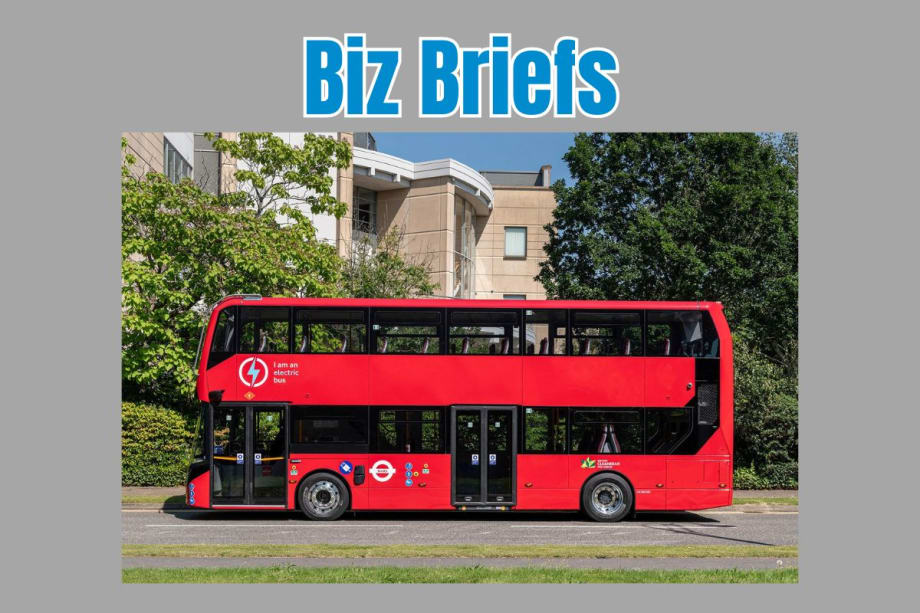
The next-generation Enviro400EV for London is 35-feet long, with a shorter wheelbase aiding maneuverability in the capital’s dense traffic and giving it a tight turning radius.
Photo: Alexander Dennis
METRO's latest installment of Business Briefs focuses on public/private partnerships and company news from Alexander Dennis, Modeshift, Luminator, Equans, and more.
Alexander Dennis Unveils London Electric Double-Deck Buses
Alexander Dennis, a subsidiary of NFI Group Inc., unveiled the first next-generation Enviro400EV battery-electric double decker built to Transport for London (TfL) specifications.
The Enviro400EV for London is fitted with 472kWh batteries as standard, which the manufacturer is now able to warrant for 14 years or one million kilometers (approximately 63K miles), whichever comes first, under normal operating conditions in the capital.
The warranty allows the zero-emission bus to cover two consecutive seven-year route contracts without a need for battery replacement, contributing to low total cost of ownership.
The next-generation Enviro400EV for London is 35-feet long, with a shorter wheelbase aiding maneuverability in the capital’s dense traffic and giving it a tight turning radius. It has TfL’s standard interior layout with a wheelchair bay accessed via an electric ramp at the center doors and seats 62 passengers on high-backed seats.
Pennsylvania’s CATA Taps Modeshift for Mobile Ticketing
Crawford Area Transportation Authority (CATA), in partnership with Modeshift, is launching a new mobile ticketing platform, marking a significant milestone in CATA’s mission to modernize transit operations and enhance the commuting experience for its passengers.
The new platform offers CATA riders a seamless, contactless ticketing solution, allowing them to plan, pay, and validate rides directly from their smartphones.
The mobile ticketing platform features the free CATAPay app, available for both Apple and Android devices, enabling riders to purchase fares and plan their trips effortlessly.
Additionally, CATA is offering reloadable Smart Cards for passengers who prefer not to use mobile devices. An intuitive web portal is also available for trip planning and fare purchasing, further simplifying the transit experience.
Luminator Technology Group Introduces RoadRunner Pro
Luminator Technology Group is launching its latest product — RoadRunner Pro mobile video system.
The on-board system supports up to 24 camera channels with AI capabilities. The new features include:
High-quality 4K video streams, ensuring the highest quality video is available for reviewing critical incidents.
The Road Runner Pro supports up to 12 channels of analog HD and 12 channels of digital IP camera and up to 23 channels of audio input, providing robust video/audio capabilities.
Supporting complete fleets of all vehicle types, the system is equipped with an eight-core processor and a neural network inference engine for intelligent algorithm applications.
Maine’s GPTD, Equans Partner for ITS Solution
Equans, in collaboration with Optibus, was by Maine’s Greater Portland Transit District (GPTD) for the deployment of a new CAD/AVL system, Automatic Passenger Counting, scheduling, and Timekeeping system replacement.
The partnership will provide a major upgrade for Greater Portland Metro, which is the largest public transit system in Maine.
The new ITS platform will consist of Equans’ NAVINEO computer aided dispatch and automatic vehicle location (CAD/AVL) system and the Optibus Planning, Scheduling, Rostering, and Operations software, creating a fully unified platform using industry standard integrations and minimizing the need for manual entry of data.
More Technology

From Hardware to Digital Partner: Luminator Charts Its Next Chapter
CEO Magnus Friberg discusses Luminator’s shift toward becoming a digital partner, the growing importance of software and interoperability, and how AI can help agencies improve operations and passenger experience.
Read More →
Beyond the Checklist: A Structured Approach to Transit Maintenance
Reliability-Centered Maintenance helps transit agencies move beyond routine checklists to focus limited resources on the assets and failures that have the greatest impact on safety, reliability, and service.
Read More →
NJ TRANSIT Advances Bus Technology Upgrades Across Statewide Fleet
More than 1,500 buses now feature upgraded technology designed to improve arrival predictions and provide free Wi-Fi, with deployment expected to reach nearly 2,000 buses by the end of 2026.
Read More →

Building a Flexible Path to Transit Electrification
John Hroncich discusses BAE Systems’ modular and scalable approach, lessons learned from decades of real-world operations, and how agencies can identify electrification strategies that fit their fleets.
Read More →
Biz Briefs: Alstom Lands Canadian Contract, LYT to Supply California TSP, and More
In METRO's latest installment, we take a look at recent news from Complete Coach Works, Beep, FlixBus, and more partnerships making headlines across the transportation sector.
Read More →
From Legacy Silos to Conversational Intelligence
What if transit leaders could ask any operational question and get a trusted answer in seconds? Conversational AI is transforming how agencies use their data.
Read More →
USDOT Announces Rail Vehicle Replacement Grants, Chattanooga AV Shuttle Funding
More than $191 million in federal funding will help three transit agencies replace aging rail vehicles and support a new autonomous shuttle service in Chattanooga.
Read More →
Bus Tech Talk: Keeping Transit Technicians Ahead of the Technology Curve
LA Metro’s Obed Mejia discusses technician training, evolving maintenance technology, fleet replacement, and strategies for getting the most out of today’s transit fleets.
Read More →
Biz Briefs: RIPTA Unveils New Frontrunners, Clevland RTA Adds New Siemens, and More
In METRO's latest installment, we take a look at recent news from Siemens, Prevost, Dodge, and more partnerships making headlines across the transportation sector.
Read More →
Why Simulating Pedestrian Movement Has Become Essential for Modern Rail Stations
Pedestrian microsimulation is helping rail planners identify bottlenecks, test station designs, and prepare complex transit hubs for growing passenger volumes.
Read More →