



Equans Delivers CAD/AVL System to Massachusetts Agency
The Equans CAD/AVL system includes ADA-compliant Automated Voice Announcement, relieving bus operators from having to announce it themselves.


LRTA will benefit from reliable ridership data, real-time occupancy status shared with riders, and a simplified annual NTD reporting process.
Photo: LRTA
Massachusetts’ Lowell Regional Transit Authority (LRTA) is launching a new CAD/AVL and real-time passenger information system, which will provide real-time bus tracking, trip planning, automatic announcement, and service alerts to all riders on a variety of media.
Created in 1974, LRTA provides public transportation services to residents and visitors of the Greater Lowell area. With 20 fixed routes, its goal is to become the transportation choice for people who live, work, and visit the area.
LRTA’s Partnership with Equans
Selected for this project in 2023, Equans has already installed and commissioned the Equans Computer-Aided Dispatch and Automatic Vehicle Location (CAD/AVL) solution, real-time passenger information (RTPI), and equipped all buses with Automatic Passenger Counters.
With the new Equans CAD/AVL, LRTA can improve passenger experience and operations efficiency. The Equans CAD/AVL system includes ADA-compliant Automated Voice Announcement (AVA), relieving bus operators from having to announce it themselves.
The CAD/AVL is fully integrated to the vehicle’s speakers and updates the destination signs automatically, even when buses interline.
Equans Integrating with Other Techs
Now, the Equans CAD/AVL system provides a GTFS Real-Time feed to Google, Transit App, and LRTA’s website, which all utilize real-time service change updates, such as when a trip is cancelled, so that LRTA’s riders never miss their bus.
Equans’ CAD/AVL system offers many new ways to access real-time information for LRTA’s customers, including Transit App, a real-time bus tracking website, and digital signage at the transit terminal.
With LRTA’s new real-time Transit bus app, riders can track buses in real-time, plan trips, and receive alerts when their bus is close to arriving at their stop, or when a service change occurs.
Riders can “favorite” their most used stops to quickly access them from the home screen and set up reminders, so they never miss a bus again. Users can quickly get walking directions to any stop and tap the bus icon to see its actual location, direction of travel, last stop, on-time status, and even how many seats are available on the next bus through new real-time bus occupancy technology.
The free Transit App is available for iOS and Android devices on the App Store and Google Play. LRTA’s customers are also able to use this tool on their website.
Further Benefits of the New System
One of the key highlights of this project is the implementation of Automatic Passenger Counting (APC) technology in all buses, which will facilitate accurate data collection and analysis.
LRTA will benefit from reliable ridership data, real-time occupancy status shared with riders, and a simplified annual NTD reporting process.
More Technology
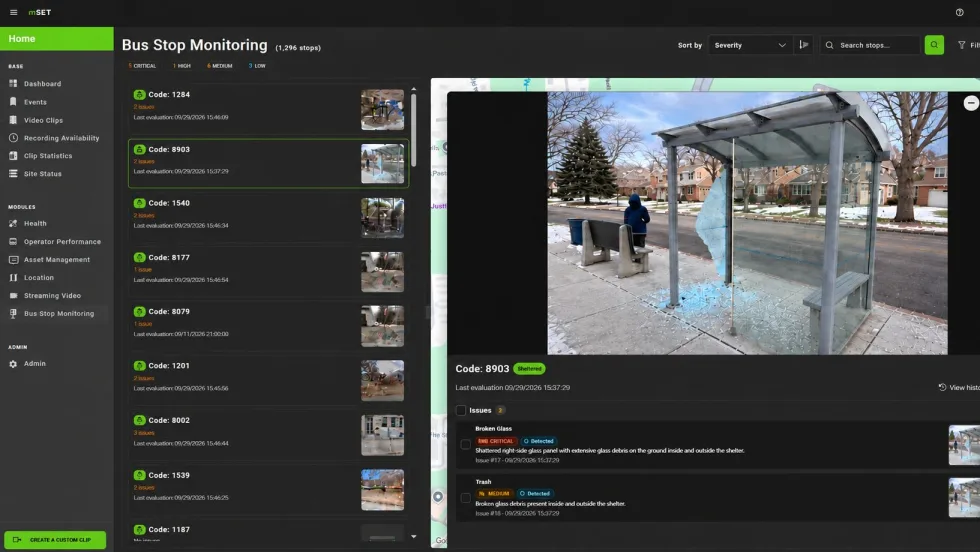
Biz Briefs: Luminator Launches AI Technology to Monitor Bus Stop Conditions and More
In METRO's latest installment, we also take a look at recent news from Masabi, Troman Industries, ioki, CCW, and more partnerships making headlines across the transportation sector.
Read More →
Public Transit Conference Returning to GFX in 2027, Call for Papers Now Open
The Call for Papers is now open, allowing transit agency professionals and industry experts to help shape the PTC educational program by submitting session ideas for consideration.
Read More →
ENC Lands MATA Contract and More in Biz Briefs
In this edition of Biz Briefs, we spotlight the latest developments shaping the future of mobility.
Read More →

Strada360’s Steve Lassey on Turning Transit Data Into Better Decisions
From breaking down data silos to preparing for AI, Strada360 CEO Steve Lassey discusses how transit agencies can use technology to improve operations, customer information, and long-term decision-making.
Read More →
Almaviva Looks to Open Architecture to Advance Transit Technology
Eric Reese discusses how interoperability, open architecture, and modular design can help transit agencies control costs, reduce vendor lock-in, and upgrade technology without starting over.
Read More →
Driving Smarter Paratransit
John Hanlon shares how AlphaRoute is leveraging AI-powered technology to help paratransit providers optimize operations, support frontline staff, and enhance the rider experience.
Read More →
From Hardware to Digital Partner: Luminator Charts Its Next Chapter
CEO Magnus Friberg discusses Luminator’s shift toward becoming a digital partner, the growing importance of software and interoperability, and how AI can help agencies improve operations and passenger experience.
Read More →
Beyond the Checklist: A Structured Approach to Transit Maintenance
Reliability-Centered Maintenance helps transit agencies move beyond routine checklists to focus limited resources on the assets and failures that have the greatest impact on safety, reliability, and service.
Read More →
NJ TRANSIT Advances Bus Technology Upgrades Across Statewide Fleet
More than 1,500 buses now feature upgraded technology designed to improve arrival predictions and provide free Wi-Fi, with deployment expected to reach nearly 2,000 buses by the end of 2026.
Read More →
Building a Flexible Path to Transit Electrification
John Hroncich discusses BAE Systems’ modular and scalable approach, lessons learned from decades of real-world operations, and how agencies can identify electrification strategies that fit their fleets.
Read More →