



King County Metro Makes ADA Paratransit Easier to Navigate
METRO's Innovative Solutions Award winner replaces complex service-area descriptions with an accessible, interactive map that puts paratransit information directly in customers’ hands.

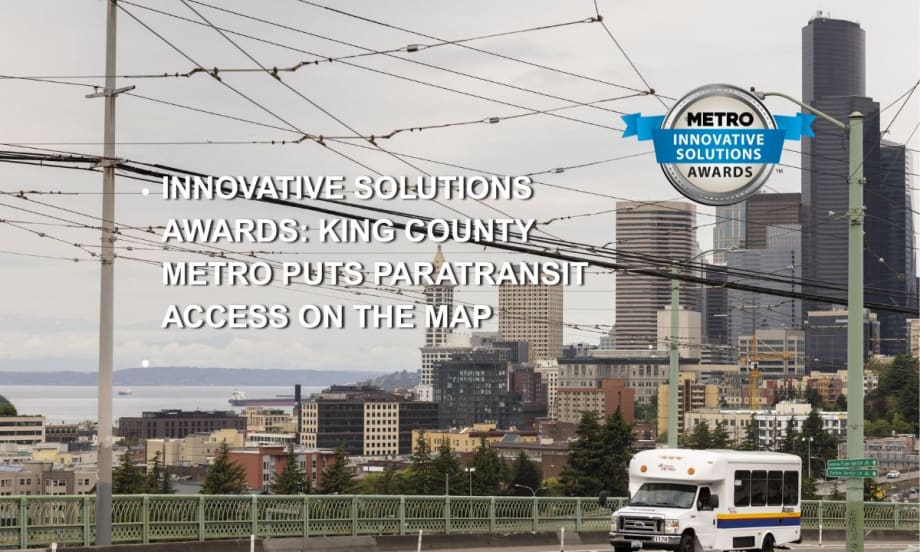
King County Metro's project has earned recognition through METRO's Innovative Solutions Award for its ability to make complex service information clear, intuitive, and customer-centered.
King County Metro/METRO
- King County Metro has introduced an accessible, interactive map for paratransit information.
- The new map simplifies navigation by replacing complex service-area descriptions.
- This innovation earned METRO's Innovative Solutions Award for improving customer experience.
*Summarized by AI
For decades, transit agencies across the US have relied on a simple text description to explain one of the most complex aspects of ADA paratransit service: service is available within three-quarters of a mile of fixed-route transit. While technically accurate, that explanation often leaves customers with more questions than answers.
Seattle’s King County Metro set out to change that.
The agency's Interactive Access Service Area Map transforms how customers, staff, and community partners understand ADA paratransit by replacing static maps and technical descriptions with an accessible, interactive online experience.
The project has earned recognition through METRO's Innovative Solutions Award for its ability to make complex service information clear, intuitive, and customer-centered.
Built using open-source web technologies, the interactive map allows users to enter an address and instantly determine whether Access paratransit service is available at that location, eliminating the need to interpret complicated service boundaries or understand the intricacies of the fixed-route network.
Removing Barriers to Information
According to Matthew Weidner, senior planner with King County Metro Accessible Services, the project reflects Metro's broader commitment to accessibility beyond simply providing transportation.
"This is a great honor for King County Metro. We see this project as one of the many ways that Metro meets not only the letter, but the spirit of the Americans with Disabilities Act," Weidner said. "We continue to work to elevate all aspects of the customer experience to match that of our fixed-route service, which includes access to information."
For many years, explaining paratransit eligibility and service availability required customers to understand the fixed-route transit system before determining whether paratransit could serve their trip.
"We were asking our customers first to understand the fixed-route system, then extrapolate to solve a very complicated geospatial problem," Weidner explained. "Requiring these customers to have a complete and detailed understanding of a system we know they won't use was patently inequitable."
Instead, Metro sought to provide the same level of convenience that fixed-route riders already enjoy through trip planners and interactive mapping tools.
Putting Customers in Control
Rather than serving as the gatekeeper of information, the interactive map enables customers to explore services independently.
"Just like our fixed-route trip planner, the interactive paratransit service map places the customer in the driver's seat of their transit experience," Weidner said. "In an instant and on their own time, they can explore the service we offer, investigate new possibilities, and discover how paratransit can unlock their personal mobility."
The tool shifts the relationship between the agency and its customers by allowing people to answer questions themselves instead of relying on phone calls or staff assistance.
"This changes the dynamic between the customer and the agency," Weidner said. "Instead of King County Metro acting as the gatekeeper, it shifts control back to the customer and gives them more ownership of their paratransit experience."
Accessibility guided every stage of development.
Metro's primary objective was simple: allow anyone to determine whether Access service is available at a location without requiring them to interpret complicated maps or service boundaries.
The project team prioritized simplicity, accessibility, and clarity. Users enter an address and receive a straightforward explanation of service availability in plain language. The application supports keyboard navigation, screen readers, and accessible status messaging, ensuring users do not need to rely solely on visual map elements. Careful attention was also given to color contrast, focus management, and responsive design across desktop and mobile devices.
The project was a collaborative effort between Mark Bilodeau of Metro's Web Team and Katia Montgomery of Accessible Services, with support from partner teams throughout the agency. By leveraging open-source technologies and existing GIS services, Metro developed a scalable, maintainable solution without additional software costs.
Changing How Metro Communicates
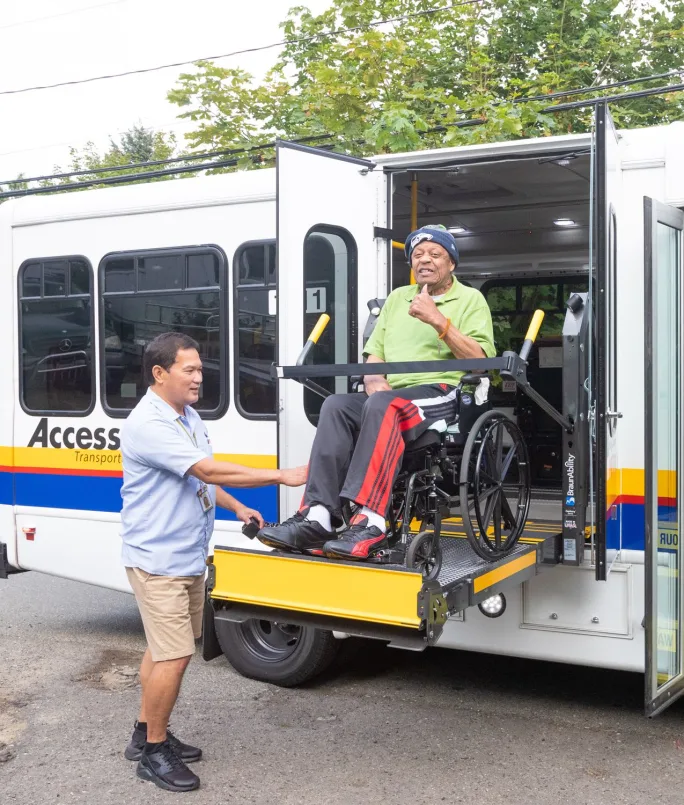
While the technology itself is innovative, King County Metro believes the larger lesson is about equity.
King County Metro
The benefits have extended far beyond the customer experience. Before the interactive map launched, staff routinely fielded questions from customers, elected officials, and internal stakeholders about where Access service operated. Answering those questions often required experienced employees to manually verify addresses using internal operational tools.
Today, those conversations happen very differently.
"Now, instead of exchanging emails and setting up meetings, we respond with a simple URL," Weidner said.
The result has been fewer customer inquiries, faster communication, and a better understanding of paratransit throughout the organization.
"We've already seen a significant reduction in both staff and customer questions regarding our service area as they discover our service area information organically via our website," Weidner said.
The map has also improved collaboration within Metro by helping planners, managers, and decision-makers better understand how changes to fixed-route service affect ADA paratransit operations.
"It has dramatically improved our program's ability to communicate how changes to the fixed-route system impact our program and driven more nuanced conversations about future system impacts," Weidner said.
A Model for the Industry
While the technology itself is innovative, Metro believes the larger lesson is about equity. The agency hopes other transit providers will rethink how they communicate with paratransit customers and consider whether longstanding approaches still meet today's expectations for accessibility and customer service.
"We hope that other agencies will take a second look at how they're providing information to their paratransit customers and consider how they might lower barriers and increase visibility into their paratransit operation," Weidner said.
By replacing technical descriptions with an intuitive digital experience, King County Metro has demonstrated that improving access to information can be just as important as improving access to transportation itself.
Quick Answers
The initiative aims to simplify navigation of ADA paratransit services by replacing complex service-area descriptions with an accessible, interactive map.
*Summarized by AI
More Paratransit
Indian River Transit’s Community-Focused Approach Earns National Recognition
Named APTA’s 2026 Outstanding Public Transportation System in its size category, Florida’s Indian River County transit system continues to grow ridership through fare-free service and a focus on evolving community needs.
Read More →
Everett Transit, Community Transit Outline Consolidation Agreement
The proposed agreement calls for a 50% increase in bus service in Everett, a new microtransit zone, continued paratransit service, and the transfer of Everett Transit operations to Community Transit.
Read More →
Driving Smarter Paratransit
John Hanlon shares how AlphaRoute is leveraging AI-powered technology to help paratransit providers optimize operations, support frontline staff, and enhance the rider experience.
Read More →
People Movement: Dan Dipert Coaches Adds Third-Generation Leader, Keolis Names New Valley Metro VP/GM, and More
In this edition, we also cover recent appointments and announcements at the Wabtec, SilverRide, HNTB, and more, showcasing the individuals helping to shape the future of transportation.
Read More →
Biz Briefs: RIPTA Unveils New Frontrunners, Clevland RTA Adds New Siemens, and More
In METRO's latest installment, we take a look at recent news from Siemens, Prevost, Dodge, and more partnerships making headlines across the transportation sector.
Read More →
Jacksonville’s NAVI Project Charts a New Course for Autonomous Public Transportation
Through its NAVI program, JTA is showing how autonomous vehicles, intelligent infrastructure, and coordinated operations can work together to deliver everyday public transportation.
Read More →
Driving Smarter Paratransit
John Hanlon shares how AlphaRoute is leveraging AI-powered technology to help paratransit providers optimize operations, support frontline staff, and enhance the rider experience.
Read More →
METRO Magazine Announces 2026 Innovative Solutions Awards Winners
Projects Recognized for Advancing Mobility Through Technology, Accessibility, Workforce Innovation, and Operational Excellence
Read More →
Biz Briefs: STV teams with Amtrak, Motorcoach Operators Boost Fleet and Land Contracts, and More
From manufacturers and suppliers to transit agencies and motorcoach operators, these updates offer a snapshot of the projects, partnerships and business moves driving the industry forward.
Read More →
Biz Briefs: Masabi Teams with St. Louis Metro and More
In METRO's latest installment, we take a look at recent news from Transdev, Hitachi, and more partnerships making headlines across the transportation sector.
Read More →