



Biz Briefs: StreetMetrics, LYT, and More
Biz Briefs covers the latest supplier news in the motorcoach and public transit industries.

In METRO's latest installment, we take a look at the latest news from suppliers including StreetMetrics, LYT, Via, and CapTech.
Photo: METRO Magazine
Biz Briefs covers the latest supplier news in the motorcoach and public transit industries.
In METRO's latest installment, we take a look at the latest news from suppliers including StreetMetrics, LYT, Via, and CapTech.
Illinois’ MTD Taps StreetMetrics for Advanced Transit Ad Analytics
StreetMetrics announced a partnership with Ill.’s Champaign-Urbana Mass Transit District (MTD), which will make the agency the first transit authority in the U.S. to leverage StreetMetrics’ cutting-edge analytics platform, offering advertisers and community supporters real-time insights into the performance of their campaigns.
The partnership will enable MTD to measure the impact of advertising on its fleet of 118 buses and 34 digital kiosks with precision, which was previously unavailable.
With access to robust impression data and detailed audience insights, MTD will enhance its ability to demonstrate the effectiveness of transit advertising while providing unparalleled value to its advertisers.
Beyond helping advertisers optimize campaigns, this partnership enhances MTD’s ability to amplify important messages from community partners. With access to real-time measurement and impression data, these partners can fine-tune their outreach strategies to connect with more residents and make a greater impact.
LYT to Provide TSP Solution for C-TRAN
LYT announced a new partnership with Clark County, Wash.’s C-TRAN to implement its cloud-based Transit Signal Priority (TSP) solution, LYT.transit, across 12 key intersections throughout Vancouver.
The strategic deployment will leverage C-TRAN's existing Q-Free Maxtime traffic signal controllers and fiber optic communication network to create a seamless and efficient TSP system. The project is slated for a rapid three-month deployment and operation.
By prioritizing transit vehicles at signalized intersections, LYT.transit helps to reduce travel times, improve on-time performance, and decrease fuel consumption for transit agencies. The cloud-based platform utilizes real-time data and intelligent algorithms to optimize signal timing, ensuring that buses can move efficiently through congested areas.
Via’s intelligent algorithms match multiple passengers headed in the same direction into one vehicle to create quick, efficient shared trips.
Photo: Via
Miami Teams with Via to Launch Microtransit
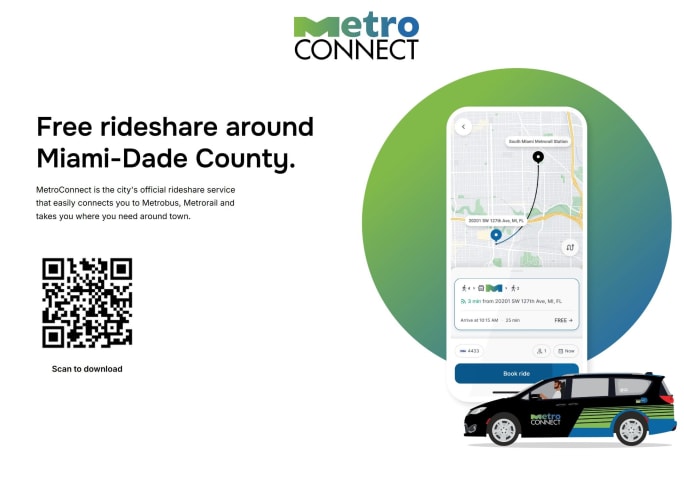
At the end of February, the City of South Miami will introduce “MetroConnect SoMi” — a free microtransit program that will allow residents to easily visit South Miami’s vibrant SoMi district from several locations including Coral Gables and parts of Pinecrest.
MetroConnect SoMi is intended to expand access to public transit in South Miami. Like the broader MetroConnect network, SoMi will be powered by TransitTech provider Via, and will serve as a replacement for the former Freebee service.
Via’s intelligent algorithms match multiple passengers headed in the same direction into one vehicle to create quick, efficient shared trips.
With MetroConnect SoMi, South Miami residents will gain several perks, including a larger service area that serves more destinations than the previous Freebee service; seamless connections with the broader MetroConnect network across Miami-Dade County, as well as easier transfers to regional transit options including Metrobus and Metrorail; and convenient door-to-door service and wheelchair accessible vehicles available upon request.
SEPTA, CapTech Launching New Mobile App
CapTech teamed with Philadelphia’s Southeastern Pennsylvania Transportation Authority (SEPTA) to launch a new mobile app.
CapTech and SEPTA partnered to reimagine a modern, accessible digital experience hosted on a flexible system that supports rapid updates. The new app underscores the agency’s commitment to making regional transit smarter and more convenient for regular riders and visitors alike.
The company engaged with the public to better understand user needs — then, using human-centered design and an understanding of transit considerations and data constraints, created a revolutionized experience.
In partnership with SEPTA, developers implemented a modern mobile architecture to integrate trip planning, real-time data, safety reporting, and payment features into a single digital platform. The result is an intuitive mobile experience with streamlined navigation, improved accessibility, and enhanced personalization.
More Technology

From Hardware to Digital Partner: Luminator Charts Its Next Chapter
CEO Magnus Friberg discusses Luminator’s shift toward becoming a digital partner, the growing importance of software and interoperability, and how AI can help agencies improve operations and passenger experience.
Read More →
Beyond the Checklist: A Structured Approach to Transit Maintenance
Reliability-Centered Maintenance helps transit agencies move beyond routine checklists to focus limited resources on the assets and failures that have the greatest impact on safety, reliability, and service.
Read More →
NJ TRANSIT Advances Bus Technology Upgrades Across Statewide Fleet
More than 1,500 buses now feature upgraded technology designed to improve arrival predictions and provide free Wi-Fi, with deployment expected to reach nearly 2,000 buses by the end of 2026.
Read More →

Building a Flexible Path to Transit Electrification
John Hroncich discusses BAE Systems’ modular and scalable approach, lessons learned from decades of real-world operations, and how agencies can identify electrification strategies that fit their fleets.
Read More →
Biz Briefs: Alstom Lands Canadian Contract, LYT to Supply California TSP, and More
In METRO's latest installment, we take a look at recent news from Complete Coach Works, Beep, FlixBus, and more partnerships making headlines across the transportation sector.
Read More →
From Legacy Silos to Conversational Intelligence
What if transit leaders could ask any operational question and get a trusted answer in seconds? Conversational AI is transforming how agencies use their data.
Read More →
USDOT Announces Rail Vehicle Replacement Grants, Chattanooga AV Shuttle Funding
More than $191 million in federal funding will help three transit agencies replace aging rail vehicles and support a new autonomous shuttle service in Chattanooga.
Read More →
Bus Tech Talk: Keeping Transit Technicians Ahead of the Technology Curve
LA Metro’s Obed Mejia discusses technician training, evolving maintenance technology, fleet replacement, and strategies for getting the most out of today’s transit fleets.
Read More →
Biz Briefs: RIPTA Unveils New Frontrunners, Clevland RTA Adds New Siemens, and More
In METRO's latest installment, we take a look at recent news from Siemens, Prevost, Dodge, and more partnerships making headlines across the transportation sector.
Read More →
Why Simulating Pedestrian Movement Has Become Essential for Modern Rail Stations
Pedestrian microsimulation is helping rail planners identify bottlenecks, test station designs, and prepare complex transit hubs for growing passenger volumes.
Read More →