




Watch:Inside MBTA’s Award-Winning Podcast Spilling the T with Host Andrew Cassidy
Boston's MBTA Orange Line Reaches 55 MPH for First Time
Due to track upgrades, MBTA Orange Line trains will faster than before.
August 25, 2025
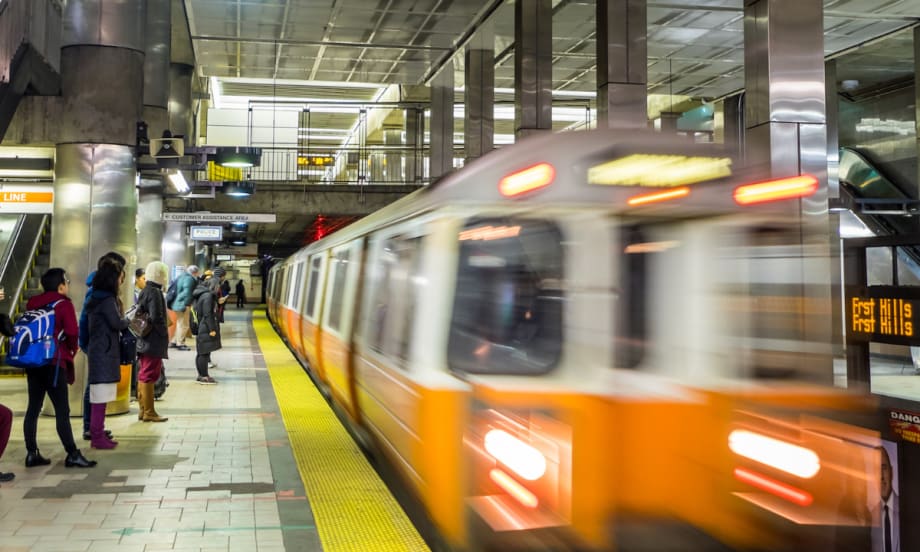
The MBTA Orange Line now reaches 55 mph between Oak Grove and Assembly after track improvements restored original design speeds.
Photo: MBTA
3 min to read
During its August Board Meeting, the Massachusetts Bay Transportation Authority (MBTA) announced that Orange Line trains will be able to reach 55 mph on select portions of the line starting August 24, 2025. The new increased speeds impact stations between Oak Grove and Assembly Station.
According to an agency release, the previous maximum speed on the Orange Line was 40 MPH. The segment between Assembly and Oak Grove was initially designed for 55 MPH, but as track infrastructure declined, speeds were lowered for safety reasons.
This is the first time it has been documented that the Orange Line reached 55 mph.
"General Manager Eng and his team are continuing to deliver for MBTA riders. This milestone is a result of our investments in the T's efforts to hire more workers and fix the tracks. Now, they've not only removed slow zones — they're increasing speeds," said Governor Maura Healey. "This means faster, smoother commutes for riders and allows them to spend more time with family and friends, cooking a meal, taking the dog for a walk, or catching a ball game."
"We are in a moment where long-awaited investments in public transportation are becoming real for the people we serve," said Transportation Secretary and CEO Monica Tibbits-Nutt. "From fare-free service on our Regional Transit Authorities, to grants supporting micro-mobility, to expanded MBTA service this fall, and more reliable trips on the Orange Line, we are delivering on our promise. It has taken hundreds of millions of dollars and an aggressive, strategic approach to infrastructure to get here. We are reaching new heights by introducing new vehicles, replacing track, modernizing signals, and investing in the people who make our system run."
"Under the leadership of Governor Healey and Lt. Governor Driscoll, we have focused on rebuilding our transportation network and improving the quality of life for all. In 2024, we eliminated speed restrictions and restored maximum allowable speed for the entire Orange Line, and now we are ready to further shorten trip times, giving our riders back even more precious time," said MBTA General Manager and CEO Phillip Eng. "I'm proud of the MBTA leadership team and our invaluable workforce for their commitment to continuously improve our system for our riders. And I'd be remiss if I didn't thank the public for their patience during diversions that allow for service improvements such as this. We've only just begun."
As part of the Track Improvement Program (2023 – 2024), the MBTA removed more than 220 speed restrictions and replaced 250,000 feet of rail across the system, saving riders 2.4 million minutes every weekday and generating nearly $1 million in economic benefit every day. Regular maintenance has been ongoing to continuously improve the safety, reliability, and efficiency of the MBTA's rail network.
More Rail

New York MTA Advances Final Contract for Second Avenue Subway Expansion
Contract Four is the largest in the Second Avenue Subway Phase 2 project and includes construction of station infrastructure, tracks, and signals for the subway expansion, MTA officials said. Work on Contract Four will begin in 2027.
Read More →
San Diego MTS Breaks Monthly Trolley Ridership Record
Agency officials said July’s ridership indicates MTS’s continued recovery from the pandemic.
Read More →
Report Examines NJ TRANSIT Reliability, Funding Challenges
The Garden State Initiative analysis examines the roles of Amtrak infrastructure, fleet management, and agency operations while recommending a more performance-based approach to improving reliability.
Read More →
Stadler, CapMetro Sign Long-Term Rail Fleet Support Agreement
Beginning in 2027, Stadler will provide on-site technical expertise, spare parts support, training, and obsolescence management to help extend the reliability and longevity of CapMetro’s GTW fleet.
Read More →
Biz Briefs: Alstom Lands Canadian Contract, LYT to Supply California TSP, and More
In METRO's latest installment, we take a look at recent news from Complete Coach Works, Beep, FlixBus, and more partnerships making headlines across the transportation sector.
Read More →
CATS Gold Line Marks 5 Years of Service, 2.8M Passenger Trips
With a six-mile expansion planned, the Charlotte streetcar is positioned to connect more neighborhoods and major transit hubs across the region.
Read More →
Why Simulating Pedestrian Movement Has Become Essential for Modern Rail Stations
Pedestrian microsimulation is helping rail planners identify bottlenecks, test station designs, and prepare complex transit hubs for growing passenger volumes.
Read More →
Amtrak Begins Major Construction at New York’s Sunnyside Yard
The new maintenance facility will support Amtrak’s Airo trainsets while improving maintenance efficiency and turnaround times in New York.
Read More →
Chicago Leaders Unveil Plans for O’Hare Airport Express Train
The privately developed project would offer a 15-minute trip between downtown and O’Hare’s Terminal 2, with trains operating every 15 minutes on a dedicated track. The service would use battery-electric trains and three existing freight rail rights-of-way.
Read More →
OCTA Maps Out 30-Year Strategy to Protect Coastal Rail Corridor
The draft feasibility report identifies strategies to protect the coastal rail line for decades as the agency continues near-term stabilization and sand placement efforts.
Read More →