



Bytemark, CapMetro Unveil New Features to Boost Accessibility
Bytemark’s Plan, Book & Pay platform powers a new fare-capping pilot program and opportunity to buy fares and load wallets at retail stores using cash.
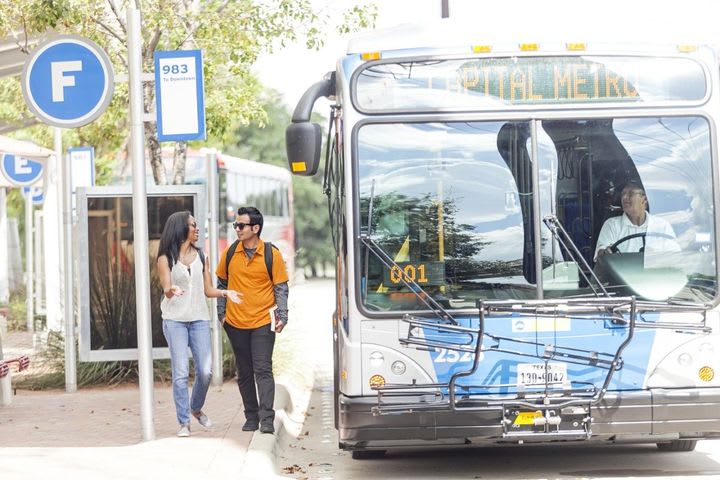
CapMetro’s new fare-capping pilot program and new way for riders to purchase tickets will help boost equity and accessibility to transit services in the Austin region.
CapMetro
Texas’s Capital Metropolitan Transportation Authority (CapMetro) is rolling out several new features to increase equity and accessibility for transit riders in the Austin area.
Through a six-month, fare-capping pilot program, CapMetro riders will be able to use transit services without deciding in advance what type of pass they want, while still reaping the benefits that come from purchasing a longer-period pass.
After purchasing a predetermined number of tickets over a set period of time, CapMetro riders will receive an unlimited use pass for the remainder of the period. For example, if a rider purchases two single-ride passes within a day, the rest of their trips will be free for 24 hours after the first pass is activated. Additionally, when a customer buys 33 single rides in 31 days, they will automatically receive a 31-day pass. CapMetro’s local and commuter services will each have separate fare-capping counts.
The pilot program will include up to 200 participants for an initial six months. Customers enrolled in health and human services programs, such as Medicaid, CHIP, TANF, or Central Health Medical Access Program, will be eligible to apply.
The fare capping feature is built on the Bytemark Passage account-based fare payment solution, which is part of the Bytemark Bridge Plan, Book & Pay platform.
The new feature rollout also comes along with another CapMetro improvement — the chance for riders to purchase tickets or load their mobile wallets by making cash retail payments. Riders can make payments at more than 250 locations in the agency’s service area, powered by InComm Payments’ Vanilla Direct solution. The change marks the first program rollout under a partnership entered between Bytemark and InComm Payments in August. The integration is built on the Bytemark Transact Payments-as-a-Service solution.
“We’re proud to collaborate with our longtime partners at Capital Metro on solutions that will improve the rider experience for so many in the Austin area,” said Bytemark CEO Eric Reese. “The hard work on all sides allowed us to move quickly from expanding our partnership with Capital Metro and entering our partnership with InComm Payments to rolling out the two exciting launches.”
“These initiatives are mindful of transit customers who can benefit from greater accessibility and equal access to fare products,” said Dottie Watkins, COO and chief customer officer for CapMetro. “The fast, easy, and safe payment solutions provided by Bytemark offer personalization and optimization of the travel experience that build on our recently introduced in-app stored value wallet.”
CapMetro’s continued collaboration with Bytemark builds on a valued partnership that began in 2012. CapMetro serves the greater Austin area, which has more than 2.2 million residents. The agency’s fleet includes 368 MetroBuses and 55 MetroRapid vehicles, 10 diesel electric trains, 257 vanpools, and 108 paratransit vehicles.
More Technology

From Hardware to Digital Partner: Luminator Charts Its Next Chapter
CEO Magnus Friberg discusses Luminator’s shift toward becoming a digital partner, the growing importance of software and interoperability, and how AI can help agencies improve operations and passenger experience.
Read More →
Beyond the Checklist: A Structured Approach to Transit Maintenance
Reliability-Centered Maintenance helps transit agencies move beyond routine checklists to focus limited resources on the assets and failures that have the greatest impact on safety, reliability, and service.
Read More →
NJ TRANSIT Advances Bus Technology Upgrades Across Statewide Fleet
More than 1,500 buses now feature upgraded technology designed to improve arrival predictions and provide free Wi-Fi, with deployment expected to reach nearly 2,000 buses by the end of 2026.
Read More →

Building a Flexible Path to Transit Electrification
John Hroncich discusses BAE Systems’ modular and scalable approach, lessons learned from decades of real-world operations, and how agencies can identify electrification strategies that fit their fleets.
Read More →
Biz Briefs: Alstom Lands Canadian Contract, LYT to Supply California TSP, and More
In METRO's latest installment, we take a look at recent news from Complete Coach Works, Beep, FlixBus, and more partnerships making headlines across the transportation sector.
Read More →
From Legacy Silos to Conversational Intelligence
What if transit leaders could ask any operational question and get a trusted answer in seconds? Conversational AI is transforming how agencies use their data.
Read More →
USDOT Announces Rail Vehicle Replacement Grants, Chattanooga AV Shuttle Funding
More than $191 million in federal funding will help three transit agencies replace aging rail vehicles and support a new autonomous shuttle service in Chattanooga.
Read More →
Bus Tech Talk: Keeping Transit Technicians Ahead of the Technology Curve
LA Metro’s Obed Mejia discusses technician training, evolving maintenance technology, fleet replacement, and strategies for getting the most out of today’s transit fleets.
Read More →
Biz Briefs: RIPTA Unveils New Frontrunners, Clevland RTA Adds New Siemens, and More
In METRO's latest installment, we take a look at recent news from Siemens, Prevost, Dodge, and more partnerships making headlines across the transportation sector.
Read More →
Why Simulating Pedestrian Movement Has Become Essential for Modern Rail Stations
Pedestrian microsimulation is helping rail planners identify bottlenecks, test station designs, and prepare complex transit hubs for growing passenger volumes.
Read More →