




On Track: Caltrain, PG&E Celebrate Electrification Project Milestone
Caltrain Debuts New Electric Trains
The new train cars will serve as the centerpiece of the Caltrain Electrification Project.
September 27, 2022
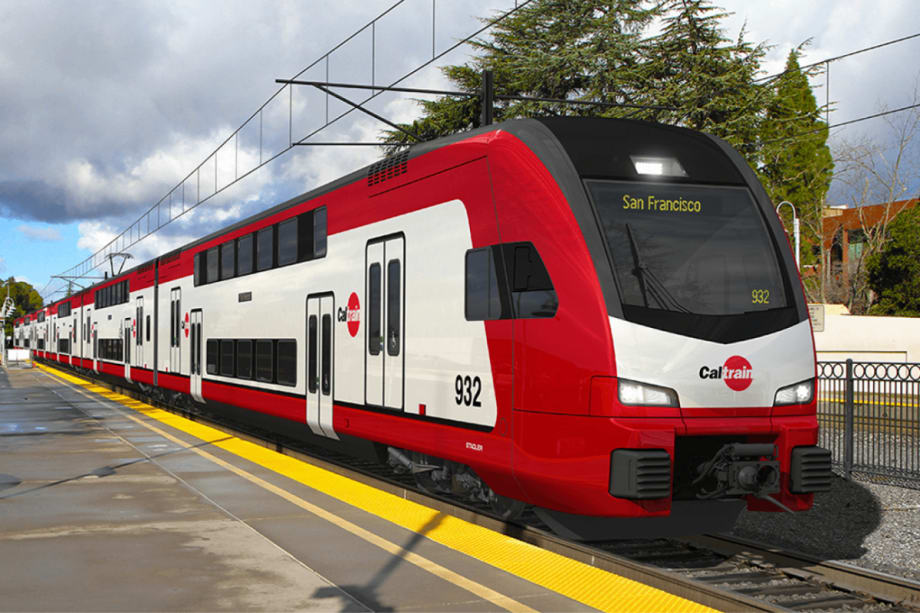
These trains will go into service in 2024, and until then will be tested to ensure they and the infrastructure they will rely upon, are in good working order.
Photo: Caltrain
2 min to read
Caltrain representatives were joined by federal, state, regional, local officials, and community members to celebrate the first public viewing of the agency’s new electric train cars. The new train cars will serve as the centerpiece of the Caltrain Electrification Project.
Caltrain said the trains will offer a better service to Caltrain riders and will generate much less noise than their diesel equivalent. The new vehicles also offer amenities, including new digital onboard displays, power outlets at each forward-facing seat, a new seat color palette selected by the public, energy-efficient lighting, coat hooks, security cameras, and expanded storage under the cantilevered seats.
“The arrival of these new electric trains marks an exciting step toward providing greener, easier transportation options for Californians,” said Speaker Nancy Pelosi. “Caltrain’s electrification initiative will mean quieter neighborhoods, cleaner air and faster commutes for working families. It has been my privilege to fight alongside the entire Bay Area delegation to secure the federal resources Caltrain needs to realize its vision of a fully electrified rail corridor from San Francisco to San Jose.”
Additionally, each trainset will have seven cars, as opposed to the current five or six. The new trains also accelerate and decelerate faster than their diesel alternatives, which must be pulled by a locomotive. This will allow Caltrain to expand its service levels beyond the current 104 trains every weekday, according to the company.
These trains will go into service in 2024, and until then will be tested to ensure they and the infrastructure they will rely upon, are in good working order.
According to the news release, the trains were built by Stadler US at their facility in Salt Lake City. After they were assembled, they were sent to a test facility in Pueblo, Colo. where they were tested at high speeds under numerous conditions as required by the Federal Railroad Administration. The trains were tested for braking, propulsion, ride quality, noise and vibration, door operation, Positive Train Control, and Electromagnetic Interference over the course of eight months.
“The electrification of Caltrain is one of the most important milestones in Caltrain’s history,” said Steve Heminger, Caltrain board chair. “Being able to step onto the new trains for the first time makes me even more excited for the start of electrified service in 2024.”
The Caltrain Electrification project will electrify the corridor from the San Francisco Station at 4th and King Streets to approximately the Tamien Station in San Jose, replacing diesel-hauled trains with electric trains, according to Caltrain.
More Rail

New York MTA Advances Final Contract for Second Avenue Subway Expansion
Contract Four is the largest in the Second Avenue Subway Phase 2 project and includes construction of station infrastructure, tracks, and signals for the subway expansion, MTA officials said. Work on Contract Four will begin in 2027.
Read More →
San Diego MTS Breaks Monthly Trolley Ridership Record
Agency officials said July’s ridership indicates MTS’s continued recovery from the pandemic.
Read More →
Report Examines NJ TRANSIT Reliability, Funding Challenges
The Garden State Initiative analysis examines the roles of Amtrak infrastructure, fleet management, and agency operations while recommending a more performance-based approach to improving reliability.
Read More →
Stadler, CapMetro Sign Long-Term Rail Fleet Support Agreement
Beginning in 2027, Stadler will provide on-site technical expertise, spare parts support, training, and obsolescence management to help extend the reliability and longevity of CapMetro’s GTW fleet.
Read More →
Biz Briefs: Alstom Lands Canadian Contract, LYT to Supply California TSP, and More
In METRO's latest installment, we take a look at recent news from Complete Coach Works, Beep, FlixBus, and more partnerships making headlines across the transportation sector.
Read More →
CATS Gold Line Marks 5 Years of Service, 2.8M Passenger Trips
With a six-mile expansion planned, the Charlotte streetcar is positioned to connect more neighborhoods and major transit hubs across the region.
Read More →
Why Simulating Pedestrian Movement Has Become Essential for Modern Rail Stations
Pedestrian microsimulation is helping rail planners identify bottlenecks, test station designs, and prepare complex transit hubs for growing passenger volumes.
Read More →
Amtrak Begins Major Construction at New York’s Sunnyside Yard
The new maintenance facility will support Amtrak’s Airo trainsets while improving maintenance efficiency and turnaround times in New York.
Read More →
Chicago Leaders Unveil Plans for O’Hare Airport Express Train
The privately developed project would offer a 15-minute trip between downtown and O’Hare’s Terminal 2, with trains operating every 15 minutes on a dedicated track. The service would use battery-electric trains and three existing freight rail rights-of-way.
Read More →
OCTA Maps Out 30-Year Strategy to Protect Coastal Rail Corridor
The draft feasibility report identifies strategies to protect the coastal rail line for decades as the agency continues near-term stabilization and sand placement efforts.
Read More →