



Caltrain Rail Electrification Reaches 3 Major Milestones
These three major milestones bring the Caltrain Electrification Project closer to passenger service in fall 2024.

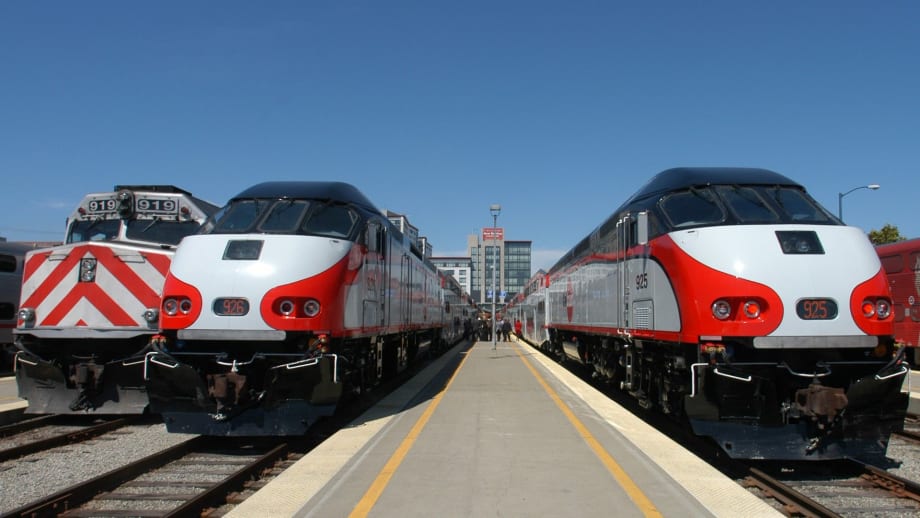
Caltrain and the vehicle manufacturer Stadler, have successfully run tests using the OCS and the upgraded signal system with the new electric trains operating at maximum track speed to ensure that all the individual systems are working together as intended.
Caltrain
Caltrain completed the installation of every pole for the Overhead Contact System (OCS), which provides power to the electric trains, upgraded the signal system that allow electric trains to operate along the Caltrain corridor, and successfully tested the new electric trains at maximum track speed of 79 mph.
These three major milestones bring the Caltrain Electrification Project closer to passenger service in fall 2024.
Caltrain Pole Installation, Signal Upgrades
Caltrain and contractor Balfour Beatty have worked to install 2,569 pre-engineered poles and upgraded the existing signal system that will allow the electric trains to operate in an electrified corridor along the nearly 160-year-old right-of-way, which has continued to be active railroad during this process.
The work in upgrading the existing signal system included upgrading every grade crossing on the electrified corridor. The steel poles were safely lifted and elevated into place and then mounted on concrete foundation, a process that involved ongoing collaboration and hours of work around the clock to complete.
With the final OCS pole installed, crews can now hang the last of the wire, as well as finish the final work on the OCS that will provide power to the electric trains, which will be tested along the full corridor from San Francisco to San Jose later this year.
Continued Testing with Stadler Electric Trains
Additionally, Caltrain and the vehicle manufacturer Stadler, have successfully run tests using the OCS and the upgraded signal system with the new electric trains operating at maximum track speed to ensure that all the individual systems are working together as intended. Cameras were placed atop the trains to ensure that the interface between the pantograph on the train and the OCS was fully integrated and operating as designed and constructed.
The trains were first tested at walking speed and with each subsequent test the speed was increased until reaching the maximum authorized track speed of 79 miles per hour.
“These three milestones are a big step forward for the Caltrain Electrification Project and we’re now even closer to completing this transformative project,” said Caltrain’s Executive Director Michelle Bouchard. “I’m grateful to the tireless work of our staff and partners who have gotten us to this point, and I’m excited for the public to have another chance to see these world class trains this Saturday in San Francisco.”
Providing Power to Caltrain System
The South San Francisco Traction Power Facility went live in August, making it possible to fully power the entire Caltrain electrified corridor once the testing and OCS is complete this fall. Trains are currently being tested on the southern end of the corridor and will be expanding to more parts of the system in the months to come.
The 51-mile Caltrain Electrification Project will be the first 25KV OCS system on the west coast and will provide power to the new state-of-the-art-electric trains.
As crews continue to install more poles and wire for the electrification system, Caltrain is embarking on a public outreach campaign to educate passengers, residents, and businesses about best safety practices along the corridor. The agency has sent out mailers, hosted community meetings and embarked on social media campaigns to remind everyone that all overhead wires on Caltrain property should be assumed to be energized now.
Benefits of Electrification
The electrification of the Caltrain system will deliver major benefits to the communities that it serves. Electrification will reduce Caltrain’s greenhouse gas emissions and eliminate the particulate matter caused by the aging diesel engines. Engine noise created by the trains will also be reduced.
Service will also become both more frequent and more comfortable as state-of-the-art electric trains replace the 30-year-old diesel fleet. Caltrain electrification has also created thousands of jobs locally and throughout the country, both to electrify the corridor and to assemble the new trains. In addition, the infrastructure that is being installed will be compatible with future high-speed rail on the corridor.
More Rail

New York MTA Advances Final Contract for Second Avenue Subway Expansion
Contract Four is the largest in the Second Avenue Subway Phase 2 project and includes construction of station infrastructure, tracks, and signals for the subway expansion, MTA officials said. Work on Contract Four will begin in 2027.
Read More →
San Diego MTS Breaks Monthly Trolley Ridership Record
Agency officials said July’s ridership indicates MTS’s continued recovery from the pandemic.
Read More →
Report Examines NJ TRANSIT Reliability, Funding Challenges
The Garden State Initiative analysis examines the roles of Amtrak infrastructure, fleet management, and agency operations while recommending a more performance-based approach to improving reliability.
Read More →
Stadler, CapMetro Sign Long-Term Rail Fleet Support Agreement
Beginning in 2027, Stadler will provide on-site technical expertise, spare parts support, training, and obsolescence management to help extend the reliability and longevity of CapMetro’s GTW fleet.
Read More →
Biz Briefs: Alstom Lands Canadian Contract, LYT to Supply California TSP, and More
In METRO's latest installment, we take a look at recent news from Complete Coach Works, Beep, FlixBus, and more partnerships making headlines across the transportation sector.
Read More →
CATS Gold Line Marks 5 Years of Service, 2.8M Passenger Trips
With a six-mile expansion planned, the Charlotte streetcar is positioned to connect more neighborhoods and major transit hubs across the region.
Read More →
Why Simulating Pedestrian Movement Has Become Essential for Modern Rail Stations
Pedestrian microsimulation is helping rail planners identify bottlenecks, test station designs, and prepare complex transit hubs for growing passenger volumes.
Read More →
Amtrak Begins Major Construction at New York’s Sunnyside Yard
The new maintenance facility will support Amtrak’s Airo trainsets while improving maintenance efficiency and turnaround times in New York.
Read More →
Chicago Leaders Unveil Plans for O’Hare Airport Express Train
The privately developed project would offer a 15-minute trip between downtown and O’Hare’s Terminal 2, with trains operating every 15 minutes on a dedicated track. The service would use battery-electric trains and three existing freight rail rights-of-way.
Read More →
OCTA Maps Out 30-Year Strategy to Protect Coastal Rail Corridor
The draft feasibility report identifies strategies to protect the coastal rail line for decades as the agency continues near-term stabilization and sand placement efforts.
Read More →