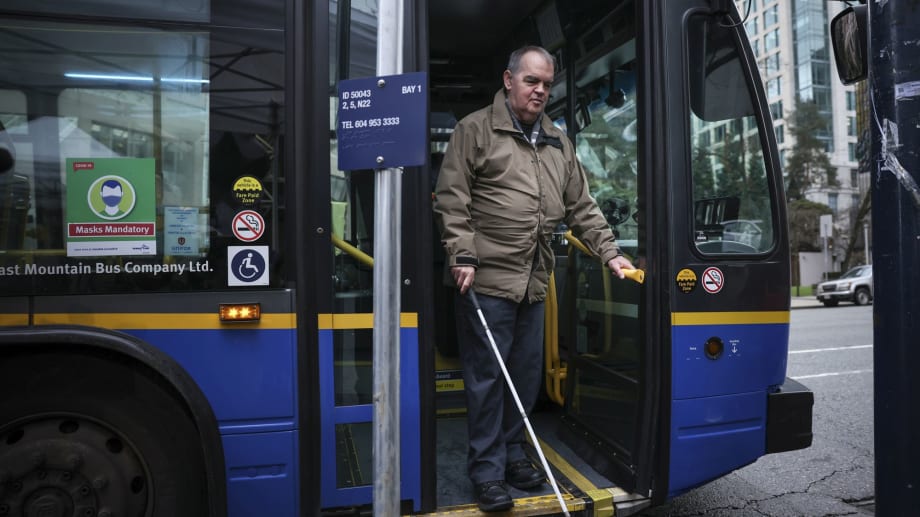
TransLink's improvements will enhance accessibility for customers who are blind or partially sighted, by letting them know which stop they are at and which buses they are waiting for.
Photo: TransLink
2 min to read
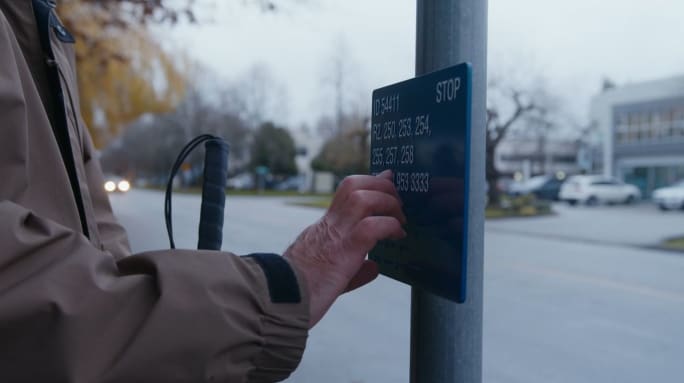
TransLink is now the first transit system in Canada with braille signage on every bus stop to improve transit information available to customers who are blind or partially sighted.
The signage has been installed at more than 8,400 bus stops throughout Metro Vancouver.
Ad Loading...
The improvements will enhance accessibility for customers who are blind or partially sighted, by letting them know which stop they are at and which buses they are waiting for.
“A great transit system is one that’s accessible for everyone,” says TransLink CEO Kevin Quinn. “We’re proud to have worked with our partners to be the first to deliver braille signage and tactile walking surface indicators to help all our customers get to their destination.”
Information written in both Unified English Braille and raised tactile letters.
Bus stop ID numbers.
Bus routes serving that bus stop.
Bay or bus stop indicators.
Customer Information phone number.
In addition to the braille and tactile signage, tactile walking surface indicators have been installed at every bus stop located on property that TransLink owns. These raised surface indicators are mounted on the ground to help customers who are blind or partially sighted know they are near a bus stop while helping direct them to the front door of the bus.
Ad Loading...
In addition to the braille and tactile signage, tactile walking surface indicators have been installed at every TransLink bus stop located on property that TransLink owns.
Photo: TransLink
Keys to the Signage Program
The changes are the result of robust engagement with Access Transit's Users' Advisory Committee, the Canadian National Institute for the Blind, and many other regional stakeholders.
“Our goal is to ensure people get to where they need to go, when they need to go –– and braille is essential for many people who are blind or have low vision," says Shoko Kitano, executive director, British Columbia/Yukon, CNIB. “As we continue to champion safe and accessible journeys for all, TransLink’s Access Transit Users’ Advisory Committee, Metro Vancouver’s municipalities and Access for Sight Impaired Consumers, an independent, consumer-driven advocacy coalition, have been instrumental in making transportation more accessible for our community.”
TransLink has also been expanding real-time text-to-audio next bus technology at bus stops. Since 2020, TransLink has installed real-time text-to-audio information at every RapidBus stop throughout the region and at every stop at UBC Exchange.
In METRO's latest installment, we take a look at recent news from Siemens, Prevost, Dodge, and more partnerships making headlines across the transportation sector.
METRO's Innovative Solutions Award winner replaces complex service-area descriptions with an accessible, interactive map that puts paratransit information directly in customers’ hands.
Through its NAVI program, JTA is showing how autonomous vehicles, intelligent infrastructure, and coordinated operations can work together to deliver everyday public transportation.
John Hanlon shares how AlphaRoute is leveraging AI-powered technology to help paratransit providers optimize operations, support frontline staff, and enhance the rider experience.
From manufacturers and suppliers to transit agencies and motorcoach operators, these updates offer a snapshot of the projects, partnerships and business moves driving the industry forward.
In METRO's latest installment, we take a look at recent news from Transdev, Hitachi, and more partnerships making headlines across the transportation sector.
Accessibility enhancements at Nevins St Station will be financed through a development agreement tied to the MTA's Zoning for Accessibility initiative.
Transit leaders need to know what needs fixing, where to look, who is responsible, when work is completed, and what it costs without having to chase information across disconnected systems.