



Cars Will Cook the Planet Absent Shift to Public Transportation
If the world's cities focused their investments on expanding public transportation, walking and cycling, they could save more than $100 trillion in public and private capital and urban transportation operating costs between now and 2050, according to a new report.

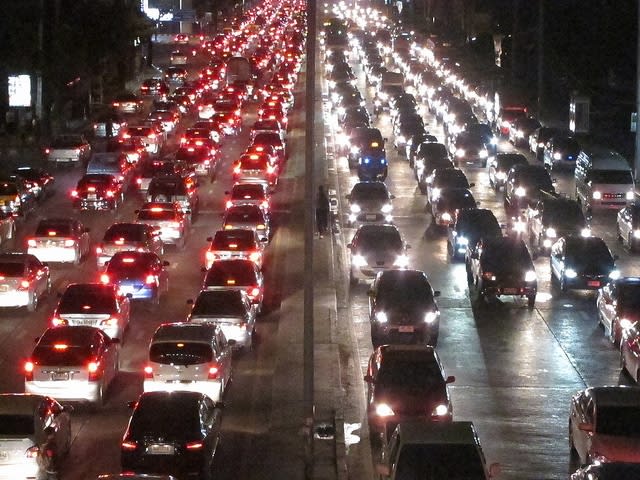
Photo by Kuruman via Flickr
Photo by Kuruman via Flickr
By Julia Pyper and ClimateWire
If the world's cities focused their investments on expanding public transportation, walking and cycling, they could save more than $100 trillion in public and private capital and urban transportation operating costs between now and 2050, according to a report released today by the University of California, Davis, and the Institute for Transportation and Development Policy (ITDP).
In a "high shift" scenario with far greater urban passenger travel by clean public transport and nonmotorized vehicles, as compared to a base-line scenario matched to mobility forecasts by the International Energy Agency, roughly 1.7 gigatons of carbon dioxide could be eliminated each year — a 40% reduction in urban passenger transport emissions — by 2050.
"A most affordable but largely overlooked way to cut global warming pollution is to give people clean options for using public transportation, walking and cycling," said Michael Replogle, ITDP's managing director for policy and a co-author of the report, in a statement.
"Transportation, driven by rapid growth in car use, has been the fastest-growing source of CO2 in the world," he continued. "While every part of the global economy needs to become greener, cleaning up the traffic jams in the world's cities offers the least pain and the most gain."
In 2010, urban transportation accounted for almost a quarter of all carbon emissions produced across all parts of the transportation sector. As cities continue to grow, particularly in developing economies, these emissions are on track to double over the next 35 years without policy intervention.
China and India could follow U.S. example
The United States is the current world leader in urban passenger transport emissions, at 670 megatons of CO2 annually. More efficient vehicles and a decline in driving are expected to lower those emissions to 560 megatons by 2050. However, under the high shift scenario — based on mode shifting and policies that encourage denser development and the substitution of telecommunications for travle — the United States could drop its emissions much faster to 280 megatons of CO2 by 2050.
Transportation emissions in China, which recently became the largest vehicle market in the world, are expected to mushroom in the coming decades, from less than 200 megatons of CO2 annually today to nearly 1,200 megatons of CO2 in 2050. In the high shift scenario, China could slash its emissions to 700 megatons by developing extensive bus rapid transit and metro systems.
India will also see a huge jump in urban transportation emissions, from about 70 megatons of CO2 today to more than 500 megatons in 2050. By addressing crucial infrastructure deficiencies its public transport systems and slowing car use, India could curb that increase at 350 megatons of CO2.
"If there are no further interventions by these governments, expect to see strong increases in urban car travel and urban energy and carbon dioxide emissions in China and India and elsewhere around the world," said Lew Fulton, a co-author and co-director of the NextSTEPS Program at the Institute of Transportation Studies at UC Davis.
Cars will still be needed in the future for intercity travel, but if cities are to address their escalating emissions, they need to put policies in place that curb vehicle use and improve vehicle fuel efficiency, he added.
Cities will run out of room
Making it easier to take mass transit will also improve social mobility and expand access to economic opportunities to more members of society.
"Unmanaged growth in motor vehicle use threatens to exacerbate growing income inequality and environmental ills, while more sustainable transport delivers access for all, reducing these ills," said Replogle. "This report's findings should help support wider agreement on climate policy, where costs and equity of the cleanup burden between rich and poor are key issues."
The report comes just days ahead of the U.N. secretary-general's climate summit on Sept. 23, which will seek to elicit bold action from governments, business, finance and civil society groups on emissions from transportation and seven other sectors. Failure to take action, said Fulton, isn't really an option.
"I must admit there's a question about whether business as usual is even plausible, because many cities are going to run into infrastructure constraints and space constraints at some point," he said of rapidly growing vehicle adoption. "But that is the trend, the trend is such fast motorization rates that if nothing is done to try and redirect that, it looks like a very unsustainable future."
Copyright 2014 E&E Publishing LLC. This article was reprinted from ClimateWire with Permission of E&E Publishing.
More Paratransit
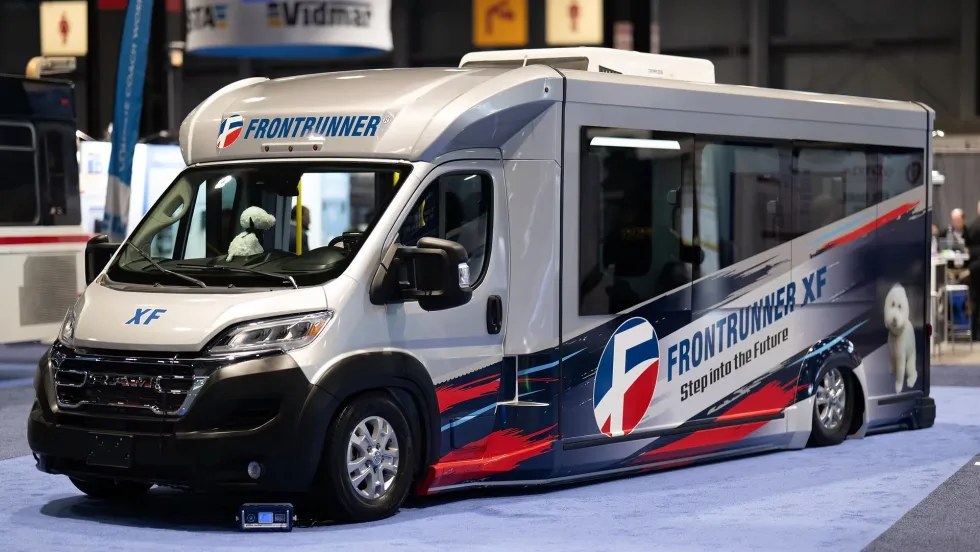
Frontrunner Bus Group Introduces XF Low-Floor Bus with Enhanced Accessibility
The new mid-sized bus features a full flat-floor design, eight-inch curbside step-in height, and zero-entry rear ramp to improve passenger access and operational flexibility.
Read More →
Scenes from APTA TRANSform & EXPO 2026
Transit leaders, manufacturers, and industry professionals gathered in Chicago to explore new technologies, share ideas, and discuss the future of public transportation.
Read More →
Indian River Transit’s Community-Focused Approach Earns National Recognition
Named APTA’s 2026 Outstanding Public Transportation System in its size category, Florida’s Indian River County transit system continues to grow ridership through fare-free service and a focus on evolving community needs.
Read More →
Everett Transit, Community Transit Outline Consolidation Agreement
The proposed agreement calls for a 50% increase in bus service in Everett, a new microtransit zone, continued paratransit service, and the transfer of Everett Transit operations to Community Transit.
Read More →
Driving Smarter Paratransit
John Hanlon shares how AlphaRoute is leveraging AI-powered technology to help paratransit providers optimize operations, support frontline staff, and enhance the rider experience.
Read More →
People Movement: Dan Dipert Coaches Adds Third-Generation Leader, Keolis Names New Valley Metro VP/GM, and More
In this edition, we also cover recent appointments and announcements at the Wabtec, SilverRide, HNTB, and more, showcasing the individuals helping to shape the future of transportation.
Read More →
Biz Briefs: RIPTA Unveils New Frontrunners, Clevland RTA Adds New Siemens, and More
In METRO's latest installment, we take a look at recent news from Siemens, Prevost, Dodge, and more partnerships making headlines across the transportation sector.
Read More →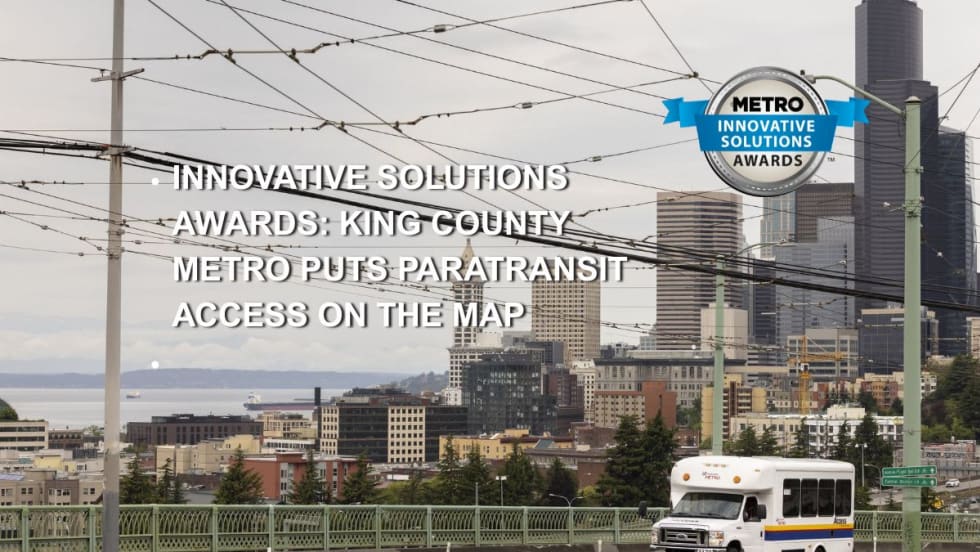
King County Metro Makes ADA Paratransit Easier to Navigate
METRO's Innovative Solutions Award winner replaces complex service-area descriptions with an accessible, interactive map that puts paratransit information directly in customers’ hands.
Read More →
Jacksonville’s NAVI Project Charts a New Course for Autonomous Public Transportation
Through its NAVI program, JTA is showing how autonomous vehicles, intelligent infrastructure, and coordinated operations can work together to deliver everyday public transportation.
Read More →
Driving Smarter Paratransit
John Hanlon shares how AlphaRoute is leveraging AI-powered technology to help paratransit providers optimize operations, support frontline staff, and enhance the rider experience.
Read More →