



CATA extends late night Loop service at Penn State
Service is one of four fare-free circulator routes operated by transit agency on behalf of Penn State, which links the campus with downtown State College, major concentrations of student housing, and the fraternity district.

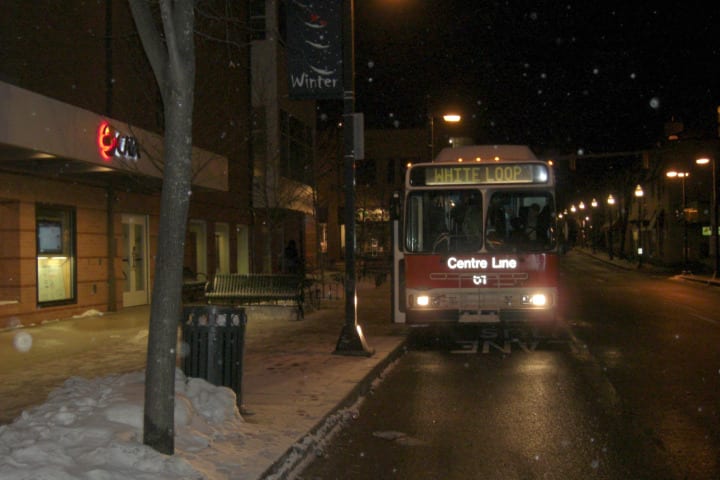
CATA of State College, Pa., in partnership with Penn State, has extended its White Loop service until 4:30 a.m. each weekend night during the Spring Semester.
[IMAGE]CATA-Loop-Bus-full.jpg[/IMAGE]The Centre Area Transportation Authority (CATA) of State College, Pa., in partnership with the Pennsylvania State University (Penn State), has extended its White Loop service until 4:30 a.m. each weekend night during the Spring Semester.
The White Loop, one of four fare-free circulator routes operated by CATA on behalf of Penn State, links the campus with downtown State College, major concentrations of student housing, and the fraternity district. For years the route has run until 2:30 a.m. on Thursday, Friday and Saturday nights. Late last year, however, the undergraduate student government made the request for later Loop hours to provide safe transportation service to those students who are out later than buses would normally be on the street.
In response, CATA and Penn State negotiated a trial extension of weekend Whie Loop hours, with buses running every 8 to 10 minutes until approximately 4:30 a.m. The additional service is funded in large part by student activity fees allocated to the program by student government. Also, Student Ambassadors ride the late night buses, not as police officers, but as monitors to discourage unacceptable behavior and to remind riders that such behavior could result in the service being terminated.
So far, the service has proved to be very popular: an average of nearly 500 riders are being transported after 2:30 a.m. each weekend night. It’s also extremely productive, with well over 100 boardings per hour, says CATA Marketing Manager, Jacqueline Sheader.
The trial began on Friday, January 15, and will continue through the end of the semester. At the end of the trial period, a decision will be made to either continue the trial, incorporate the trial into regular CATA service or end the program altogether. Metrics that will be considered include ridership during the extended hours, instances of inappropriate rider behavior, and feedback received from riders and others, as well as any increases in alcohol-related incidents, criminal reports or arrests.
More Bus

New York MTA Plans Largest Bus Fleet Upgrade in More Than a Decade
The agency is seeking manufacturers for 650 new CNG buses to replace aging vehicles, improve reliability, and advance its broader fleet modernization strategy.
Read More →
Building a Flexible Path to Transit Electrification
John Hroncich discusses BAE Systems’ modular and scalable approach, lessons learned from decades of real-world operations, and how agencies can identify electrification strategies that fit their fleets.
Read More →
Bus Tech Talk: Keeping Transit Technicians Ahead of the Technology Curve
LA Metro’s Obed Mejia discusses technician training, evolving maintenance technology, fleet replacement, and strategies for getting the most out of today’s transit fleets.
Read More →
Biz Briefs: RIPTA Unveils New Frontrunners, Clevland RTA Adds New Siemens, and More
In METRO's latest installment, we take a look at recent news from Siemens, Prevost, Dodge, and more partnerships making headlines across the transportation sector.
Read More →
People Movement: Holly Arnold Joins Transdev and More
In this edition, we also cover recent appointments and announcements at Pace, CamTran, MCI, and more, showcasing the individuals helping to shape the future of transportation.
Read More →
The High Cost of Transit Buses: Industry Leaders Look to Procurement Reform
Transit leaders and policymakers examine how standardized bus designs, streamlined procurement, and predictable funding could help agencies stretch budgets and deliver better service.
Read More →
The Business Voice Behind Public Transportation
As chair of APTA’s Business Members Board of Governors, Ray Melleady explains how more than 850 business members are partnering with transit agencies to advance funding, innovation, and industry-wide collaboration.
Read More →
From Surviving to Thriving: Building Stronger Transportation Organizations
Bus Business Consultants founder Brian Dickson shares lessons on leadership, organizational health, and creating options for long-term success in a changing transportation industry.
Read More →
Finding the ‘Happy Medium’: Optimizing Maintenance Without Sacrificing Reliability
The key to maintenance optimization isn’t doing less work—it’s doing the right work at the right time on the right assets.
Read More →
LA Metro, City of West Hollywood, and Partners Advance Smarter Bus Lane Enforcement
The award-winning partnership combines AI-powered detection with human oversight to improve bus reliability, accessibility, and enforcement efficiency.
Read More →